Tag Archives: Busworld Latin America

TRANSDEV SIGNS AN AGREEMENT FOR E-BUSES IN COLOMBIA FOR 874 MILLION EUROS

Colombiabus Newsroom – Transdev France

THE FRENCH ARE EXPANDING IN LATIN AMERICA

The French multinational mobility company Transdev, through its Colombian subsidiary, holds 50% of the shareholding who was awarded the provision and operation of 406 electric buses in Bogotá, for functional units 6 and 17 in the town of Fontibón. Through the contract signed with Transmilenio that amounts to 874 million euros. This contract is an important step in a large-scale development of the European company to make a transition to electric and sustainable fleets.

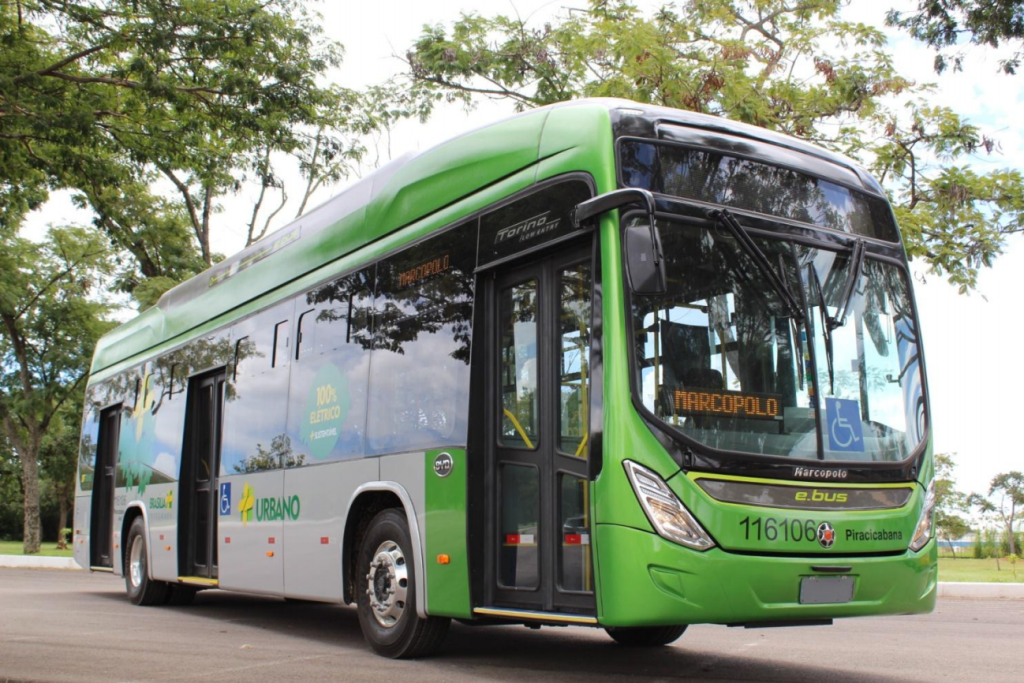
Transdev’s participation in Colombia is not new, since it has a 20-year presence in Bogotá together with its Colombian partner Fanalca in TransMilenio, the BRT (Bus Rapid Transit) system that mobilizes the most people in the world, the French company expects to have operational the largest electric bus fleet in Latin America, with 406 electric buses with BYD chassis, whose bodies will be assembled in Colombia by Superpolo.

The fleet of electric buses will be made up of a combination of 272 9-meter local buses and 134 12-meter zonal buses respectively. The buses will serve the zonal component of Transmilenio along 15 routes in the town of Fontibón. In this area of ​​the city, Transdev and Fanalca will jointly build the largest electrical installation in South America. It will be a bus station of more than 40,000 m² where it will be possible to park, maintain and load all the vehicles covered by the contract.
“With this huge electric bus contract in Bogotá, Transdev is fulfilling its ambition to transition its bus fleets to zero emissions in Colombia and globally. We are proud to continue serving Bogotá where we have been successfully operating much of the TransMilenio with our BRT systems. I am convinced that, for large urban areas, there is no way to avoid the mass deployment of sustainable mobility solutions, including biofuels, electric batteries and, ultimately, hydrogen electric fleets and fuel cells,” Thierry Mallet, President and CEO of Transdev Group.

These new e-buses, which will replace a 20-year-old traditional public transport diesel fleet, will greatly reduce polluting emissions from public transport, improve local air quality, and optimize Colombia’s overall capacity to cope with the transition of energy towards other modes of transport. By the end of 2020, Transdev and Fanalca were operating some 660 articulated and bi-articulated buses for the trunk component of Transmilenio and additionally, the 163 cabins of the acclaimed TransMiCable urban cable system. With this new contract, by the end of 2021, Transdev and Fanalca will jointly operate 1,067 buses in Bogotá, reinforcing an operation that the previous year generated total sales of 95 million euros and employed a workforce of 2,750 people.

VOLVO BUSES STARTS TESTING THE 7900 ELECTRIC IN MEXICO CITY

Colombiabus Newsroom – William Marroquín

THE BUS WILL TEST ON LINE 4 OF THE METROBÚS SYSTEM

All city governments seek solutions to the challenges that arise due to climate change and passenger transport is in the eye of the hurricane, since a lot is required of this activity as it must offer sustainable and environmentally friendly solutions. If we talk about Mexico City, the challenge is bigger, since it is the fifth most populated city in the world, with about 22 million inhabitants.

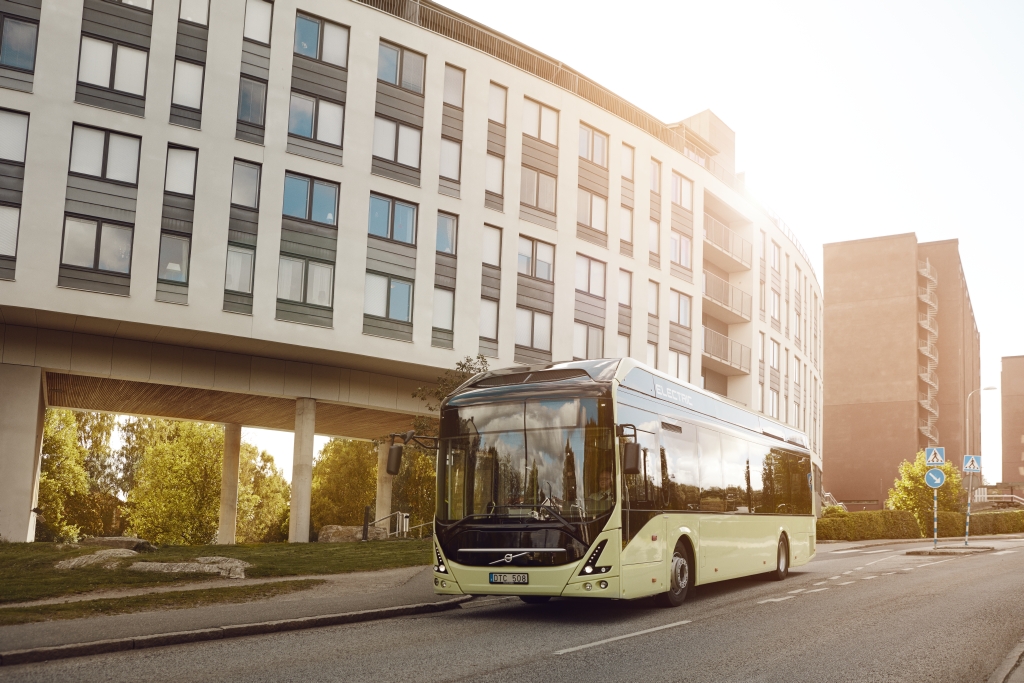
To respond to these challenges, Volvo has arrived in the Mexican metropolis with an innovative solution that is faithful to the premises of every bus of the Swedish brand, such as respect for the environment, quality and safety. That is why a 12-meter Volvo 7900 electric bus has been brought to Mexico City, which has begun tests on Metrobús Line 4, the BRT transport system of the huge Latin American city.

Line 4 of the Mexico City bus system is a line that is characterized by light and open stations, which by having to cross through the Historic Center respect its urban environment. It should be noted that in this line the first hybrid buses were released in Mexico, which began their operation in April 2012, with 54 vehicles of the Volvo 7700 model, which stood out for their low floor and a very low consumption diesel engine combined with a generator electric that delivered minimal noise and emissions. The line has connected important points such as Buenavista, Zócalo, Alameda Central, La Merced, the TAPO Bus Terminal and the International Airport.

The 7900 bus is capable of transporting up to 95 passengers (sitting and standing), it has a recharging system through CCS-type connectors to replenish power at night, when the operation ends and the bus is at its terminal. It delivers 330Kw of power, the rear axle is provided by ZF and to ensure occupant safety it has disc brakes, ABS, EBS, ASR traction control, hill start assist, ESP stability program and can also include the telematics systems solutions such as the Safe Zones package.

In this way, Volvo Buses hopes to continue with electromobility projects in cities and have a new success story, in this case in Latin American cities. With this commitment, Volvo frames the launch of its electric bus under the #CiudadCero concept, with which it seeks to promote the transition towards levels of zero traffic, zero accidents, zero noise and zero emissions.

WORLD’S LARGEST FLEET OF URBAN CNG EURO VI BUSES IN BOGOTÁ

Colombiabus newsroom. By William Marroquín.

211 NEW BUSES ARRIVES FOR THE GRAN AMERICAS OPERATOR

The modernization of transport in Bogotá and the renewal of the entire bus fleet continue to advance, aiming to replace the traditional bus system that only has one year left. The pandemic has not slowed down the process of delivering and replacing vehicles, to offer all citizens of the Colombian capital a dignified and friendly transportation with modern, comfortable, safe and productive vehicles.

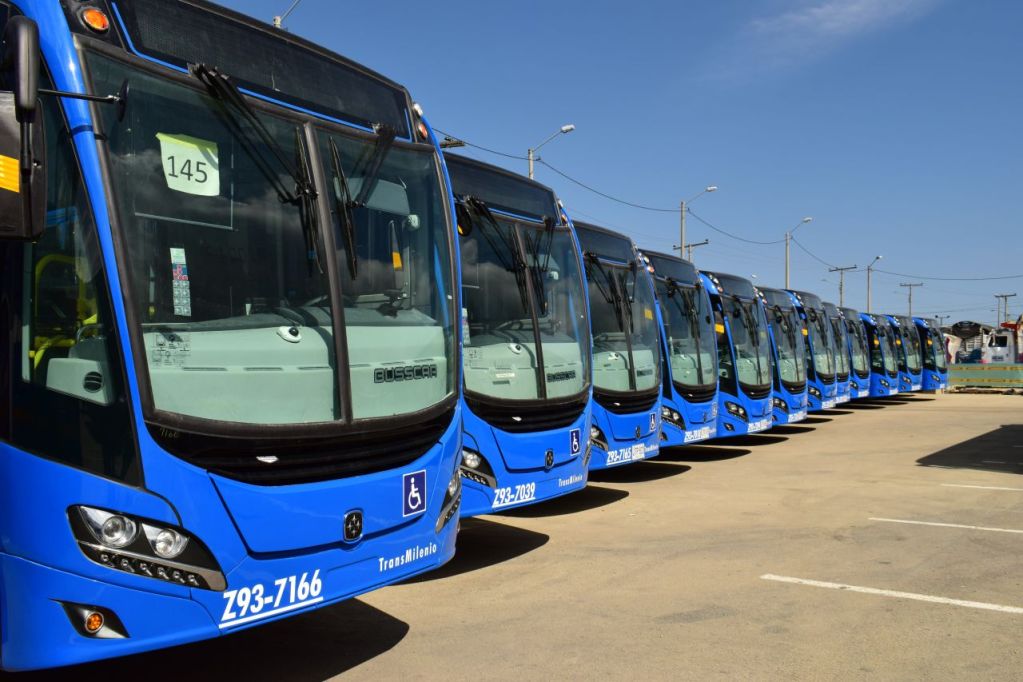
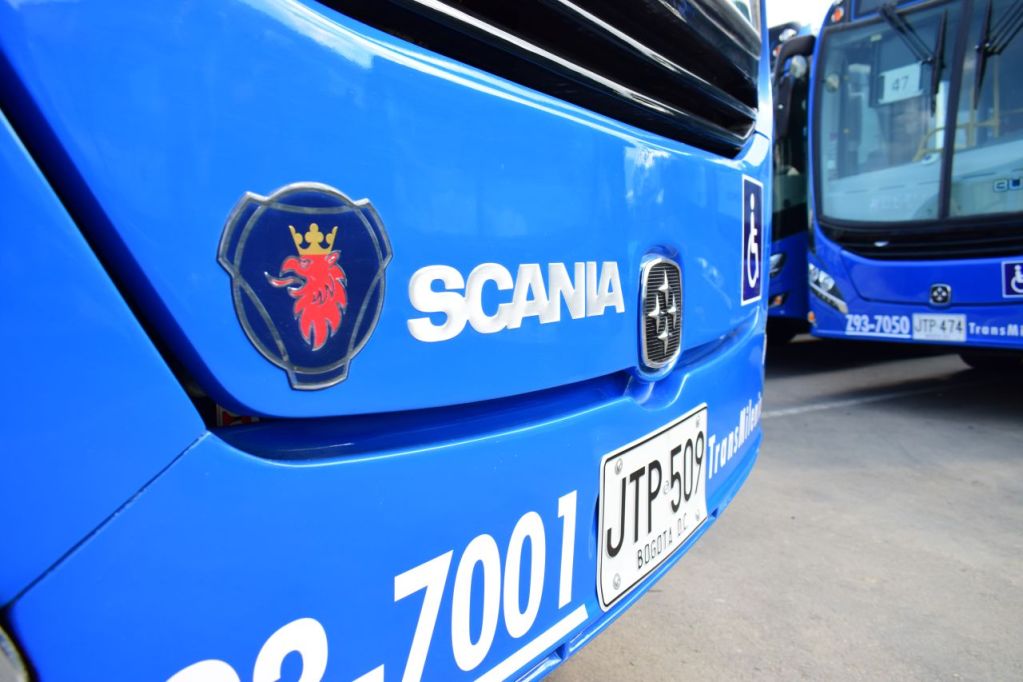
For this reason, Gran Americas, a bus operator in the southeast of Bogotá, began serving the routes of 7 regional services since January 16 that will benefit nearly 35,000 inhabitants of this town. These are 211 standard Scania K280CNG buses that reaffirm the progress of the Swedish manufacturer and its work in the development of natural CNG technologies that allow it to fulfill the commitment to provide benefits, be friendly to the environment and offer solutions for cities.

The vehicles feature air suspension with electronic level control, ABS brakes and the full suite of solutions that Scania’s connected services provide. “With these units we completed 1,467 Euro VI CNG buses, which we have delivered, there are 311 additional buses remaining, which makes Bogotá the city with the largest CNG bus fleet in the world ” As Juan Carlos Ocampo said, General Manager of Scania Colombia.

The 12-meter long buses are designed to transport up to 80 passengers (including seated and standing), builded in Pereira, Colombia by Busscar Colombia, which also have lifting mechanisms to facilitate accessibility to people in mobility reduced condition. The body model is the legendary Urbanuss Pluss, a great protagonist of massive systems both in Colombia and in different Latin American cities, a model that has evolved over 20 years. “We not only transport dreams in this alliance, we are teamwork, social commitment and we are very grateful to Bogotá and its citizens, since a large part of our suppliers are from the capital.” Roberto Gálvez Montealegre, President of Busscar de Colombia, declared.

Work has been done to improve the travel experience, seeking to win back users and invite them to use the buses, take care of them and enjoy them. That is why they have included additional comfort and safety elements such as WiFi Internet connection, electrical outlets and additionally they have information screens so that travelers can identify the stops and the different routes of the route. Likewise, it has surveillance cameras to increase the safety of passengers during the trip, provided by MET Group, a Pereiran company that has worked hand in hand with Busscar Colombia.

Finally, to ensure the correct supply of fuel, the Vanti Group (Colombian company dedicated to the provision of the domestic public service of distribution and commercialization of natural gas in the country) worked on the construction of a new station that allows the refueling of CNG. A job that involved extending the pipeline network for about three kilometers and that allows the station, which three compressors and a storage capacity of 5,000 cubic meters, to fill the tanks of each bus in about seven minutes and represented an investment close to 11,000 million Colombian pesos (More than €2,600,000)