Tag Archives: busworld news

SCANIA AND MARCOPOLO LAUNCH THE FIRST GAS ENGINE ROAD BUS IN BRAZIL

Colombiabus Newsroom – By William Marroquín

GERDAU AND TURIS SILVA ARE ALSO PARTNERS IN THE PROJECT

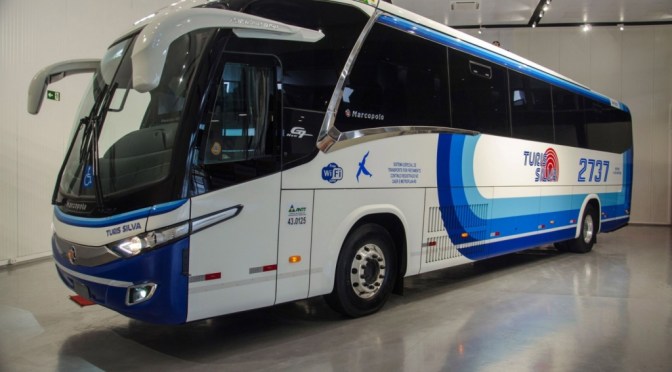
An alliance between Scania and Marcopolo will allow Turis Silva, a transport operator located in the south of the South American giant, to launch the first highway bus powered by Compressed Natural Gas (CNG) for tourism applications, business service, rental and short excursions. The bus will be assigned to transport employees of the Gerdau steel company, at the Charqueadas plant, Rio Grande do Sul state.

The business transport operation, in charge of Turis Silva Transportes, will be under a demonstration contract on a route from Porto Alegre-Charqueadas-São Jerônimo, on a daily route of 190 km. To date, the gas highway bus to charter in Brazil is in the final details of the certification and homologation process to receive the circulation permit.

“We are very excited about this pioneering operation. There will no longer be more to continue having diesel as the sole parent. Requests from contractors for greener products are increasing every day and sustainability is a path of no return. I am convinced that it will be the first of many gas buses for rent” Jaime Silva, founder and owner of Turis Silva Transportes. The businessman is also president of the National Association of Tourist Transporters and Charter. The company has been in the market for 31 years, with its headquartered in Porto Alegre, provides continuous and occasional charter services, has 54 Scania buses and has been increasing the brand’s share in its fleet each year.
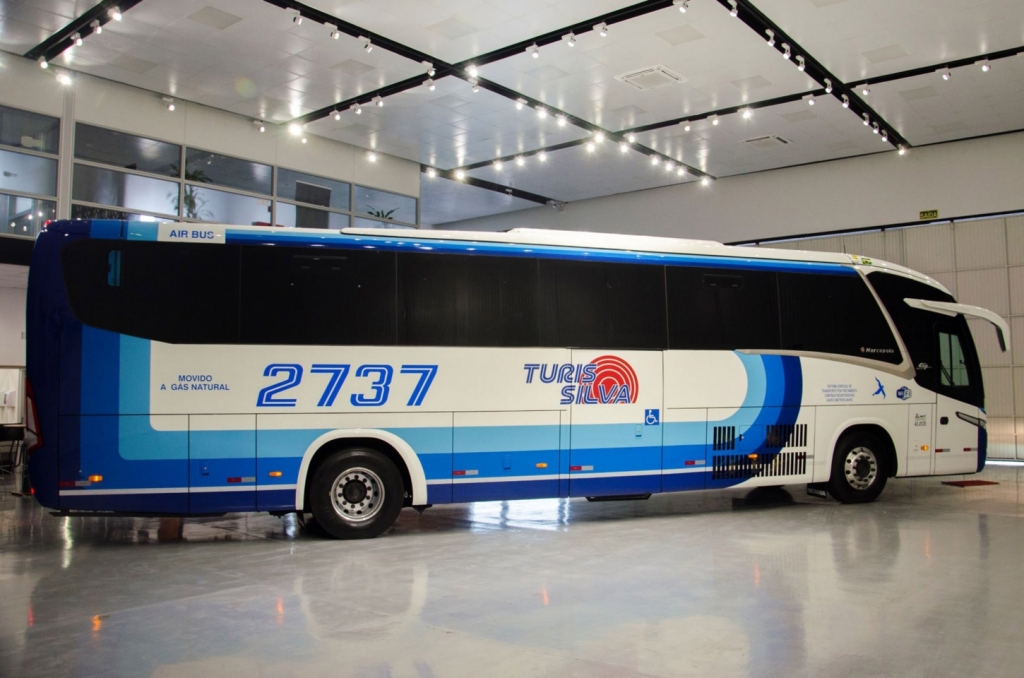
The K 320 4 × 2 model has a 9.3-liter engine that produces 320HPc, the propeller is Otto Cycle (the same concept as cars) and it runs 100% on gas and biomethane, or a mixture of both. It is not converted from diesel to gas, it is a dedicated power unit with factory warranty, reliable and safe technology, consistent performance and diesel-like strength, as well as being quieter. Eight gas cylinders were installed in the front with a range of 300 km. If a customer wants more autonomy, it is possible to evaluate the location of more cylinders and for the development of the body there are no significant changes.

In the case of a fire or crash, the gas is released into the atmosphere and dissolves without danger of an explosion, unlike a similar diesel-powered vehicle which is more dangerous as the liquid remains on the ground or can spread through the body.

Marcopolo chose the Paradiso New G7 1050 bodywork to equip the historic bus, capable of handling up to 44 passengers. It is equipped with Wi-Fi internet access, environmental entertainment screens, semi-bed seats, camera monitoring system, individual USB sockets and air conditioning. The model also has different solutions of the Marcopolo BioSafe platform to protect the occupants from pathogens that could cause diseases such as Covid-19, such as a toilet and air conditioning system with UV-C lamps to disinfect the environments; curtains with antimicrobial material, and gel dispenser at the entrance of the access staircase.
TOYOTA LAUNCHES ITS TWO VERSIONS PASSENGER VAN HI-ACE IN ARGENTINA

Colombiabus Newsroom

THE VAN IS CONTEMPLATED TO BE PRODUCE IN ARGENTINA

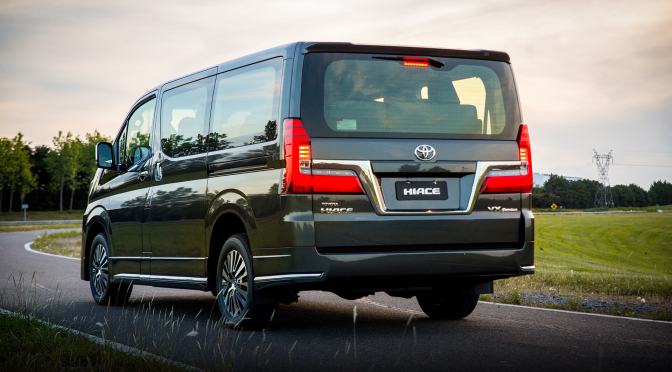
Although Toyota had already introduced the HiAce light utility vehicle in delivery van versions nearly two years ago, this launch of the Wagon and Commuter versions marks the entry into the commercial passenger vehicle segment in Argentina for the Japanese brand, with a van that is imported from Japan, but for which there are plans to produce it in the country, at the Zárate plant (Buenos Aires province) where the Hilux pick-up, leader in sales in the country, was also built.

Two versions that share the same engine, but with an eye on two different segments and models: The Wagon with shorter dimensions and a more luxurious equipment for 9 passengers, which will face the Mercedes-Benz Vito and the Hyundai H100; It is designed for the transport of executives, clubs, diplomats and artists. For its part, the Commuter will be able to transport up to 13 passengers and will seek to compete with the Mercedes-Benz Sprinter and the Renault Master, targeting the transport of excursions, business and charters in short distances.

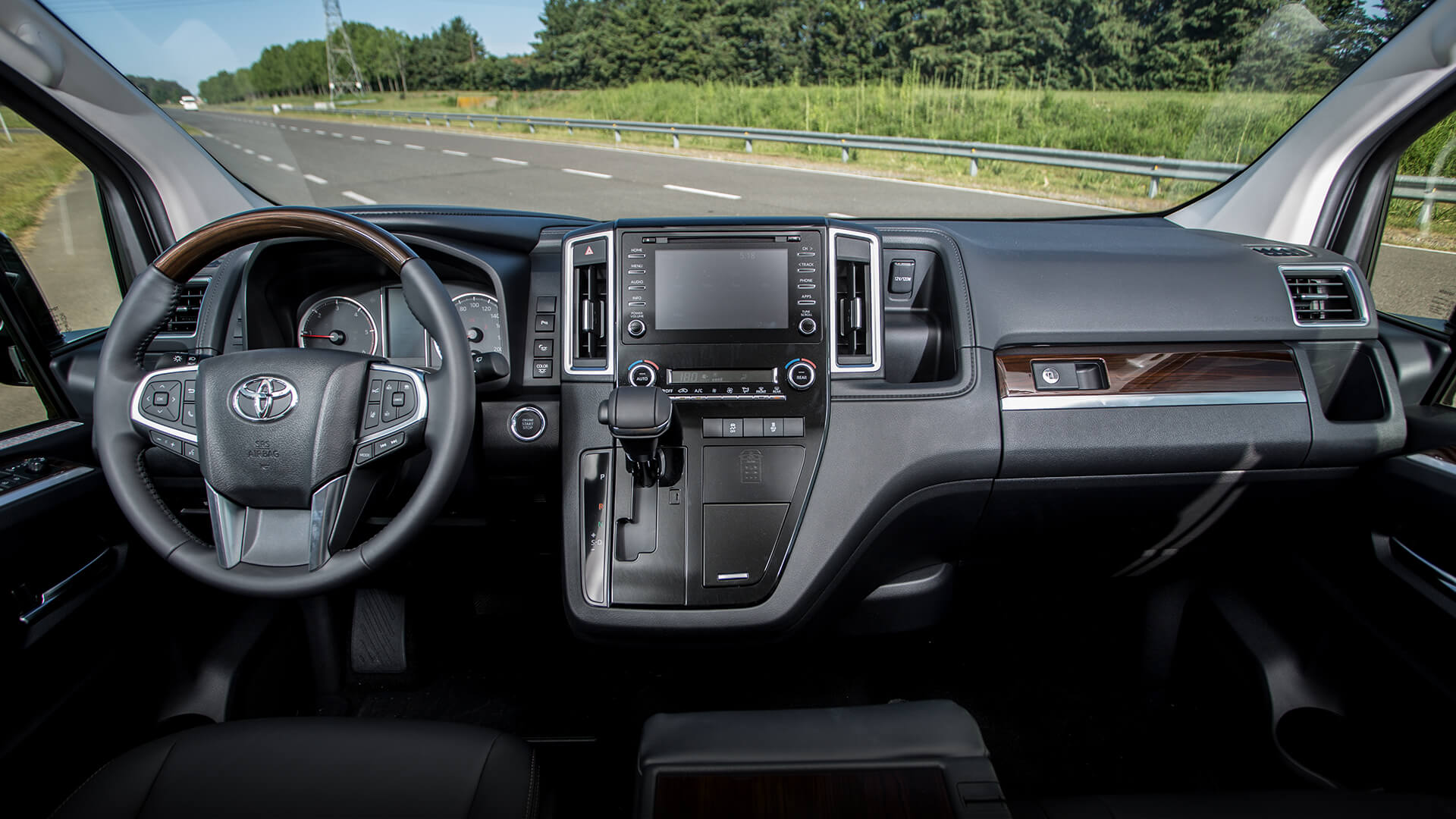
To achieve economies of scale and facilitate the aftermarket, both versions will feature the engine and transmission used in the Toyota Hilux. The 1GD engine of the Japanese brand with 2.8 liters of displacement, but with a different electronic map looking for fuel economy; that’s why the powerplant delivers 163HP at 3,600rpm and 420Nm of torque between 1,600 and 2,200 engine turns. Power is delivered to the wheels via a six-speed torque converter automatic transmission.

Considering that they are oriented to different segments, although they share the same mechanics, the dimensions and equipment are different. The Commuter has a length of 5,915 mm and the Wagon 5,300 mm, in addition to the finishes of the former that are more functional and for a more demanding job. For its part, the second option offers seats upholstered in leather and electrically adjustable (in the second row).

In both versions, the driver’s position has a height and depth adjustable steering wheel and a height adjustable seat with longitudinal adjustment and backrest recline. It is worth noting the very good wide field of vision and the angular-turning exterior mirrors that improve rear vision. Additionally, they incorporate 6 USB ports to recharge devices.

Toyota will seek to test the acceptance of the vehicle not only in Argentina, but also throughout Latin America. Initially it was imported from Japan, but in the future the idea is to produce the HiAce in Argentina, where the Hilux and SW4 are already manufactured. Countries like Chile, Peru and others in Central America sell the van and that is why it is considered that the assembly project in South America can be successful.

AGRALE LAUNCHES THE MA27.0 FRONT ENGINE ARTICULATED BUS IN ARGENTINA

Colombiabus Newsroom – Agrale Argentina S.A.

TODOBUS BUILT THE PROTOTYPE MODEL

Despite the pandemic, the Argentine subsidiary of the Brazilian manufacturer Agrale continues to advance in the development of passenger buses, highly oriented towards urban mobility. Not only do they finalize details of the long-awaited electric MA17 whose powertrain is being developed in England, but now add a new variant for operators who need large capacity vehicles in cities, with its front-engined MA27.0 chassis.

The chassis of the presentation has been bodied by the constructor TodoBus, located southwest of Buenos Aires, on a platform length of 18 meters, a gross vehicle weight of 27 tons and with the capacity to transport up to 143 passengers, of which 49 they can travel seated. The MA27.0 with front engine is part of the more than ten developments conceived by the Argentine engineering team, in about 15 years of Agrale’s presence in the country.

The chassis is powered by a Cummins Euro V diesel engine of the ISB family, with 6.7 liters of displacement and 290HP of power, which reaches the wheels thanks to the fully automatic transmission provided by Allison of the Torqmatic family suitable for vehicles with weight. 29,000kg gross vehicle. The joint (sanfona) is imported from Germany by Hübner, the suspension is pneumatic for maximum smoothness and absorption capacity of the irregularities of the roads in the cities, and with its electronic control it can also be adjusted. The TodoBus bodywork includes ramps and accessibility devices for those with reduced mobility conditions.

Agrale hopes to maintain its commitment to developing models that guarantee productivity, efficiency and friendly transport for Latin American cities.

TRANSDEV SIGNS AN AGREEMENT FOR E-BUSES IN COLOMBIA FOR 874 MILLION EUROS

Colombiabus Newsroom – Transdev France

THE FRENCH ARE EXPANDING IN LATIN AMERICA

The French multinational mobility company Transdev, through its Colombian subsidiary, holds 50% of the shareholding who was awarded the provision and operation of 406 electric buses in Bogotá, for functional units 6 and 17 in the town of Fontibón. Through the contract signed with Transmilenio that amounts to 874 million euros. This contract is an important step in a large-scale development of the European company to make a transition to electric and sustainable fleets.

Transdev’s participation in Colombia is not new, since it has a 20-year presence in Bogotá together with its Colombian partner Fanalca in TransMilenio, the BRT (Bus Rapid Transit) system that mobilizes the most people in the world, the French company expects to have operational the largest electric bus fleet in Latin America, with 406 electric buses with BYD chassis, whose bodies will be assembled in Colombia by Superpolo.

The fleet of electric buses will be made up of a combination of 272 9-meter local buses and 134 12-meter zonal buses respectively. The buses will serve the zonal component of Transmilenio along 15 routes in the town of Fontibón. In this area of ​​the city, Transdev and Fanalca will jointly build the largest electrical installation in South America. It will be a bus station of more than 40,000 m² where it will be possible to park, maintain and load all the vehicles covered by the contract.

“With this huge electric bus contract in Bogotá, Transdev is fulfilling its ambition to transition its bus fleets to zero emissions in Colombia and globally. We are proud to continue serving Bogotá where we have been successfully operating much of the TransMilenio with our BRT systems. I am convinced that, for large urban areas, there is no way to avoid the mass deployment of sustainable mobility solutions, including biofuels, electric batteries and, ultimately, hydrogen electric fleets and fuel cells,” Thierry Mallet, President and CEO of Transdev Group.

These new e-buses, which will replace a 20-year-old traditional public transport diesel fleet, will greatly reduce polluting emissions from public transport, improve local air quality, and optimize Colombia’s overall capacity to cope with the transition of energy towards other modes of transport. By the end of 2020, Transdev and Fanalca were operating some 660 articulated and bi-articulated buses for the trunk component of Transmilenio and additionally, the 163 cabins of the acclaimed TransMiCable urban cable system. With this new contract, by the end of 2021, Transdev and Fanalca will jointly operate 1,067 buses in Bogotá, reinforcing an operation that the previous year generated total sales of 95 million euros and employed a workforce of 2,750 people.

VOLVO BUSES STARTS TESTING THE 7900 ELECTRIC IN MEXICO CITY

Colombiabus Newsroom – William Marroquín

THE BUS WILL TEST ON LINE 4 OF THE METROBÚS SYSTEM

All city governments seek solutions to the challenges that arise due to climate change and passenger transport is in the eye of the hurricane, since a lot is required of this activity as it must offer sustainable and environmentally friendly solutions. If we talk about Mexico City, the challenge is bigger, since it is the fifth most populated city in the world, with about 22 million inhabitants.

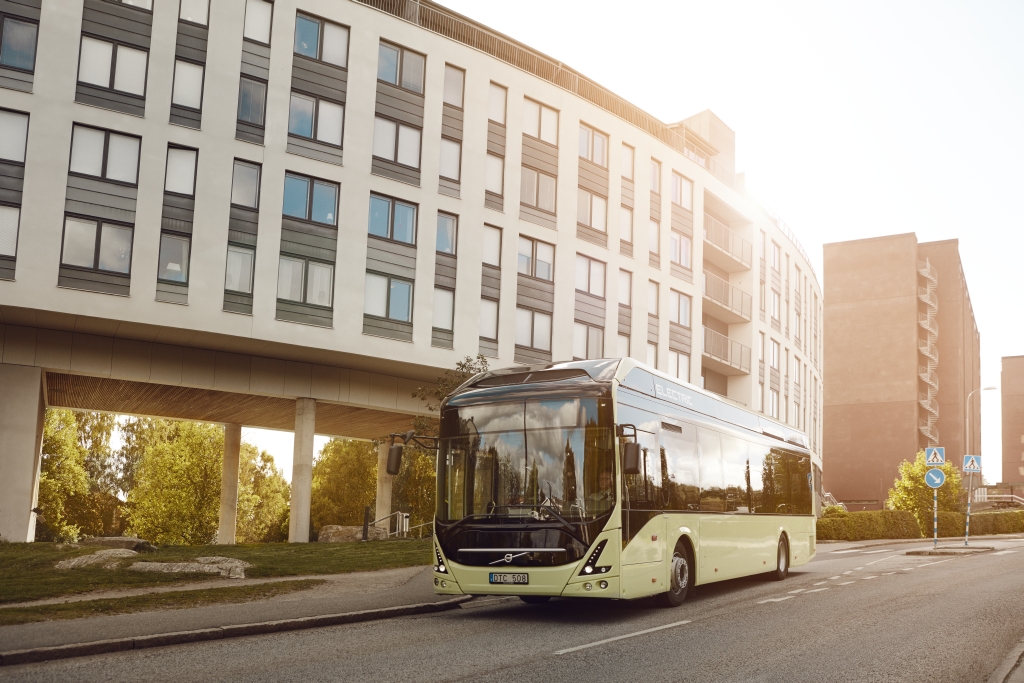
To respond to these challenges, Volvo has arrived in the Mexican metropolis with an innovative solution that is faithful to the premises of every bus of the Swedish brand, such as respect for the environment, quality and safety. That is why a 12-meter Volvo 7900 electric bus has been brought to Mexico City, which has begun tests on Metrobús Line 4, the BRT transport system of the huge Latin American city.

Line 4 of the Mexico City bus system is a line that is characterized by light and open stations, which by having to cross through the Historic Center respect its urban environment. It should be noted that in this line the first hybrid buses were released in Mexico, which began their operation in April 2012, with 54 vehicles of the Volvo 7700 model, which stood out for their low floor and a very low consumption diesel engine combined with a generator electric that delivered minimal noise and emissions. The line has connected important points such as Buenavista, Zócalo, Alameda Central, La Merced, the TAPO Bus Terminal and the International Airport.

The 7900 bus is capable of transporting up to 95 passengers (sitting and standing), it has a recharging system through CCS-type connectors to replenish power at night, when the operation ends and the bus is at its terminal. It delivers 330Kw of power, the rear axle is provided by ZF and to ensure occupant safety it has disc brakes, ABS, EBS, ASR traction control, hill start assist, ESP stability program and can also include the telematics systems solutions such as the Safe Zones package.

In this way, Volvo Buses hopes to continue with electromobility projects in cities and have a new success story, in this case in Latin American cities. With this commitment, Volvo frames the launch of its electric bus under the #CiudadCero concept, with which it seeks to promote the transition towards levels of zero traffic, zero accidents, zero noise and zero emissions.

SCANIA PRESENTS A NEW CNG ARTICULATED BUS EURO VI IN MEXICO

Colombiabus Newsroom.

COLOMBIA’S EXPERIENCE REACHES OTHER MARKETS

Scania Mexico has given the green flag to a new bus powered by an engine that incorporates CNG technology and guarantees to comply with the Euro VI emissions standard. A bus with well-known specifications in Colombia, corresponding to the K320 chassis with a 9.3-liter 320HP rear engine that allows the configuration of 18-meter articulated buses. In addition, it highlights the work of Busscar Colombia that continues to advance in its effort to depend less on the local market and serve more destinations abroad, such as the Aztec country where it has had a very good acceptance and this time, its highly recognized Urbanuss Pluss S5.

The bus has started operation on the routes of Transcomunicador, a Mexibus mobility company, it has always offered users and a Mexican entity a quality service that never stops through its BRT system that travels in the entity, through the municipalities of Ecatepec, Coacalco, Tultitlán and Cuautitlán Izcalli, transporting more than 200 thousand people a day, traveling about 23 thousand km a day and benefiting more than 2 million inhabitants in mobility as it is the most sustainable transport option in the area.

In the last five years, the transport sector accounted for 32% of greenhouse gas and compound emissions and of that percentage, 92% came from motor transport. That is why the Mexibus supplier company, busy offering options that minimize the environmental impact and help minimize the damage to public health, offers this new option for gas mobility, which truly demonstrates its low rate of polluting emissions. “It is a technology already proven in Colombia, in addition to the adaptations required for the state of Mexico. It is more comfortable, ergonomic, less polluting and noisy, further to being Euro VI, which undoubtedly makes it a robust solution for city transport, “said Jorge Navarro Inostroza, director of People Transport Solutions at Scania Mexico.

This bus contributes to the reduction of polluting emissions that cause the greenhouse effect and accelerate global warming. It achieves a 100% reduction in NO2 (Nitrogen Dioxide), a reduction in NOX (Nitrogen oxides) causing acid rain by 80%, a reduction in PM emissions (particulate matter or suspended particles) that cause respiratory diseases, up to 96%, decrease in SO2 (sulfur dioxide) by 100%, additionally this unit is also characterized by reducing the noise derived from its operation up to 5 times compared to a Euro V Diesel unit.

The chassis of the mobility project of the Mexican entity is from Scania, a Swedish brand that has always spoken out in favor of sustainability, this time it offers Transcomunicador a unit that adds to the objectives of the Mexican transportation provider company, offering the best CNG so far, and that will have a lesser impact on the environment. Additionally, with the integrated systems that the chassis has, pollutant emissions can be truly measured, having greater certainty of the impact and effectiveness of the units, guaranteeing that they are always in good condition and available.

WORLD’S LARGEST FLEET OF URBAN CNG EURO VI BUSES IN BOGOTÁ

Colombiabus newsroom. By William Marroquín.

211 NEW BUSES ARRIVES FOR THE GRAN AMERICAS OPERATOR

The modernization of transport in Bogotá and the renewal of the entire bus fleet continue to advance, aiming to replace the traditional bus system that only has one year left. The pandemic has not slowed down the process of delivering and replacing vehicles, to offer all citizens of the Colombian capital a dignified and friendly transportation with modern, comfortable, safe and productive vehicles.

For this reason, Gran Americas, a bus operator in the southeast of Bogotá, began serving the routes of 7 regional services since January 16 that will benefit nearly 35,000 inhabitants of this town. These are 211 standard Scania K280CNG buses that reaffirm the progress of the Swedish manufacturer and its work in the development of natural CNG technologies that allow it to fulfill the commitment to provide benefits, be friendly to the environment and offer solutions for cities.

The vehicles feature air suspension with electronic level control, ABS brakes and the full suite of solutions that Scania’s connected services provide. “With these units we completed 1,467 Euro VI CNG buses, which we have delivered, there are 311 additional buses remaining, which makes Bogotá the city with the largest CNG bus fleet in the world ” As Juan Carlos Ocampo said, General Manager of Scania Colombia.

The 12-meter long buses are designed to transport up to 80 passengers (including seated and standing), builded in Pereira, Colombia by Busscar Colombia, which also have lifting mechanisms to facilitate accessibility to people in mobility reduced condition. The body model is the legendary Urbanuss Pluss, a great protagonist of massive systems both in Colombia and in different Latin American cities, a model that has evolved over 20 years. “We not only transport dreams in this alliance, we are teamwork, social commitment and we are very grateful to Bogotá and its citizens, since a large part of our suppliers are from the capital.” Roberto Gálvez Montealegre, President of Busscar de Colombia, declared.

Work has been done to improve the travel experience, seeking to win back users and invite them to use the buses, take care of them and enjoy them. That is why they have included additional comfort and safety elements such as WiFi Internet connection, electrical outlets and additionally they have information screens so that travelers can identify the stops and the different routes of the route. Likewise, it has surveillance cameras to increase the safety of passengers during the trip, provided by MET Group, a Pereiran company that has worked hand in hand with Busscar Colombia.

Finally, to ensure the correct supply of fuel, the Vanti Group (Colombian company dedicated to the provision of the domestic public service of distribution and commercialization of natural gas in the country) worked on the construction of a new station that allows the refueling of CNG. A job that involved extending the pipeline network for about three kilometers and that allows the station, which three compressors and a storage capacity of 5,000 cubic meters, to fill the tanks of each bus in about seven minutes and represented an investment close to 11,000 million Colombian pesos (More than €2,600,000)