G8 DE MARCOPOLO MOTIVA EL AUMENTO DE PEDIDOS DE BUSES DOBLE PISO EN BRASIL

CAMBIA LA ESCENA DEL TRANSPORTE DE CARRETERA EN BRASIL

Redacción Latinobus – Secco Comunicaciones

La enorme expectativa por la llegada de la Generación 8 de Marcopolo con destino al segmento rodoviario, se venía gestando desde hacía varios años y cuando se presentó oficialmente en julio de 2021, no defraudó a nadie. En los mercados internacionales, los pedidos van confirmándose y su llegada a ellos viene dándose gradualmente.

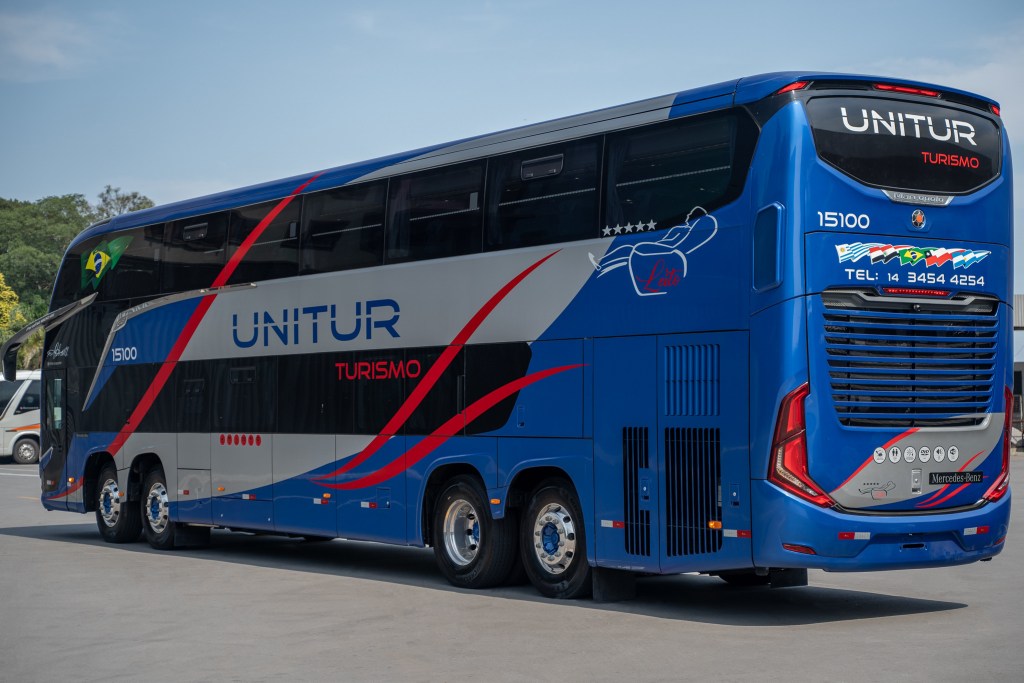
Sin embargo en el mercado brasilero, la llegada de la Generación 8, viene transformando el escenario del transporte de carretera en el país y para sorpresa, llevando a que la participación de los buses dos pisos en el segmento crezca con mayor rapidez. Tanto, que hace algunos años, sólo el 10% de los vehículos de dos niveles se producían con destino a los operadores locales. Ahora, gracias al nuevo modelo, más del 50% de los pedidos del Paradiso 1800DD G8, son para empresas de Brasil.
Este movimiento del mercado venía gestándose a medida que fueron eliminándose las restricciones a los viajes, a causa de la pandemia y las empresas se prepararon para recibir nuevamente a los viajeros “Incluso antes del lanzamiento de la Generación 8, ya veíamos este movimiento de mercado y esperábamos una fuerte demanda de DD más sofisticados, pero está demostrando ser aún más positivo. Desde el lanzamiento del G8, la mayoría de los pedidos han sido del modelo 1800 DD, lo que representa un cambio en el comportamiento de los clientes que compraban más el modelo Paradiso 1200”, explica Ricardo Portolan, director de Operaciones Comerciales MI y Marketing de Marcopolo.

“De la producción de autobuses interurbanos de Marcopolo en 2021, el modelo Double Decker representó más del 50% del volumen. Y de ese volumen, cuando consideramos sólo la Generación 8, la participación del modelo es más expresiva, superando el 70% de las ventas”, destaca Portolán.
Según el ejecutivo de Marcopolo, este cambio en el comportamiento de los operadores es una señal importante de que el transporte por carretera está pasando por una transformación completa para ofrecer cada vez más seguridad, comodidad y conveniencia para atraer a más usuarios, incluidos aquellos que optaron por el transporte aéreo. “Para viajes de media distancia, como São Paulo-Río de Janeiro o incluso São Paulo-Belo Horizonte, muchas personas prefieren el autobús, por su comodidad y practicidad, lo que ha hecho que los operadores intensifiquen la adquisición de DD, con asientos cama y diferentes clases de servicio”.

Desde hace muchos años, Marcopolo dedica especial atención a la evolución del transporte por carretera y al cambio en el perfil de los pasajeros, centrándose en el desarrollo de productos, soluciones e incluso servicios que mejoran mucho la experiencia de todos. Desde el pasajero hasta el operador, pasando por el conductor, mecánicos y demás profesionales que intervienen en toda la cadena productiva.

Paradis

Otro detalle que merece destacarse, es que los buses doble piso de la Generación 8 no sólo son apreciados por más empresas dedicadas al segmento de rutas interestatales o internacionales. También, empresas del sector de alquiler, excursiones y fletamento han incorporado en sus flotillas el Paradiso 1800DD.

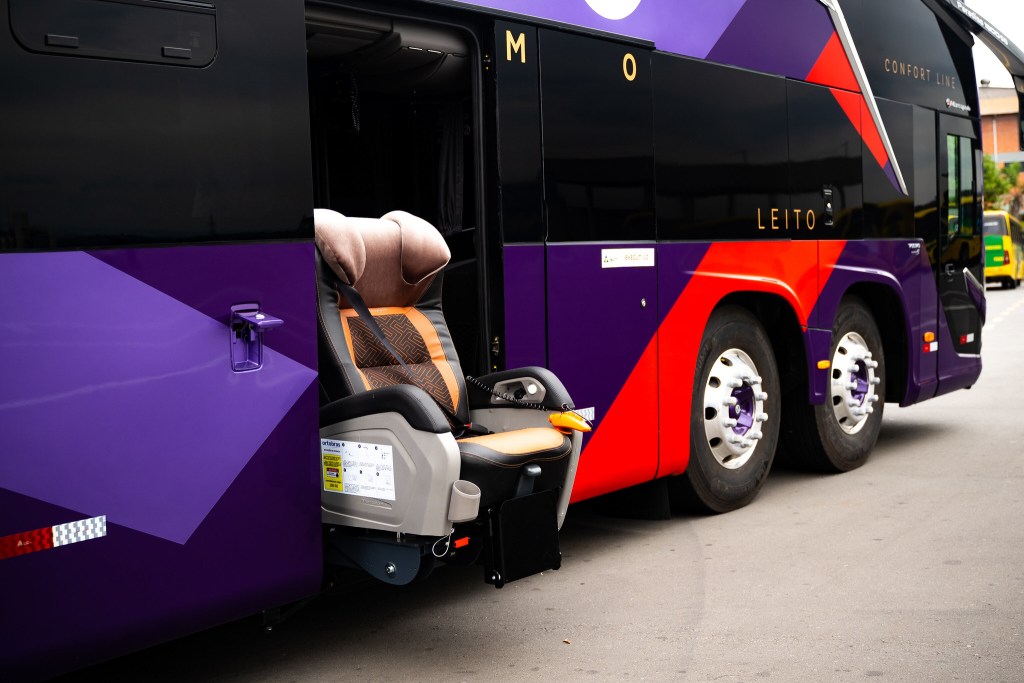
El nuevo G8 recibió un nuevo diseño de escaleras más anchas, con peldaños anchos y suaves, luz LED indirecta y un nuevo diseño del sistema de apertura de puertas, más eficiente y robusto. Todos los revestimientos internos, incluyendo las manijas, el techo y los costados, están revestidos con material ‘fácil limpieza’, ahorrando tiempo durante las paradas, y son producidos con tejido antimicrobiano (estándar en todos los modelos Marcopolo).
TRATON GROUP WILL INVEST 2.6 BILLION EUROS IN R&D FOR ELECTROMOBILITY BY 2026

THE GROUP SINKS THE ACCELERATOR TOWARDS ELECTRIFICATION

Colombiabus newsroom – Traton Group SE

The Traton Group, one of the largest global players in the commercial passenger and cargo vehicle industry; with its brands MAN, Scania, Volkswagen Trucks & Buses, Navistar and RIO in digital services; has decided to assume head-on the commitment to offer sustainable transportation, seeking affordable and profitable solutions for its customers around the world.

The group has been investing heavily in the development of new products, battery technologies, research and testing for its electrification-oriented models, construction of new production facilities, among others. Previously, the budget earmarked for electromobility in 2025 had been 1.6 billion euros, which by 2026 will receive a significant increase.

That is why the Traton Group, in order to intensify the transition to commercial vehicles powered by alternative propellants, plans to invest €2.6 billion in electric mobility research and development by 2026 in support of that goal.

“Together with its brands, the Traton Group will take a leading role in sustainable transport. That is why we have consistently aligned our planning for the next five years to focus on battery electric drives. These units are clearly the greenest, fastest and most affordable solution for our customers, even for long-distance transport, although hydrogen can be a useful addition in certain niches. Since trucks are mostly charged during supply peaks and demand troughs, even the power load on the grid is moderate. That is why we must focus on creating the infrastructure that we so urgently need. Establishing the fast charging network for passenger cars also offers a unique opportunity for synergies” said Christian Levin, CEO of the Traton Group.

Pure battery electric trucks have a clear advantage over their hydrogen counterparts: 75% of energy output is used to power electric vehicles, compared to 25% for fuel cell trucks.

That is why Traton’s priority is to invest in Battery Electric Vehicles (BEVs), the goal is for 50% of long-distance trucks to be zero-emission by 2030, provided the corresponding regulatory mechanisms and infrastructure are in place. Work is already underway on charging issues, following the agreement signed between Daimler Truck and the Volvo Group to create a public charging network for battery-electric heavy trucks and coaches as part of a joint venture. All partners have already signed a binding agreement at the end of 2021, which is now subject to antitrust approvals.

In the last quarter of 2021, the commercial results of the electric vehicles of the Traton Group brands were as follows:

The plan is to install at least 1,700 high-performance green energy charging points across Europe within five years of establishing the joint venture. In 2020, the Traton Group invested one billion euros for the electrification of transport and in five years, the amount allocated will have almost tripled.

MI MACRO PERFIFÉRICO REACHED THE ESTIMATED DEMAND IN ONE MONTH OF OPERATIONS

AUTHORITIES WILL CONTINUE WORKING TO IMPROVE IT

Colombiabus newsroom – Gobierno de Jalisco

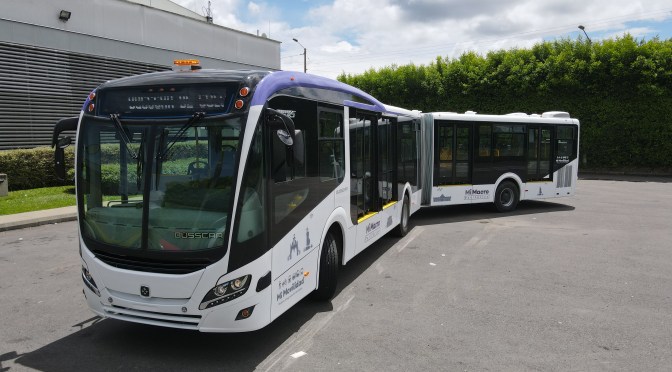
On January 30, 2022, the operation of the largest BRT system in Mexico was launched, with a 41.5 kilometer corridor to connect the city of Guadalajara: Mi Macro Periférico. This project was approved in 2019 and on its first day of operations, it managed to mobilize 180,000 users.

A month after starting operations, the system administrators and the Government of the State of Jalisco have been reviewing the results, both in terms of passenger demand and route movement. In a meeting with the authorities and Governor Enrique Alfaro, the performance figures of Mi Macro Periférico have been shared, with very positive results.

“In just one month of operations, we are reaching the level of demand that we had estimated in the medium term. The Mi Macro Periférico project was designed to reach 300,000 passengers per day in that period of time. To compare, in the Insurgentes BRT, 160,000 passengers/day were projected, reaching it a year later. Here in a month, the demand has grown above what was expected, generating pressures in the feeders, the complementary ones and the main ones”, declared Enrique Alfaro, Governor of the State of Jalisco.

Based on the foregoing, logistical changes are being prepared and for this reason, after the meeting, the purchase of more buses for complementary, feeder and trunk routes was authorized. The construction works calendar was modified, hoping that by mid-April, the changes will result in a better service.

“There is a calibration process that has to be done, we are taking it very seriously, we are all involved so that it is done in the best possible way. From this exercise of cutting results, we can reorganize things that we believe can work better, based on people’s suggestions and that experience allows us to understand” stressed the president.

Another aspect that has brought great satisfaction and has motivated more users to adopt the service, are transfers, since they allow those who travel through the system’s routes to generate greater savings. Little by little, people will continue to adapt to the system, and the administration will continue to correct it, presenting the results with a cutoff date of April 15, after the Easter holidays.

MERCEDES-BENZ ALREADY HAS CLOSE TO 100 ORDERS FOR ITS EO500U ELECTRIC BUS CHASSIS

DELIVERIES START AT THE END OF 2022

Colombiabus newsroom – Mercedes-Benz Do Brasil

In 2021, the Mercedes-Benz O500 bus series celebrated 20 years of commercial life with its urban and road versions, of which more than 70,000 have been manufactured in Brazil, supplying both the local market and the those of South America and other continents.

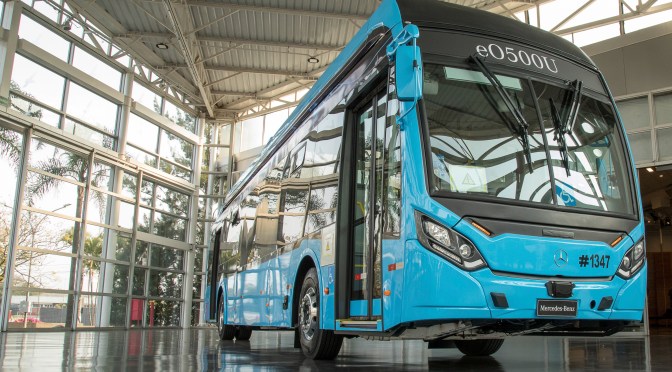
In that same year, the electric revolution also reached the O500, with the eO500U version, for urban transport. A platform on which Mercedes-Benz has invested heavily, with an investment of 19 million dollars, in addition to an extensive testing program carried out in both Brazil and Germany and now with demonstrations for operators.

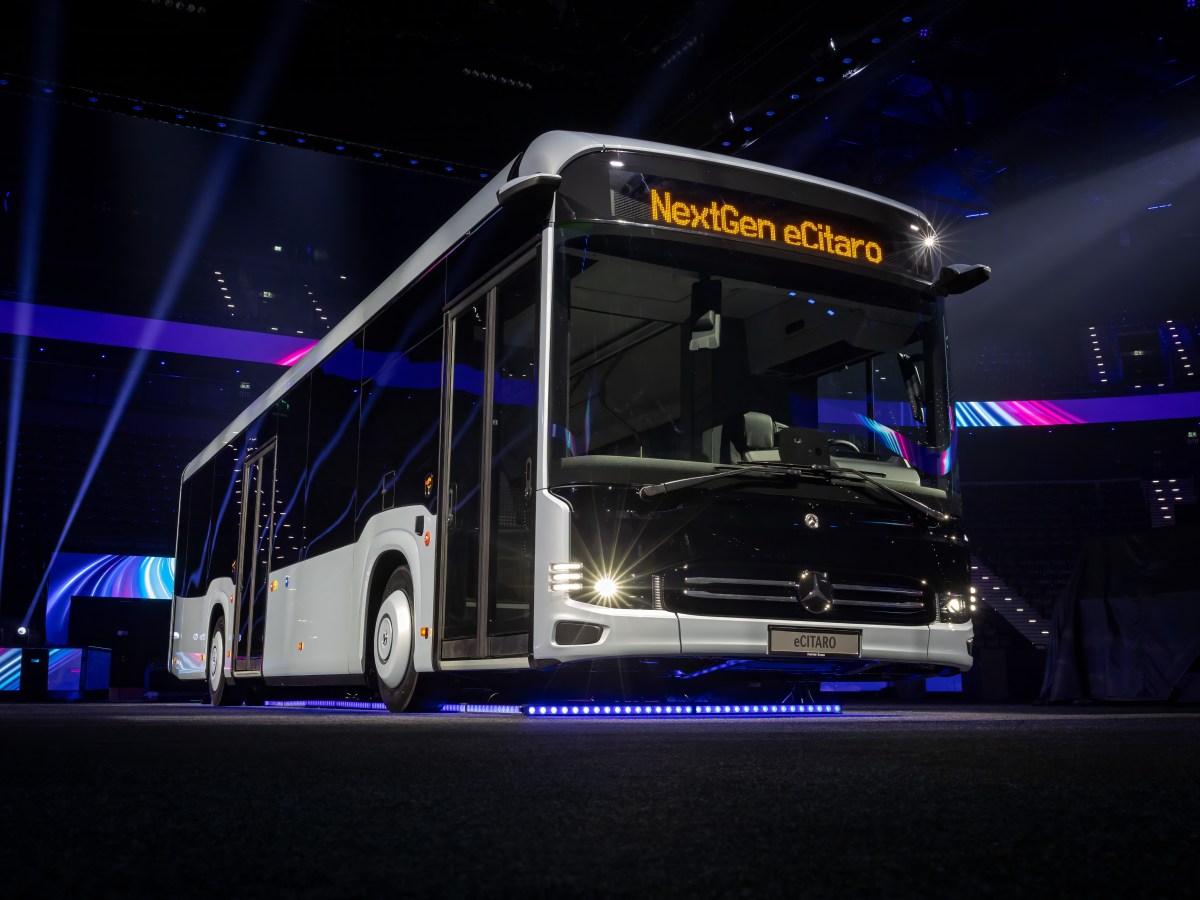
As the eO500U commercial breakthrough is a reality, Mercedes-Benz said that 100 orders for the eO500U electric chassis are already scheduled for delivery. The eO500U is the first Mercedes-Benz electric bus chassis in the country, symbolizing the brand’s entry into the era of electromobility in commercial vehicles in Brazil.

“The market is looking forward to the chassis of Mercedes-Benz electric buses starting in the second half of the year,” said the Vice President of Sales and Marketing of Trucks and Buses of Mercedes-Benz do Brasil, Roberto Leoncini. “We already have 100 orders scheduled for delivery between the end of 2022 and the beginning of 2023,” he added.

According to Mercedes-Benz, the bus chassis production at the São Bernardo do Campo plant is already preparing for the new product. “Industry 4.0 concepts in our company resulted in the flexibility of assembling several models on the same line. With this, we gain time in the preparation of the eO500U, making only the specific adjustments of an electric vehicle”, said the General Director of Buses Mercedes-Benz Latin America, Sérgio Magalhães. “We are also in an advanced stage of training the team of employees for the electric bus, which requires specific assembly safety knowledge. For that, we have the experience of colleagues from Daimler Truck and SENAI”, he added.

It must be remembered that although the initial configuration of the chassis is developed to build standard-type buses, this eO500U will have to expand the options for Latin operators, with articulated, super-articulated and bi-articulated versions.

ANKAI PREPARES THE DELIVERY OF 800 GAS UNITS TO THE STATE OF NUEVO LEON (MEXICO)

THE FIRST 100 UNITS HAVE ARRIVED

Colombiabus newsroom – Ankai Global

Ankai is one of the many Chinese companies dedicated to the production of buses, located in Hefei (Anhui) and belonging to the JAC group, which has had a significant penetration in several Latin American markets, with good results, especially in freight transport with tonnages small and medium. It can produce around 30,000 buses a year, and it also stands out for having received collaboration from the Germans Kassböhrer (Setra) in the 1990s, before being acquired by Daimler.

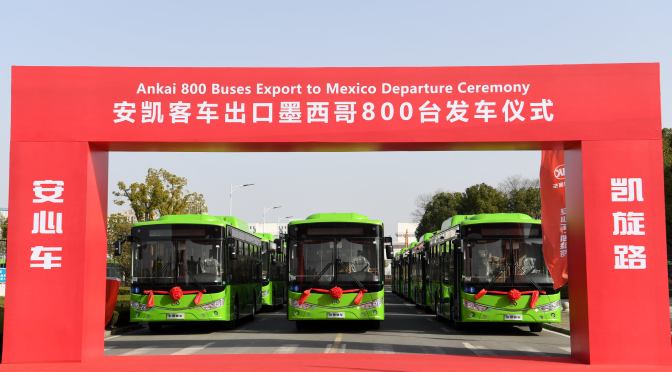
In Mexico, the brand’s representative is EGS Trucks, which is in charge of the entire sales, service and spare parts process for Ankai, in addition to Yuchai engines, which can also equip Chinese buses. Now the Chinese manufacturer reaches the big transport leagues in the country, after being awarded a contract for 800 units, for the Nuevo León transport system.

In a competition where four brands participated, in December 2021, the Thousand International Companies S.A. consortium was chosen. (Ticsa), which included the technology provided by Ankai. The Winner not only met the specifications, but also offered the best prices and conditions and was well below what was estimated by the state administration for the tender. The Secretary of Mobility announced that the first 100 units will arrive in Nuevo León in April and that the 800 buses will finish arriving in September, likewise, he declared that the buses will serve for the restructuring of public transport in the entity.

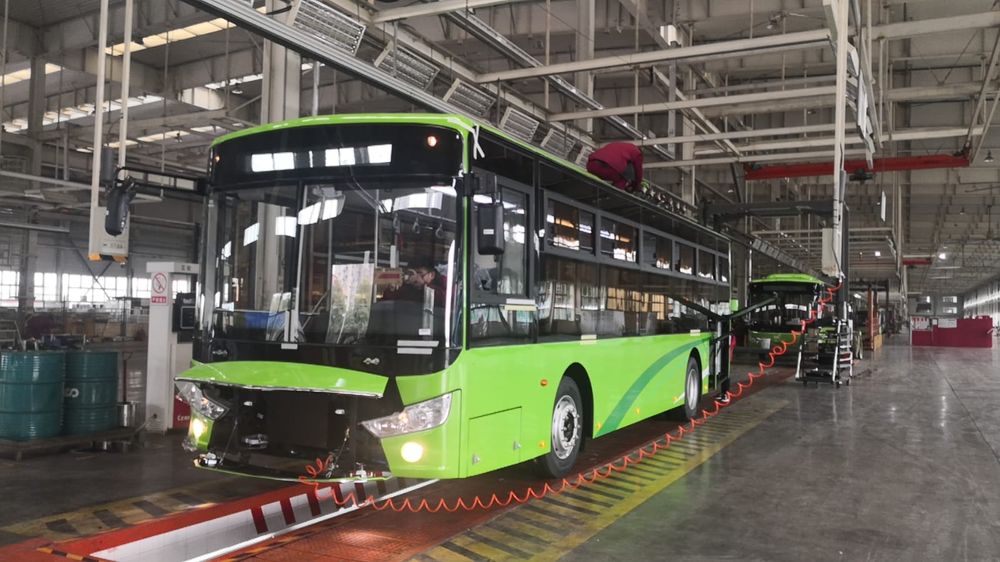
That first batch of 100 units must be delivered on April 23, then deliveries of 140 units will be made progressively each month, until they are completed by the month of September. The buses are being built at the Ankai plants, for later shipment by sea to Mexico.

The Ankai buses that will roll through the streets of Nuevo León correspond to the HK6105HGQ model, 10,500 mm long, 2,500 mm wide and with a maximum height of 3,250 mm and a maximum vehicle weight of 16,000 kg. They are powered by a 7.8-liter Yuchai YC6J245-50 engine, delivering 240 HP of power and 980 Nm of torque, complying with the Euro V emission standard. The 6 fuel storage tanks have a capacity of 120 liters each.

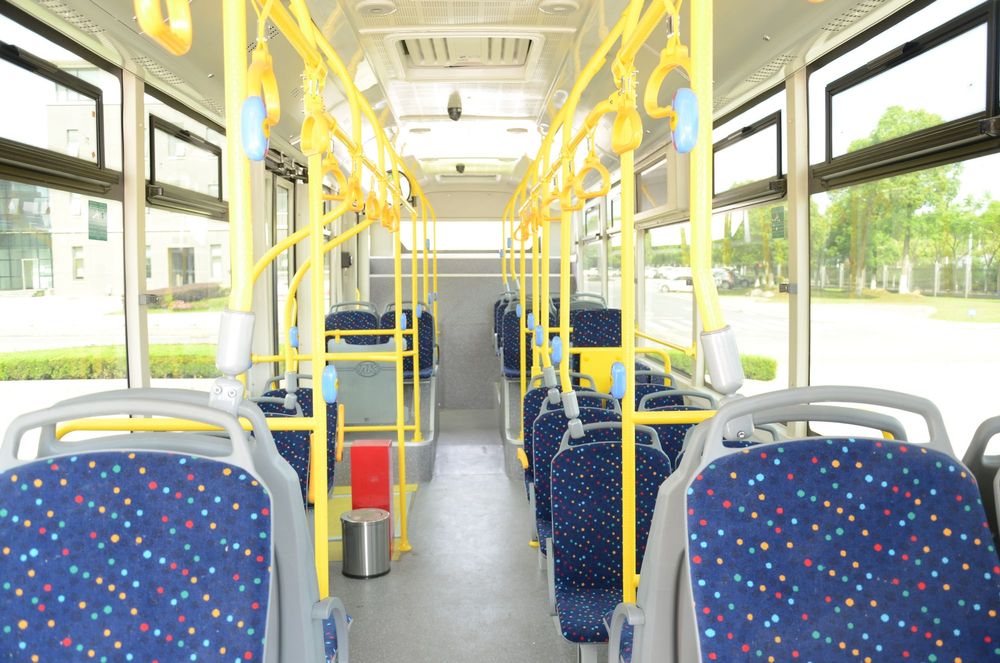
The vehicles will be able to transport up to 70 passengers, they have air conditioning, fire extinguishing system in the engine, USB recharging ports. The braking system is drum, with ABS and air dryer provided by Wabco, while the electromagnetic retarder system is of Telma origin.

FOTON WILL SUPPLY 991 ELECTRIC BUSES IN THE NEW BIDDING OF SANTIAGO DE CHILE

60% OF THE NEW TENDER WILL BE E-BUSES

Colombiabus newsroom – William Marroquín

A long process had to be followed for the General Comptroller of Chile to approve the tender that began in December 2020, to award more than 150 services for the Red Metropolitana de Movilidad system (formerly Transantiago). Finally, in February, the adjudication of the routes and zones was accepted, which will allow the arrival of 1,637 buses to the streets of the capital Santiago.

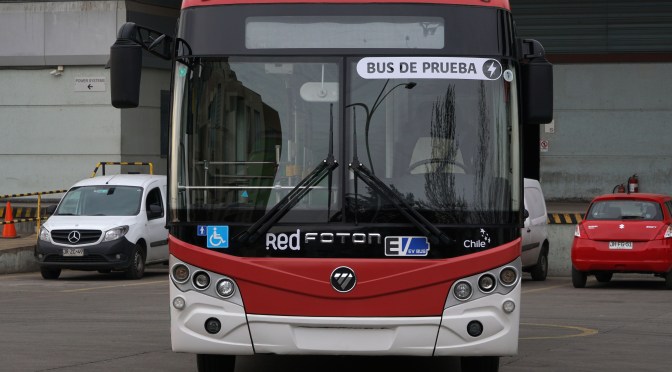
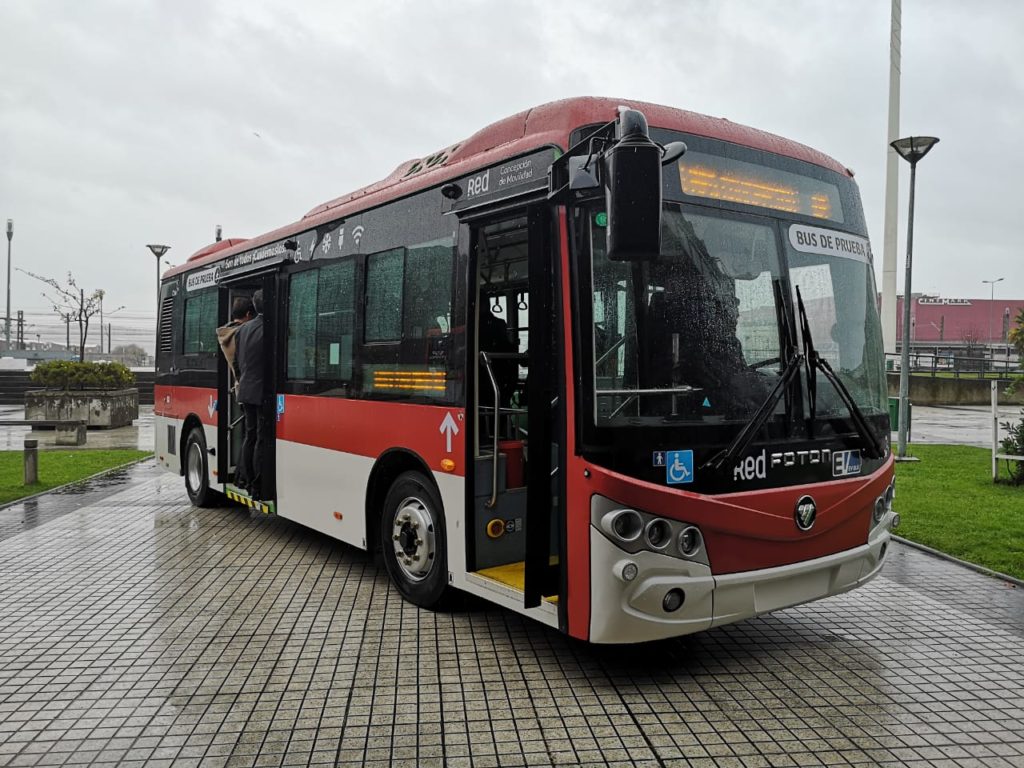
60% of the new buses that will be part of the landscape of the Chilean capital will be electric and from the Chinese brand Fotón, which with 991 units manages to take a very important share of the population of electric buses in Latin America, in which BYD has been dominating for several years.

TRANSDEV CONTINUES TO HAVE A PRESENCE IN CHILE

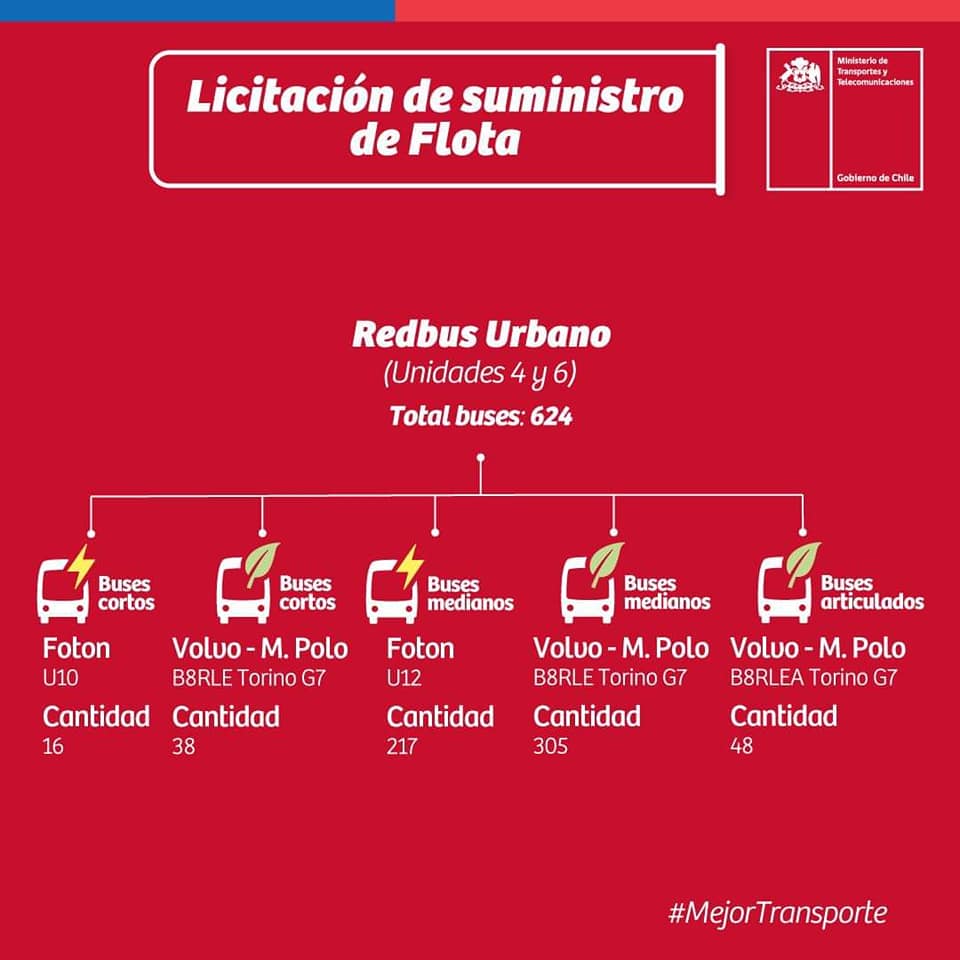
Units 4 and 6 will be in charge of Redbus Urbano, an operator belonging to the French mobility multinational Transdev, which owns 100% of the shares. It will combine its fleet with Euro 6 diesel buses, incorporating the Volvo B8R in standard and articulated low-floor versions, joining the Marcopolo bodies with its Torino urban model.

There will be 391 Euro 6 diesel buses (343 monobody buses and 48 articulated), which will be accompanied by the 233 Foton electric buses, of the U10 model that is equivalent to the small bus and the U12 that corresponds to the standard type. They will be integral (chassis and bodywork built at their plants in China). As has been done in tenders in other countries, such as Transmilenio in Bogotá, the companies that are in charge of supplying the fleet have been separated from those that operate, to facilitate financial closings and the assurance of resources to ask the factories the vehicles.

ARGENTINE INVESTMENT IN CHILE

Argentines also come to the operation of the Santiago BRT system, thanks to the Metropol Group subsidiary. This is a conglomerate that has distribution businesses for Toyota vehicles in Argentina, production and distribution of nuts, as well as public transportation. In this last area, it is responsible for more than 1,500 buses and mobilizes more than 230 million passengers a year.

Grupo Metropol, will serve Service Units 1 and 2, with the companies Buses Alfa and Buses Omega, respectively. Each of them will have 24 routes and the concessionaire will be able to operate them from the end of 2022, until the year 2029. There will be 293 Foton U12 electric buses with a maximum capacity of 90 passengers, 44 articulated buses and 89 Volvo B8RLE standards. All buses of the Swedish brand will be built in Brazil and bodied by Caio with its Mondego model.

THE CHILEAN CONTRIBUTION

The third consortium that will participate in the operation will be STP S.A. (Servicio de Transporte de Personas Santiago S.A.), which is made up entirely of Chilean capital. Its main shareholder is Empresa Nacional de Transprote de Pasajeros de Chile Ltda., with 47.83% of the company’s total shares and the rest, made up of groups of investors and real estate companies that have shares between 2.79% and 16.03%.

STP will deploy 547 buses, in Service Units 3 and 5, which have 52 routes assigned, combining an electric fleet with Euro 6 diesel. In this case, the difference will be with buses with an internal combustion engine, which will be Mercedes-Benz O500UA with flat low, whose chassis are built at the São Bernardo do Campo plant (State of São Paulo) to be bodied by Caio and its Mondego model.

Regarding electric buses, it will also trust Foton with 66 units that can transport up to 67 passengers and 399 that can travel with a maximum of 90 occupants. Both equipped with CATL batteries, Prestolite motors coupled to the rear wheels, air conditioning, pneumatic suspension, low floor and access ramp for people with reduced mobility.

When these buses are delivered, including the 991 electric ones, Santiago will regain first place in Latin America in the size of the zero-emission fleet rolling through its streets, as it will momentarily lose the leadership to Bogotá, which expects 830 BYD vehicles for the next few months zonal component of Transmilenio.