VOLVO RENUEVA CICLO DE INVERSIONES EN BRASIL POR US$ 283 MILLONES

LAS INVERSIONES ESTÁN PREVISTAS DE 2022 A 2025

Redacción Latinobus – Volvo Latin America

Volvo Latin America Group está renovando su tradicional ciclo de inversión en Brasil. La empresa invertirá 283 millones de dólares en sus operaciones en el país en el período 2022/2025. Los recursos se centran principalmente en la investigación y el desarrollo de nuevos productos y servicios. El anuncio se lanza con el balance positivo de 2021, el mejor año en la historia de Volvo desde que se instaló en Brasil.

En el segmento de camiones, Volvo fue líder con gran distancia, en la venta de vehículos pesados ​​en el país, con 17.980 unidades vehiculares matriculadas. El Volvo FH 540 volvió a ser el camión más vendido en Brasil, con 8.935 unidades matriculadas, número superior incluso a los camiones ligeros. Otro destaque fue el desempeño de las ventas de la línea Volvo VM, que creció 81% en matrículas, con 6.393 vehículos vendidos. En total, Volvo registró 21.823 camiones en el país en 2021, un crecimiento del 45,7% respecto al año anterior.

“Brasil mantuvo su importante posición como el segundo mayor mercado de camiones Volvo en el mundo, incluso en un momento de limitaciones por la pandemia y las restricciones de la cadena de suministro. Estamos orgullosos de celebrar el mejor año en la historia de la marca en el país. ”, celebra Wilson Lirmann, Presidente de Volvo Latin America Group.
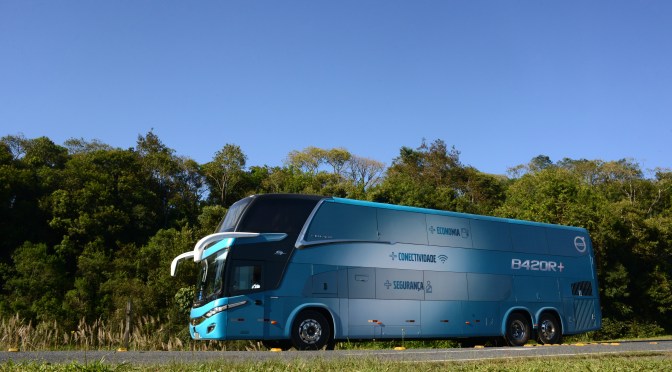
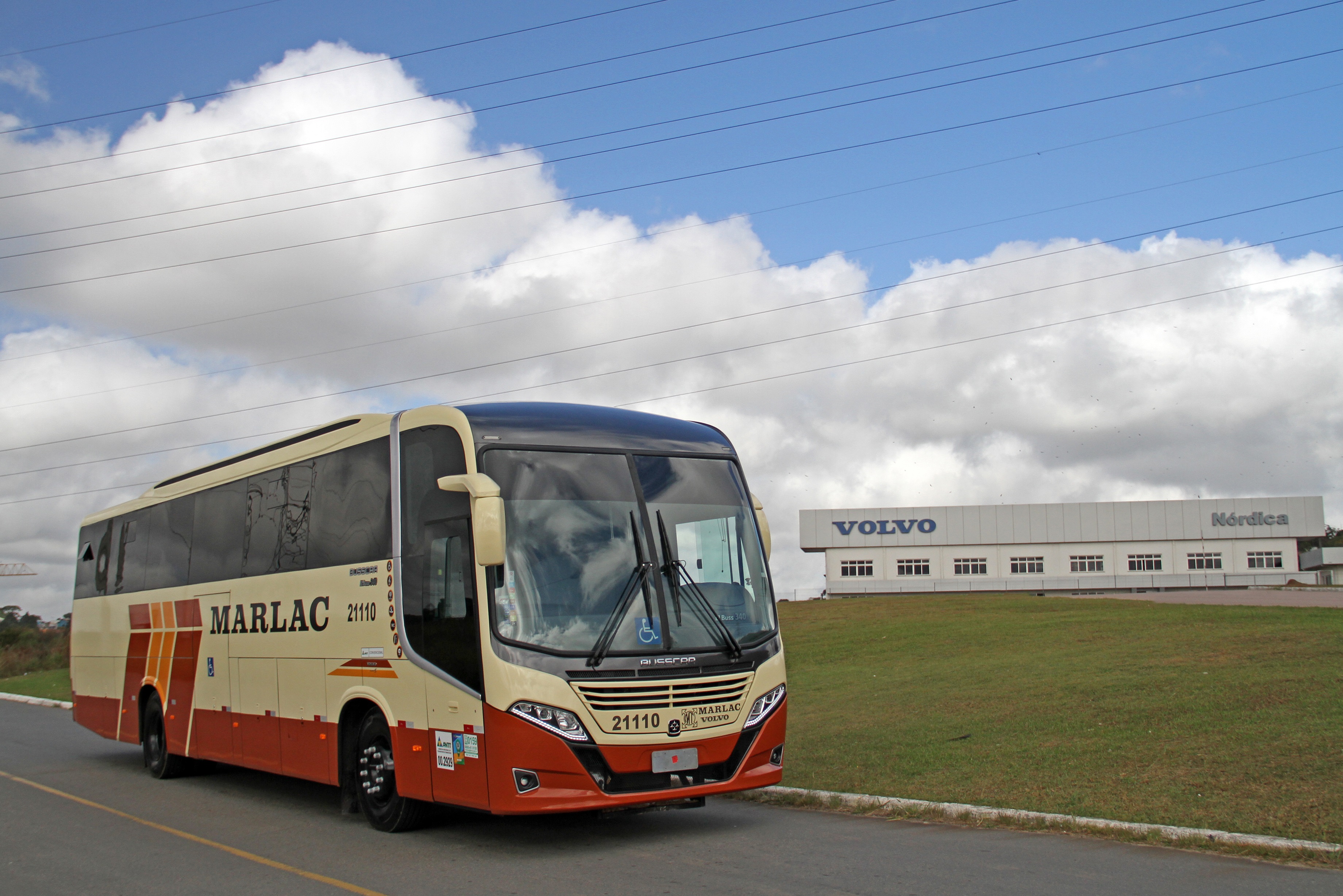
En buses, la marca logró buenos resultados, principalmente en el mercado externo. La división de autobuses entregó 1.180 chasis pesados ​​y semipesados ​​urbanos y rodoviarios. De ese total, 368 vehículos fueron matriculados en Brasil. Los 812 autobuses restantes se dirigieron a toda la región hispana de América Latina y varios países de África. En 2021, el 66% del negocio de autobuses salió de Brasil.

Otro hecho destacable de 2021 fue el ingreso de Volvo a la alianza “Zero Emission Bus Rapid-Deployment Accelerator” (aceleración para el uso de buses cero emisiones), una iniciativa entre varias instituciones para impulsar la implementación de buses cada vez más limpios en América Latina. Como primer paso, en enero de 2022 la marca comenzó a realizar pruebas con un chasis 100% eléctrico en Santiago de Chile. También en este primer semestre están programadas pruebas con el mismo vehículo en Bogotá.
Volvo Financial Services cerró 2021 con un récord de 906 millones de dólares en nuevas financiaciones, un 65 % más que el año anterior. El Consorcio Volvo alcanzó 283 millones de dólares en nuevas ventas, la mejor marca en 30 años, con un aumento del 20%. El volumen de nuevos seguros y renovaciones, que alcanzó USD 23 millones, superó los números de 2020 y 2013, hasta entonces el mejor desempeño histórico de la división de Corredores de Seguros Volvo.

La cartera total de activos administrados por Volvo Servicios Financieros alcanzó USD 2,3 billones, un aumento del 36% frente a 2020, incluyendo los resultados del consorcio, Finame, CDC y Leasing. Banco Volvo mantuvo una buena participación en el negocio de la empresa, financiando alrededor del 40% de los camiones, autobuses y maquinaria de construcción de la marca.

“El excepcional resultado de 2021 alimenta nuestra confianza y apuesta por el futuro. Por eso renovamos nuestro ciclo inversor en Latinoamérica con más R$ 1,5 mil millones (ciclo 2022/2025). Será un período de grandes transformaciones en la industria del transporte y Volvo seguirá trayendo muchas innovaciones en productos y servicios, en todos los segmentos en los que operamos”, concluye Wilson Lirmann.

SCANIA MEXICO DELIVERS ITS FIRST CHASSIS WITH THE MARCOPOLO G8 BODYWORK

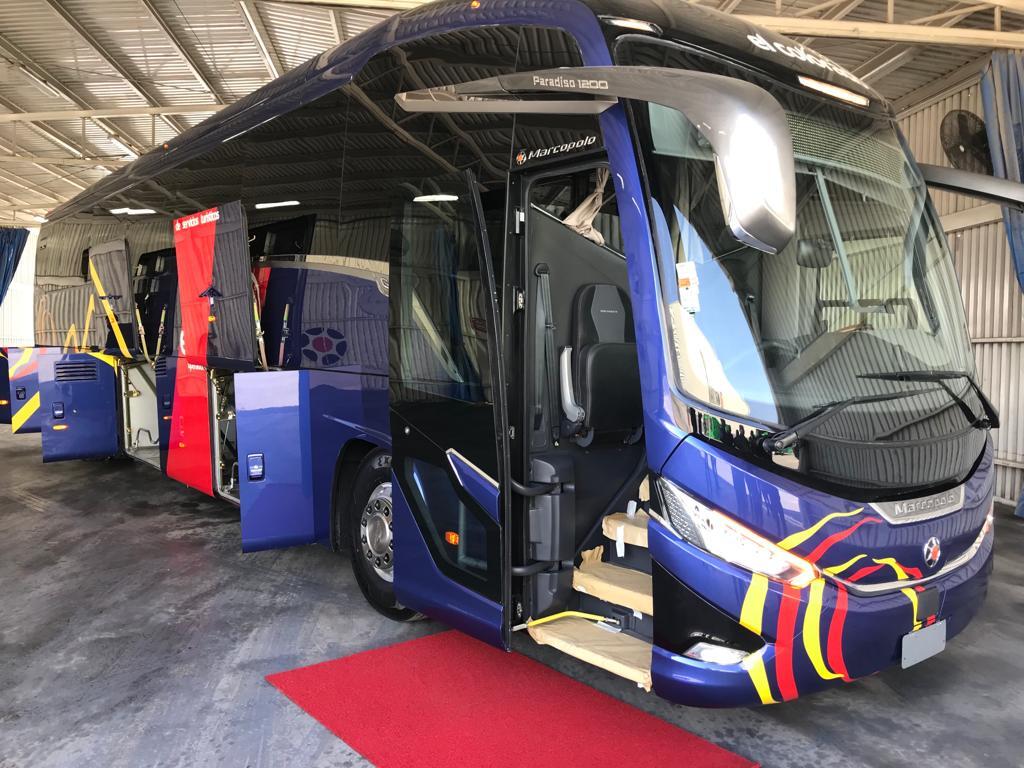
EL COLORADO TOURS LAUNCHES PARADISO 1200 G8

Latinobus newsroom – Scania México

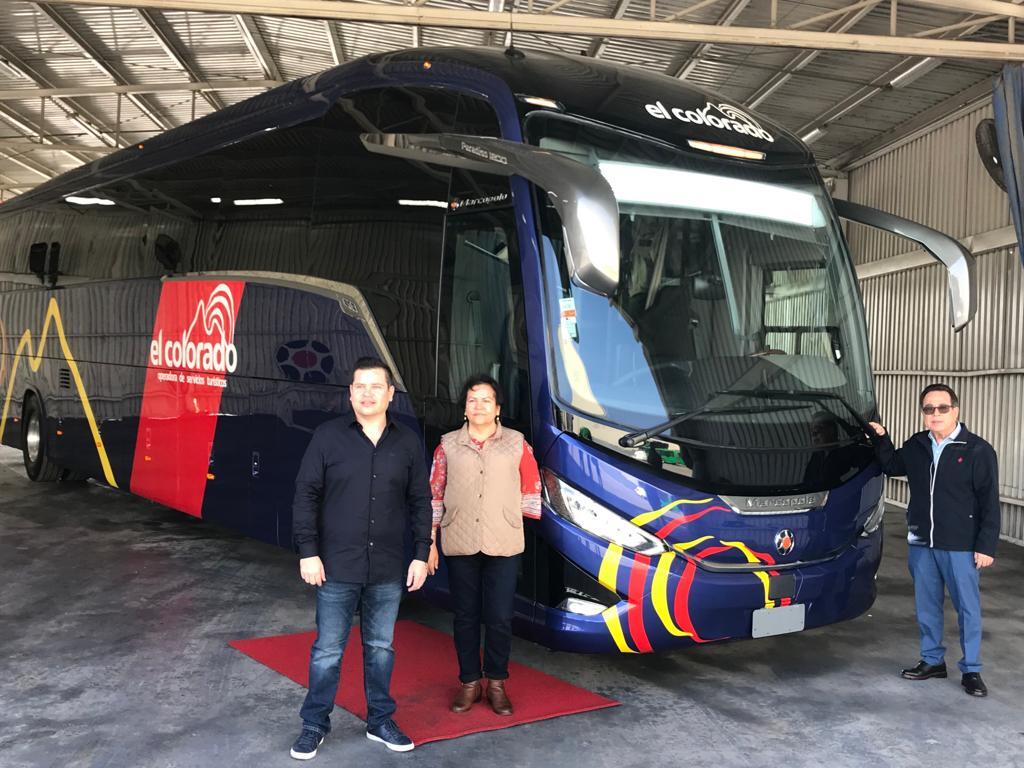
Scania delivered to the Chihuahuan company, El Colorado Tour, its first chassis that will be accompanied by the Marcopolo G8 bodywork, this time on the K450 chassis with its Euro 6 diesel engine.

This new bus will be making tours throughout the Republic, from Chihuahua to any point in Mexico. The Colorado Tour Buses is a local company that seeks to take tourism and business personnel through different routes, complying with the best industry standards.

“We are very happy with the acquisition of this Scania bus, we needed one for at least 50 passengers and without a doubt this bus has been our best option both for performance and for its sustainable and environmentally friendly technology. Likewise, we believe that the powertrain will provide us with a great benefit, it is a very competitive bus at market price.” Commented Mario Ruiz, Director of El Colorado Tours.

One of the great objectives of the Swedish brand is the reduction in the carbon footprint and the improvement of the environment, in addition, it seeks that each of its clients has a unique and quality service, in order to be part of the objectives of the clients, offering them confidence and security in the services. Under this premise, for the northern company, it was one of the factors for which they made their purchase decision, since it is important for them to offer their clients’ transportation options with lesser environmental impacts and thus contribute with their Socially Responsible Company certifications.

With this delivery, Scania reaffirms its commitment to Mexican carriers who are betting on having safer, cleaner, much more productive and efficient units, with all the comprehensive support of the brand in the country accompanying the new generation of transport in Mexico.

The Scania chassis corresponds to the K450EB 4X2 model, which stands out for its DC13 147 engines equipped with XPI ultra-high-pressure fuel injection, which allows these high power figures to be achieved and also 2,350Nm between 1,000 and 1,300 turns. It has the 12-speed Opticruise automated gearbox with its three operating programs (power, normal and economical) together with the retarder.

In the safety section, it has a very complete endowment, starting with the electronic braking system, four-wheel discs, ABS and traction control. As a complement, the ADAS system and its three components AICC (Intelligent Adaptive Cruise Control), LDW (Lane Departure Warning) and AEB (Advanced Emergency Braking) provide maximum peace of mind on the move.

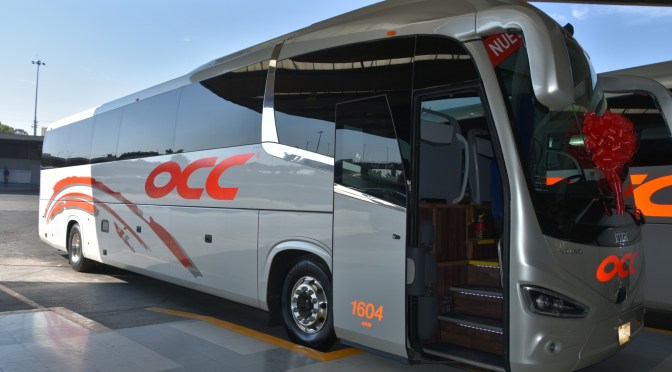
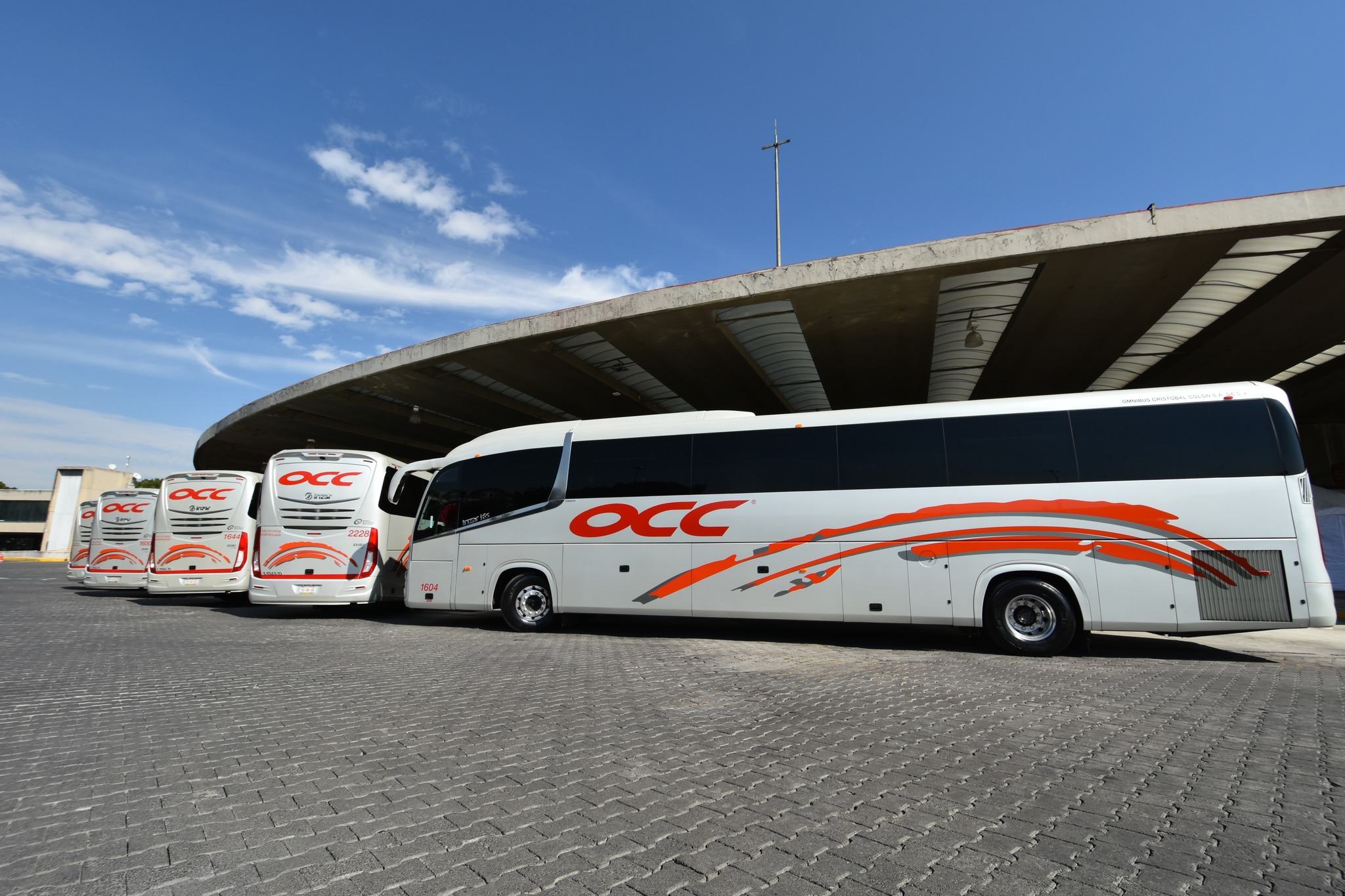
BUSES OCC DE MEXICO STRENGTHENS ITS COMMITMENT TO TRAVELERS BY INCORPORATING 20 NEW BUSES

THE COMPANY COMMITS TO THE VOLVO-IRIZAR TEAM

Latinobus newsroom – William Marroquín

The history of Omnibus Cristóbal Colón – OCC dates back to 1930, when a union of bus owners began to connect Mexico City with Cuautla and Cuernavaca in the state of Morelos, until its acquisition in 1988 by ADO (Autobuses Eastern). Today, OCC is one of the brands that is part of Mobility ADO, one of the main passenger transport conglomerates in the Aztec nation.

After the enormous difficulties that OCC had to overcome during the pandemic, which led to a drastic reduction in the operation of the fleet, the company is reunited with its allies and clients, to present its first incorporation in more than two years, with which It shows that he trusts the market and indicates that the most complicated days of this situation that changed the world seem to have been overcome.

“Today is a very important day, because when the pandemic started, the world stopped and with its mobility. Although we never stopped, there was a time when about 4,000 buses were not operating, but always trusting that we were going to get ahead. What we are presenting here is a reflection of the trust we have in Mexico, in the company and, above all, with the most significant thing that we have in our organization: our passengers. We believe that the only way to get ahead is with a lot of work, effort and dedication every day to show our passengers that traveling through southern Mexico with OCC is safe, viable, hygienic and that they can be very calm letting themselves be carried away by the experts, such as Autobuses OCC” mentioned Aldo Alarcón Vargas, General Director of Transportation at Mobility ADO.

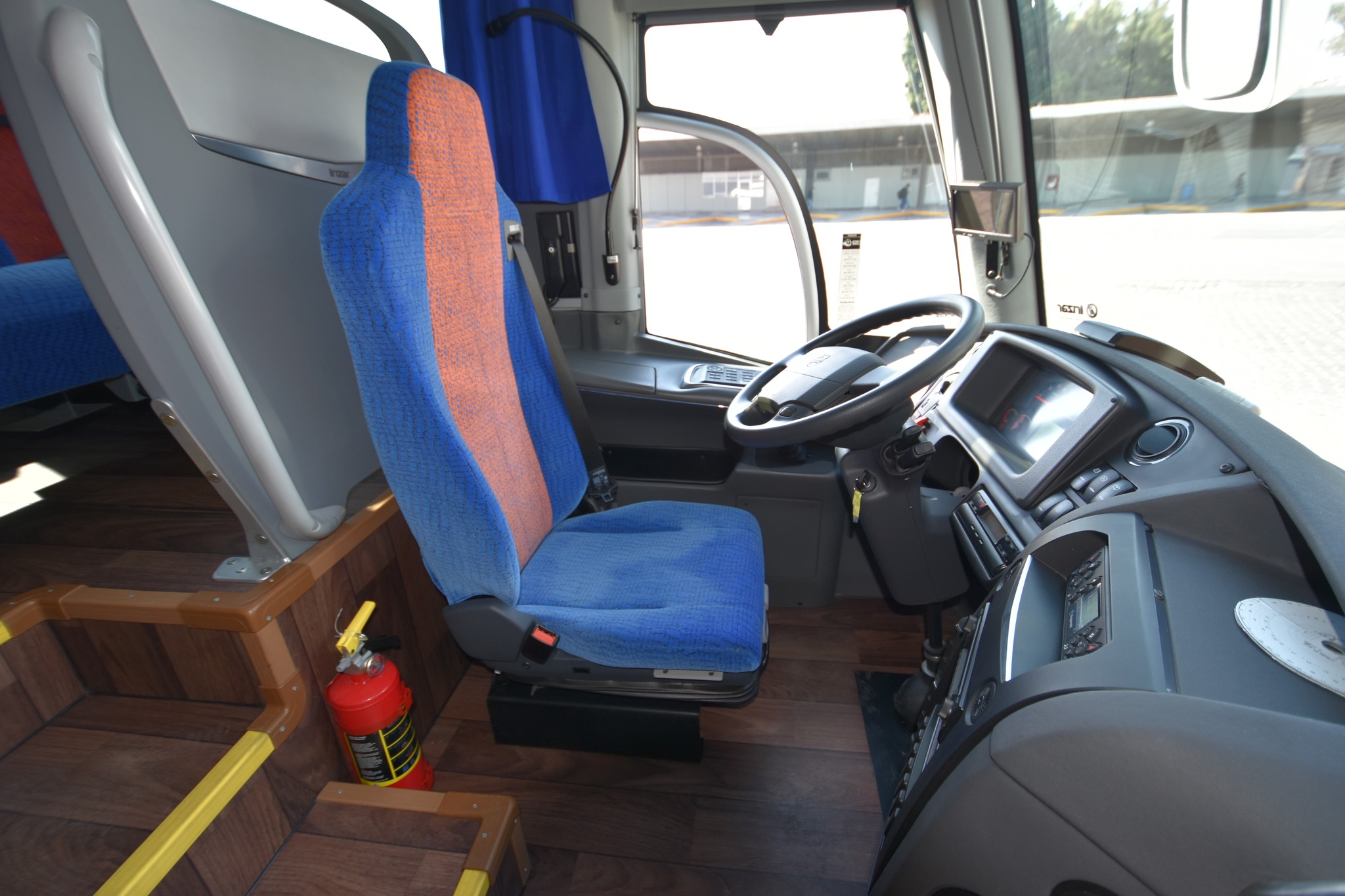
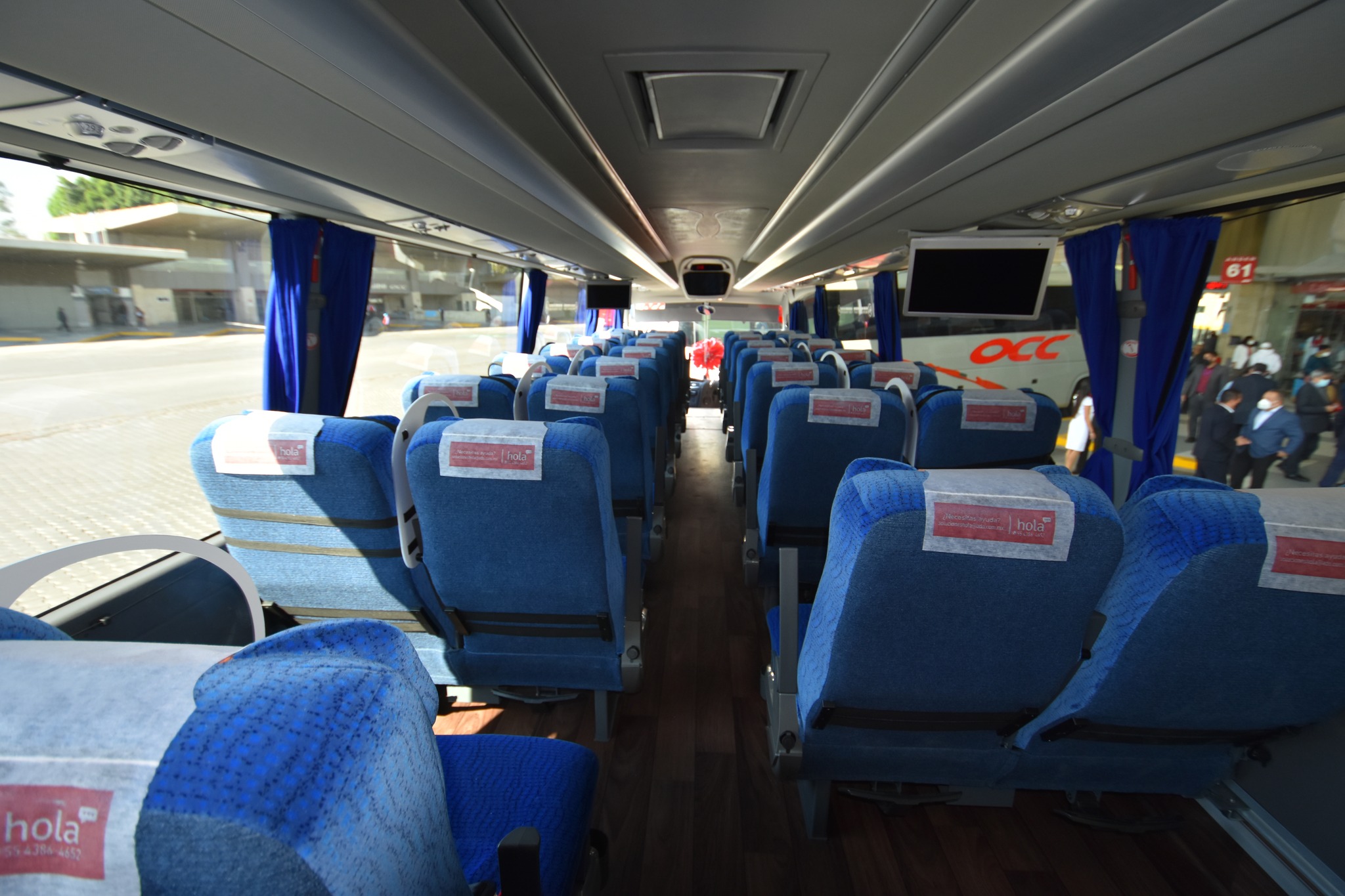
In that order of ideas, OCC has opted for one of the combinations preferred by transporters in Mexico in the last year, with the Volvo chassis that serves as a platform to receive the Irizar i6 body, receiving 20 buses with this specification, capable to carry up to 44 passengers and about 13,000 users per month.

The new units will travel to the states of Morelos, Oaxaca, Chiapas where there is informality and high competition. That is why OCC is aware that to endorse this commitment to its travelers, it not only implies incorporating new units, but also with a high-level service.

The Volvo chassis corresponds to the B11R 4X2 model with its 10,800cc, 6-cylinder D11C engine with turbocharger and intercooler, which also meets the Euro 5 emission standard. It delivers 410HP of power and 1,950Nm of torque, figures with which the bus will travel with plenty of capacity to move on any terrain. Additionally, it has a fault diagnosis system (multiplex), self-protection against overheating and low oil pressure, as well as engine fire detection sensors.

To guarantee peace of mind for the occupants, the bus is equipped with the Volvo disc brake system on all axles (EBS5- Electronic Braking System). With this you can control the ABS, the ASR (control
traction control), anti-slip system, pad wear sensors, intelligent braking combined with retarder, hill start assist and emergency braking system. The latter includes involuntary lane departure warning, adaptive cruise control and activation of automatic braking when a risk of collision is noticed.

The Irizar i6 body has been the second best-selling body by the Spanish manufacturer in Mexico, following the i5, which is designed for cheaper service lines. The bus has a toilet, 22-inch and 19-inch environmental entertainment screens, USB connections to recharge devices and air conditioning provided by Hispacold (also belonging to the same Irizar business group).

In this way, 2022 begins with the right foot in the highway transport (foreign) of Mexico, which will generate a lot of news due to the arrival of new players in the market, the struggle of the competitors not to lose position and in the same way, if Volvo will continue as leader in the highway segment as it did during 2021, surprising the Aztec market.

HIGER WILL HAVE AN ARTICULATED ELECTRIC BUS RUNNING IN BRAZIL AND URUGUAY BY JULY

THE BUS WILL COME 100% MADE IN CHINA

Colombiabus newsroom – Higer do Brasil / William Marroquín

The Chinese bus manufacturer Higer, belonging to the same group that manufactures the King Long and Golden Dragon brands, continues to show that it has great ambitions in the electrification of public transport in Latin America.

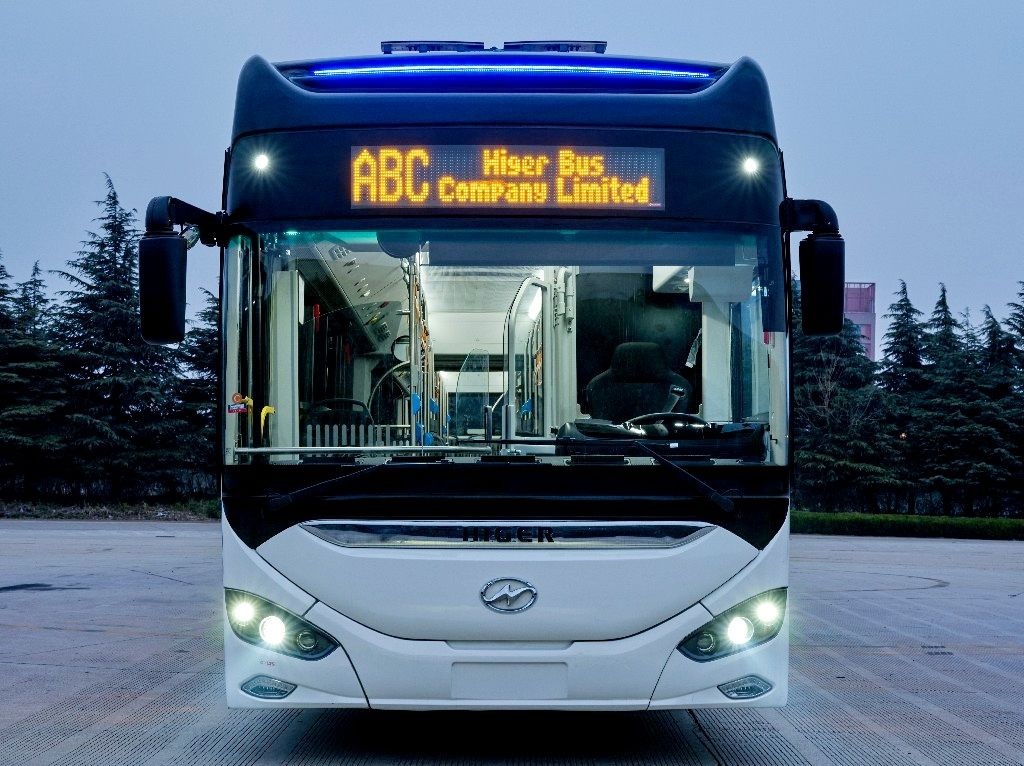
In November 2021, the official presentation of the Higer Azure 12BR electric standard was held in Brazil, in an event chaired by the Mayor of São Paulo. This 12.2 meter long vehicle capable of transporting up to 70 passengers is being demonstrated and tested on the routes of Transwolff, the public transport operator of the great Brazilian metropolis.

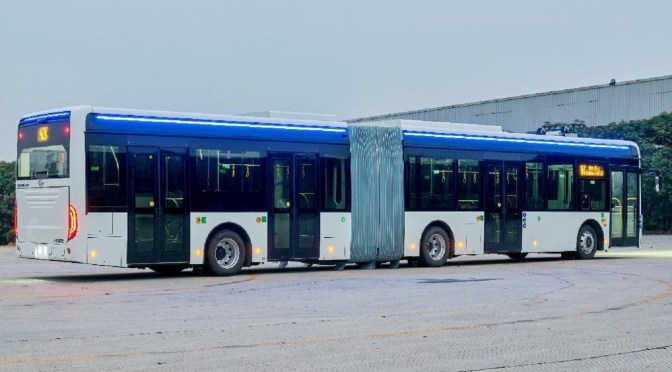
The next step will be the arrival of the Higer Azure 18BR articulated electric bus, the name by which it will be known in Brazil, since its name in China is KLQ6186GEV. The double-body version is essential for the development of BRT (Rapid Transit Bus – in Spanish) systems in Latin American cities, since in many cities, this type of bus is the majority. In Brazil alone, there are to date 94 lines of this type, in 24 cities, thus also the interest of the Chinese manufacturer and its representative in the country, TEVX.

The Azure 18BR is 18,750 mm long, 2,550 mm wide, and 3,390 mm wide; It is capable of supporting a gross vehicle weight of 33,500Kg, obviously influenced by the batteries. These accumulators are provided by CATL, with a capacity of 516Kwh, which allow an average autonomy of 270Km and to fully recharge, they need 3.5 hours.

Major brands in the automotive industry contribute to the development of this electric articulated bus: Dana with the generator, ZF with the air suspension, Wabco disc brakes, air conditioning manufactured by Valeo, Bosch power steering and special Michelin tires for urban use.

The Azure 18BR also stands out for its completely low-floor platform even at the rear doors, providing maximum accessibility, although it can be adapted for systems in other cities, whose stations are not at ground level. The bus will have all the equipment for the comfort of the 154 passengers it can carry, as specified by SP Trans, manager of public transport in São Paulo: air conditioning, USB charging ports, free Wi-Fi internet connection and tinted windows.

The model is integral, with chassis and bodywork built in China, which continues to generate controversy in a country like Brazil, where importers are tightly controlled and where its population travels in 100% local buses. The bus that will arrive in July will not be alone, as a second Azure 18BR will be tested on urban routes in Uruguay.