Tag Archives: Busworld Buenos Aires 2022

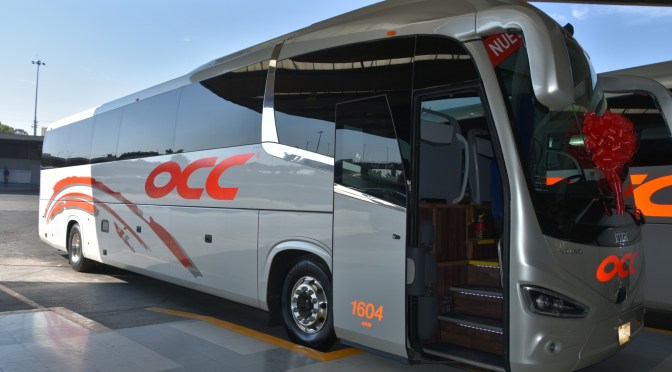
BUSES OCC DE MEXICO STRENGTHENS ITS COMMITMENT TO TRAVELERS BY INCORPORATING 20 NEW BUSES

THE COMPANY COMMITS TO THE VOLVO-IRIZAR TEAM

Latinobus newsroom – William Marroquín

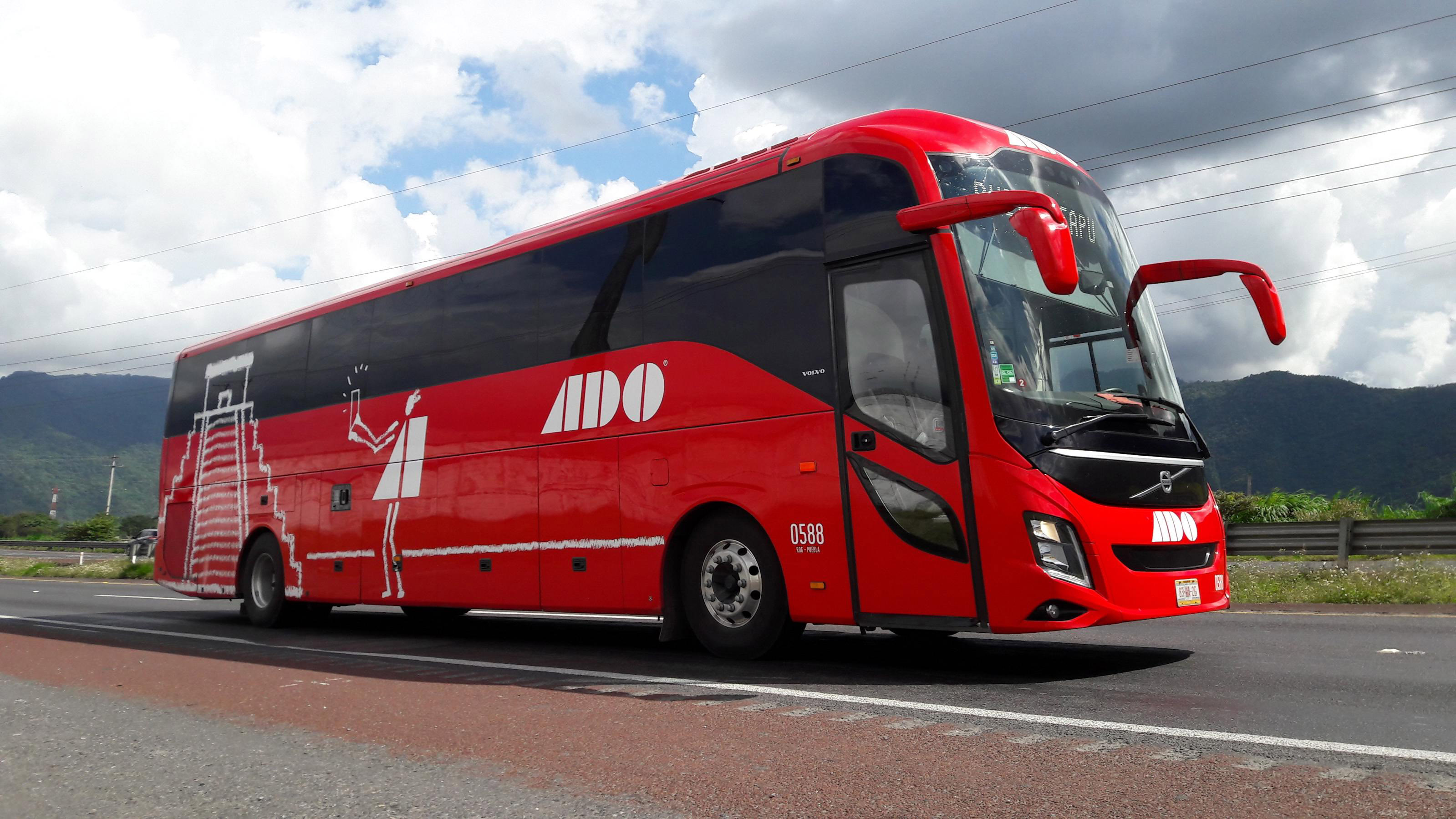
The history of Omnibus Cristóbal Colón – OCC dates back to 1930, when a union of bus owners began to connect Mexico City with Cuautla and Cuernavaca in the state of Morelos, until its acquisition in 1988 by ADO (Autobuses Eastern). Today, OCC is one of the brands that is part of Mobility ADO, one of the main passenger transport conglomerates in the Aztec nation.

After the enormous difficulties that OCC had to overcome during the pandemic, which led to a drastic reduction in the operation of the fleet, the company is reunited with its allies and clients, to present its first incorporation in more than two years, with which It shows that he trusts the market and indicates that the most complicated days of this situation that changed the world seem to have been overcome.

“Today is a very important day, because when the pandemic started, the world stopped and with its mobility. Although we never stopped, there was a time when about 4,000 buses were not operating, but always trusting that we were going to get ahead. What we are presenting here is a reflection of the trust we have in Mexico, in the company and, above all, with the most significant thing that we have in our organization: our passengers. We believe that the only way to get ahead is with a lot of work, effort and dedication every day to show our passengers that traveling through southern Mexico with OCC is safe, viable, hygienic and that they can be very calm letting themselves be carried away by the experts, such as Autobuses OCC” mentioned Aldo Alarcón Vargas, General Director of Transportation at Mobility ADO.
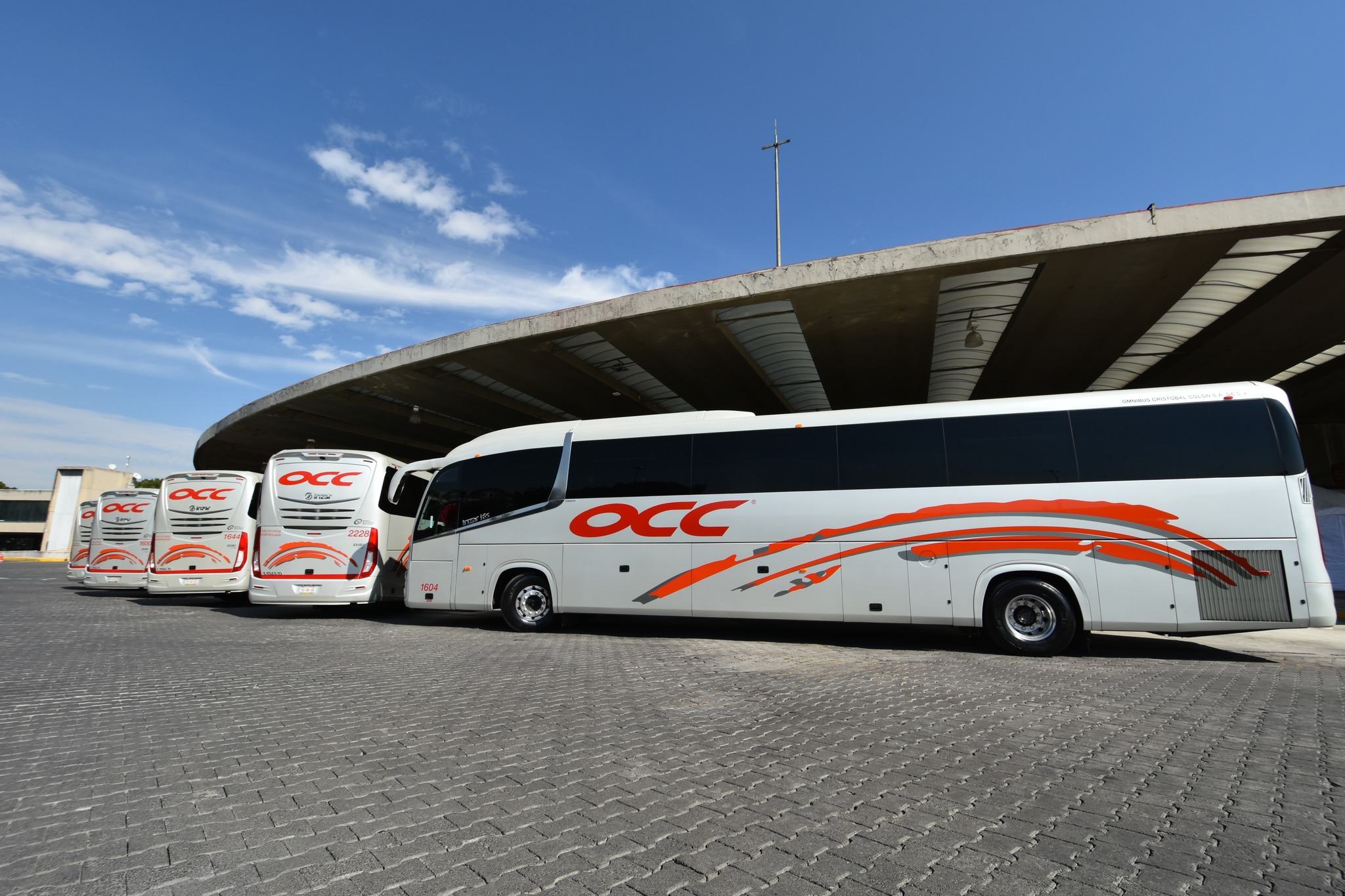
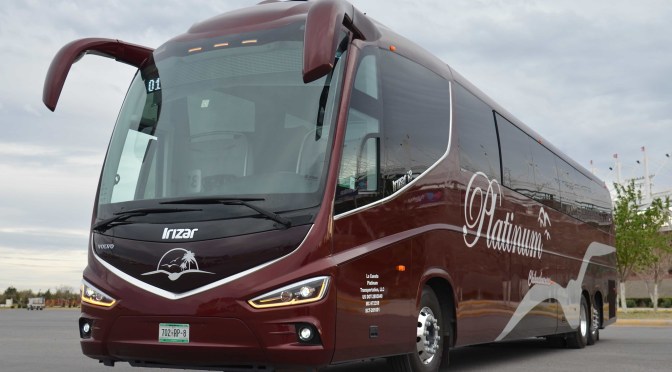
In that order of ideas, OCC has opted for one of the combinations preferred by transporters in Mexico in the last year, with the Volvo chassis that serves as a platform to receive the Irizar i6 body, receiving 20 buses with this specification, capable to carry up to 44 passengers and about 13,000 users per month.

The new units will travel to the states of Morelos, Oaxaca, Chiapas where there is informality and high competition. That is why OCC is aware that to endorse this commitment to its travelers, it not only implies incorporating new units, but also with a high-level service.

The Volvo chassis corresponds to the B11R 4X2 model with its 10,800cc, 6-cylinder D11C engine with turbocharger and intercooler, which also meets the Euro 5 emission standard. It delivers 410HP of power and 1,950Nm of torque, figures with which the bus will travel with plenty of capacity to move on any terrain. Additionally, it has a fault diagnosis system (multiplex), self-protection against overheating and low oil pressure, as well as engine fire detection sensors.
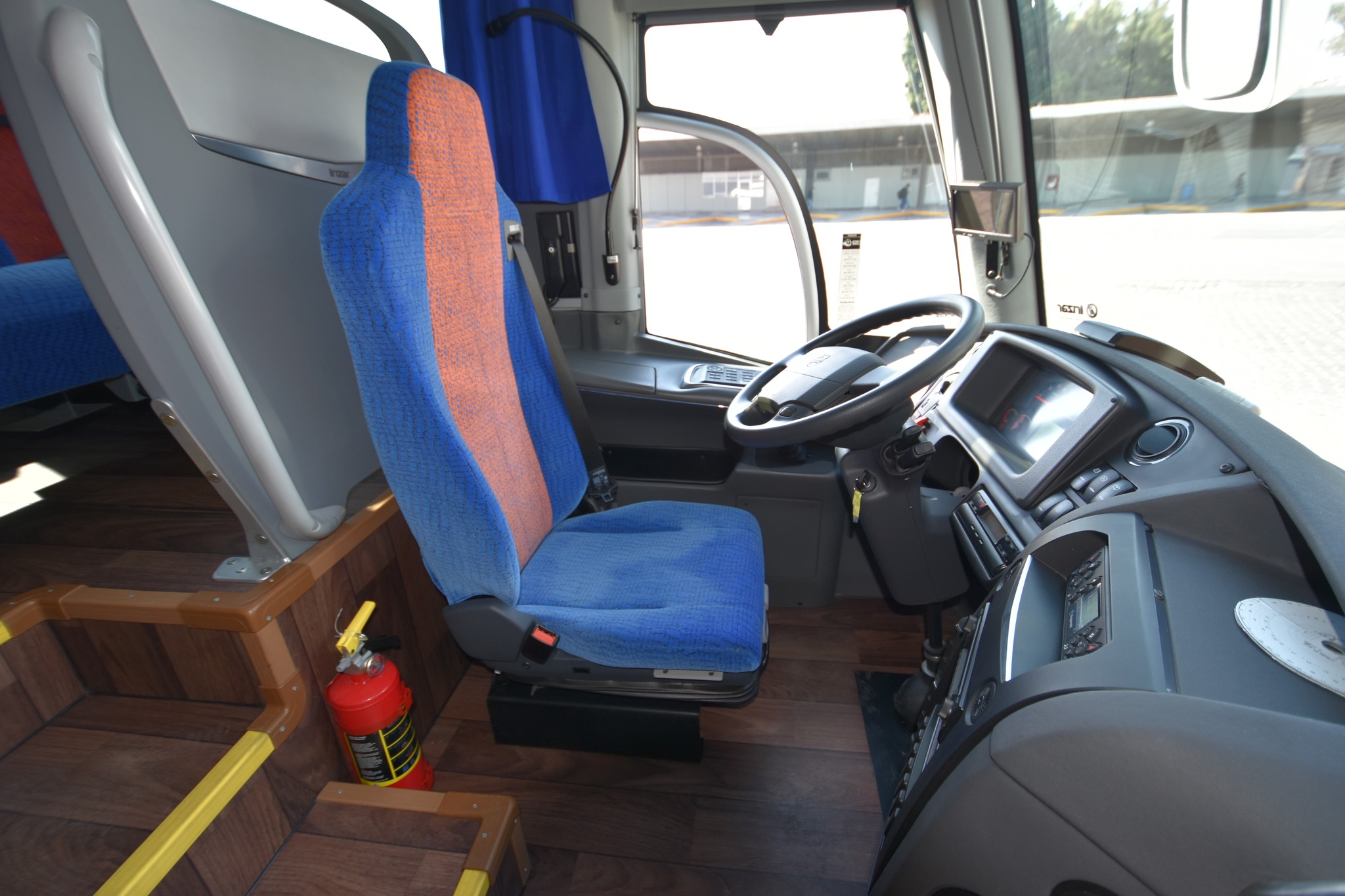
To guarantee peace of mind for the occupants, the bus is equipped with the Volvo disc brake system on all axles (EBS5- Electronic Braking System). With this you can control the ABS, the ASR (control
traction control), anti-slip system, pad wear sensors, intelligent braking combined with retarder, hill start assist and emergency braking system. The latter includes involuntary lane departure warning, adaptive cruise control and activation of automatic braking when a risk of collision is noticed.

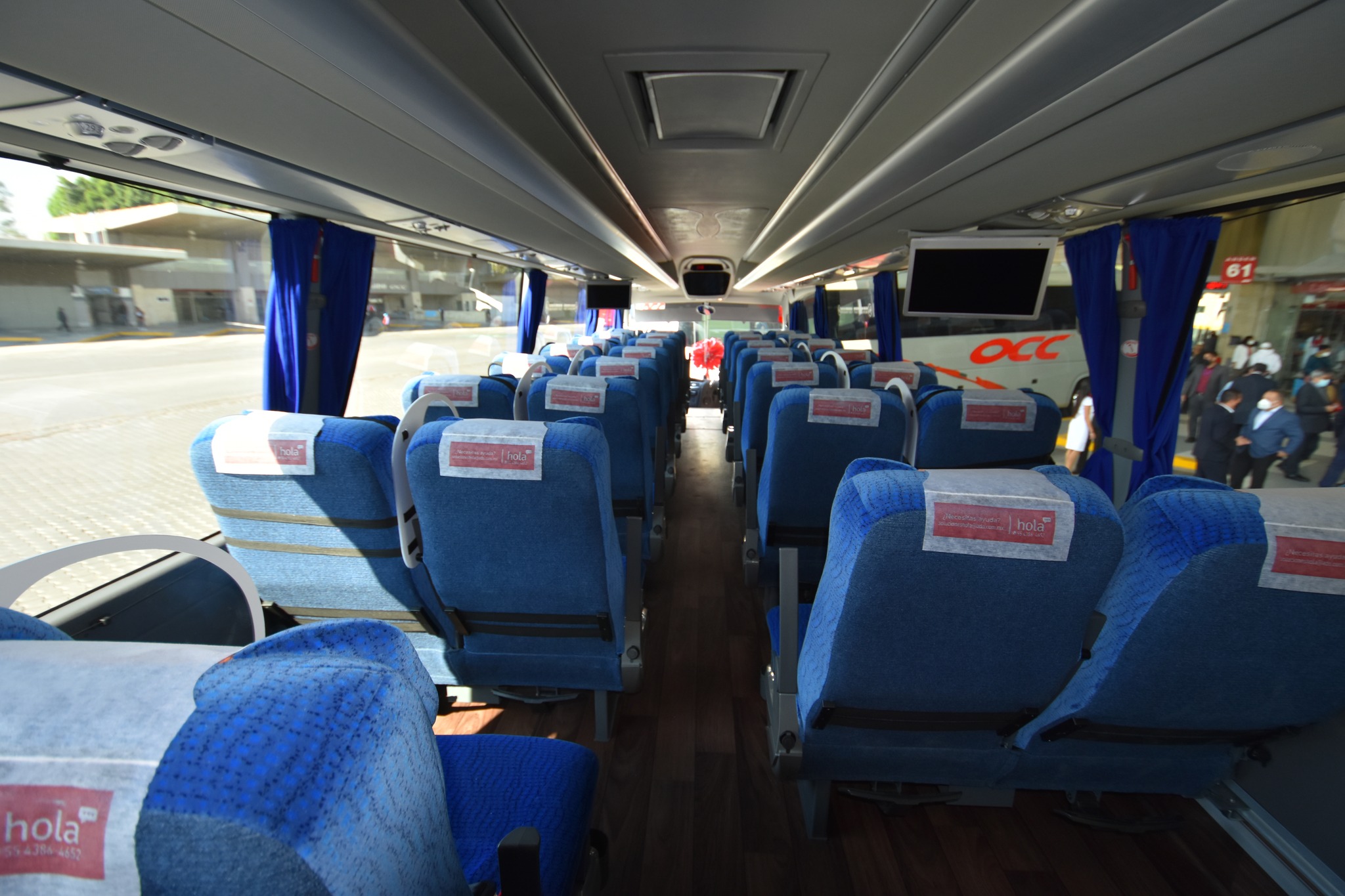
The Irizar i6 body has been the second best-selling body by the Spanish manufacturer in Mexico, following the i5, which is designed for cheaper service lines. The bus has a toilet, 22-inch and 19-inch environmental entertainment screens, USB connections to recharge devices and air conditioning provided by Hispacold (also belonging to the same Irizar business group).
In this way, 2022 begins with the right foot in the highway transport (foreign) of Mexico, which will generate a lot of news due to the arrival of new players in the market, the struggle of the competitors not to lose position and in the same way, if Volvo will continue as leader in the highway segment as it did during 2021, surprising the Aztec market.
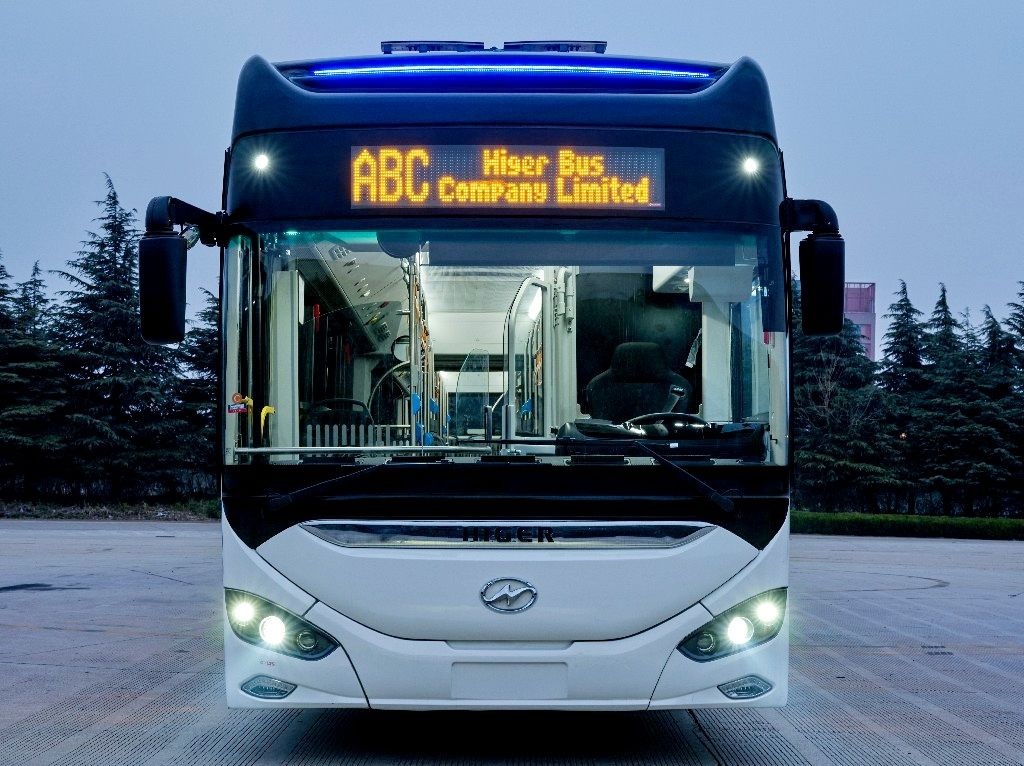
HIGER WILL HAVE AN ARTICULATED ELECTRIC BUS RUNNING IN BRAZIL AND URUGUAY BY JULY

THE BUS WILL COME 100% MADE IN CHINA

Colombiabus newsroom – Higer do Brasil / William Marroquín

The Chinese bus manufacturer Higer, belonging to the same group that manufactures the King Long and Golden Dragon brands, continues to show that it has great ambitions in the electrification of public transport in Latin America.

In November 2021, the official presentation of the Higer Azure 12BR electric standard was held in Brazil, in an event chaired by the Mayor of São Paulo. This 12.2 meter long vehicle capable of transporting up to 70 passengers is being demonstrated and tested on the routes of Transwolff, the public transport operator of the great Brazilian metropolis.

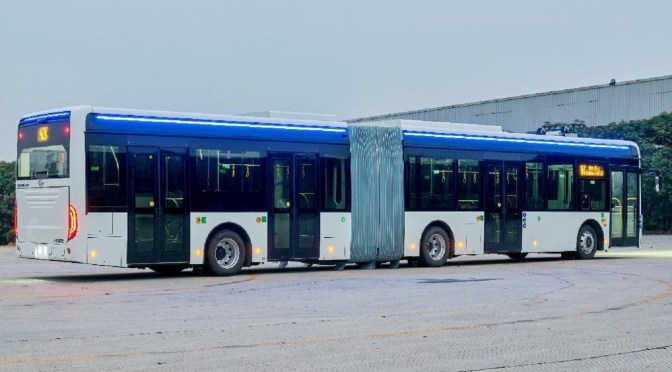
The next step will be the arrival of the Higer Azure 18BR articulated electric bus, the name by which it will be known in Brazil, since its name in China is KLQ6186GEV. The double-body version is essential for the development of BRT (Rapid Transit Bus – in Spanish) systems in Latin American cities, since in many cities, this type of bus is the majority. In Brazil alone, there are to date 94 lines of this type, in 24 cities, thus also the interest of the Chinese manufacturer and its representative in the country, TEVX.

The Azure 18BR is 18,750 mm long, 2,550 mm wide, and 3,390 mm wide; It is capable of supporting a gross vehicle weight of 33,500Kg, obviously influenced by the batteries. These accumulators are provided by CATL, with a capacity of 516Kwh, which allow an average autonomy of 270Km and to fully recharge, they need 3.5 hours.

Major brands in the automotive industry contribute to the development of this electric articulated bus: Dana with the generator, ZF with the air suspension, Wabco disc brakes, air conditioning manufactured by Valeo, Bosch power steering and special Michelin tires for urban use.

The Azure 18BR also stands out for its completely low-floor platform even at the rear doors, providing maximum accessibility, although it can be adapted for systems in other cities, whose stations are not at ground level. The bus will have all the equipment for the comfort of the 154 passengers it can carry, as specified by SP Trans, manager of public transport in São Paulo: air conditioning, USB charging ports, free Wi-Fi internet connection and tinted windows.

The model is integral, with chassis and bodywork built in China, which continues to generate controversy in a country like Brazil, where importers are tightly controlled and where its population travels in 100% local buses. The bus that will arrive in July will not be alone, as a second Azure 18BR will be tested on urban routes in Uruguay.

MARCOPOLO EXPANDS THE OPTIONS OF GENERATION 8 WITH ITS PARADISO 1600 LD

AVAILABLE FROM THE SECOND QUARTER OF 2022

Colombiabus newsroom– Marcopolo S.A.

By 2022, there is expected to be a significant improvement in demand for road travel around the world. The highway bus segment contracted significantly during 2020 and much of 2021, and only the end of the previous year showed that a firm recovery must begin. Marcopolo, moved in that direction and in the middle of the previous year presented the new Generation 8, which has the challenging task of surpassing what the G7 left (which is still marketed in many markets), especially in the western hemisphere, where it is the bus bestseller.

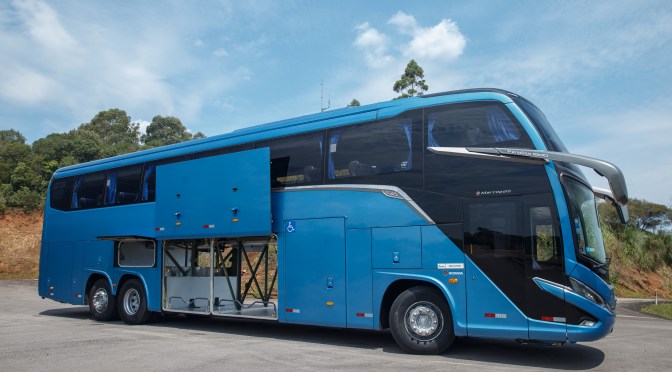
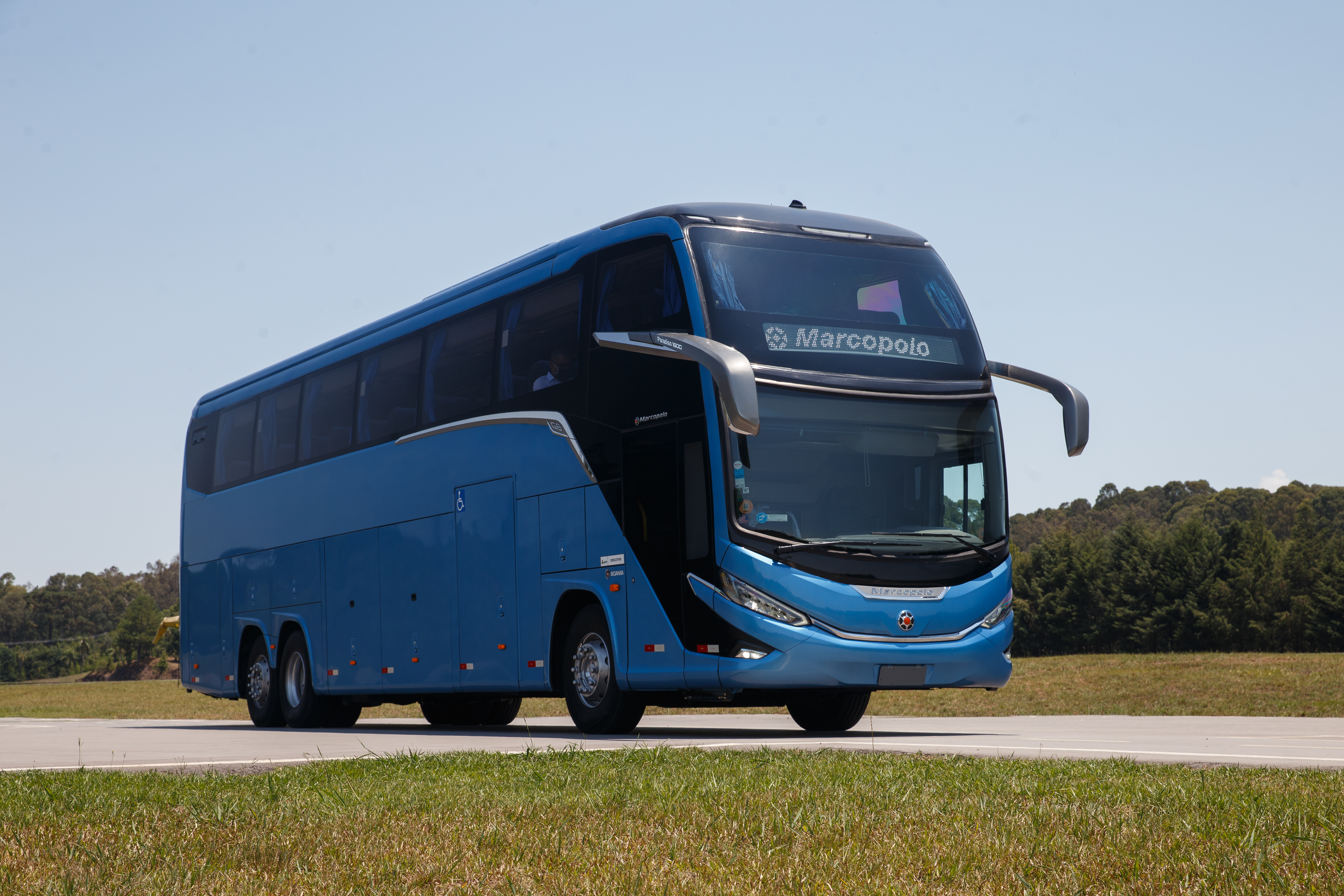
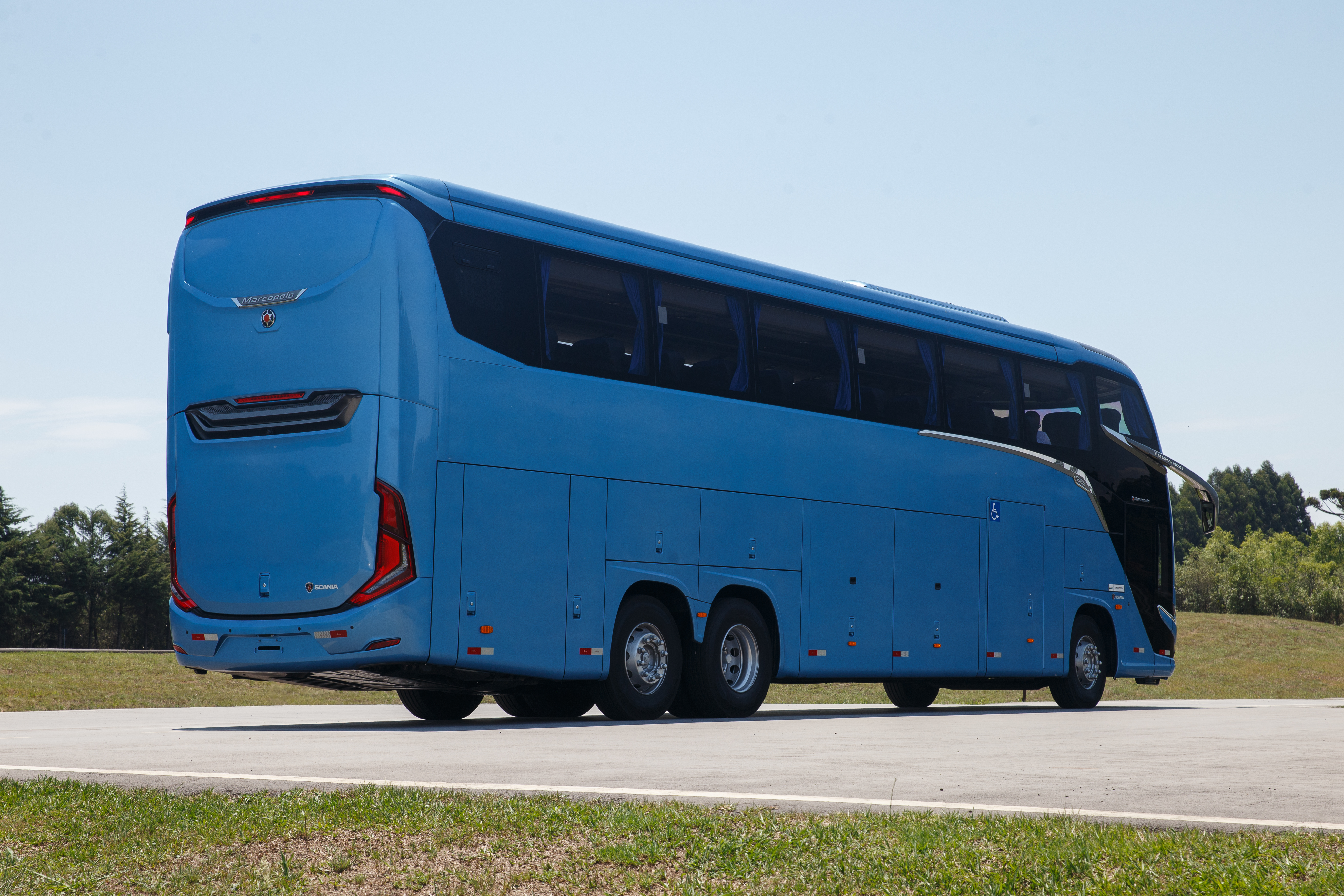
In July 2021, the Paradiso 1050, 1200, 1350 and 1800DD arrived, becoming the first options of the new generation 8, which are now complemented by the Paradiso 1600LD, the road bus with the largest hold capacity on the market. The model, which can be produced with different brands of chassis in the 6×2 configuration and also 8×2 for some markets, maintains the characteristics of safety, comfort and space, combined with innovation and technology to offer a better experience to passengers and drivers, with a model of high operational efficiency on medium and long-distance highway routes.

“We develop all the Generation 8 models focused on excellence and maximum efficiency of the operation so that our clients obtain better commercial results”, highlights Ricardo Portolan, Director of Commercial Operations of the Internal Market and Marketing of Marcopolo.

The model incorporates all the technologies and design of the Marcopolo DNA introduced in the previous models of the Generation 8 launched in July 2021. The front grille and bumper with greater volume, robustness and the use of new external materials increase the durability of the assemblies. More than 140 innovations generate positive impacts for drivers, passengers and transporters, the elegant and modern style with a drag coefficient of only 0.379. Additionally, the optional full LED headlights, with efficiency up to 3.5 times higher than other buses on the market, and a structure that increases the passive safety of the driver.

The Paradiso G8 1600 LD also offers the Marcopolo Biosafe solutions package, designed to make public transport safer against viral and bacterial contamination, incorporating solutions focused on biosafety. Optional elements such as toilet disinfection and air conditioning using UV-C light, antimicrobial finishes, 1x1x1 layout and alcohol gel dispensers continue to be available.

ORIENTED TO COMFORT AND SAFETY

One of the most important aspects in the development of the new project was the attention paid to safety and accessibility, both for drivers and passengers. The Low Drive version has a redesigned driver’s cabin with a lower instrument panel and left-side refrigerator and USB socket; larger visible area on the right side and glass partition wall, improving visibility and maneuverability for the driver. The cab door opening is larger for comfort and convenience, along with the completely revised upper instrument panel.

Also in the new Paradiso G8 1600 LD, every detail was designed to optimize the passenger experience, facilitating access to the passenger lounge, providing attributes of thermoacoustic comfort, seats that focus on ergonomics, in addition to the biolight concept, which adjusts interior lighting according to the time of day for visual comfort of the occupants.

A model that is in the final phase of homologation to be offered in all markets from the second quarter of 2022, with which Generation 8 is completed, with options for short, medium and long distance routes, in addition to an infinity of options to configure interiors.

V&A TRAVELS, FIRST CLIENT OF GENERATION 8 OF MARCOPOLO IN MEXICO

THE 500HP VOLVO B13R CHASSIS ACCOMPANIES THE BODY

Colombiabus newsroom – William Marroquín

Once the first Marcopolo Generation 8 units were presented in Brazil, the question was to know in which of the brand’s foreign markets, the new creation that continues to capture the interest of carriers, passengers and bus enthusiasts in Latin America would be present. , with a start of commercial life collecting orders for those seeking to offer new levels of comfort on road routes, whose mobilization continues to grow after months of restrictions.

Already in October, the first model of this new saga had arrived for Mexico, a Paradiso 1800DD double-decker bus with the MAN 26.480 chassis, built in Brazil at the Caxias do Sul facilities. Other single-deck units were sent to Aztec lands in PKD configuration (for coupling to the chassis at Polomex facilities), corresponding to the Paradiso 1200 and Paradiso 1350 models.

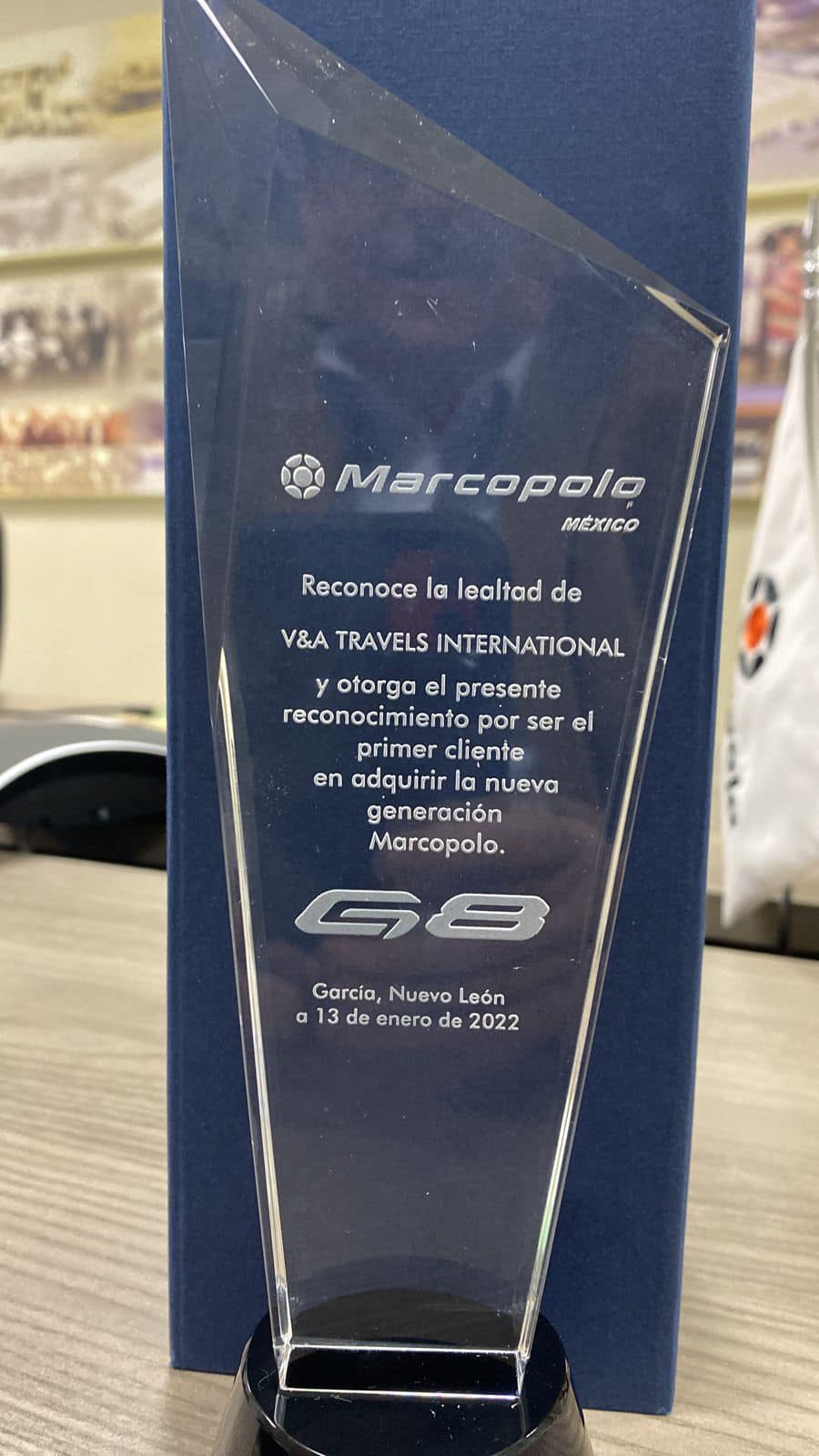
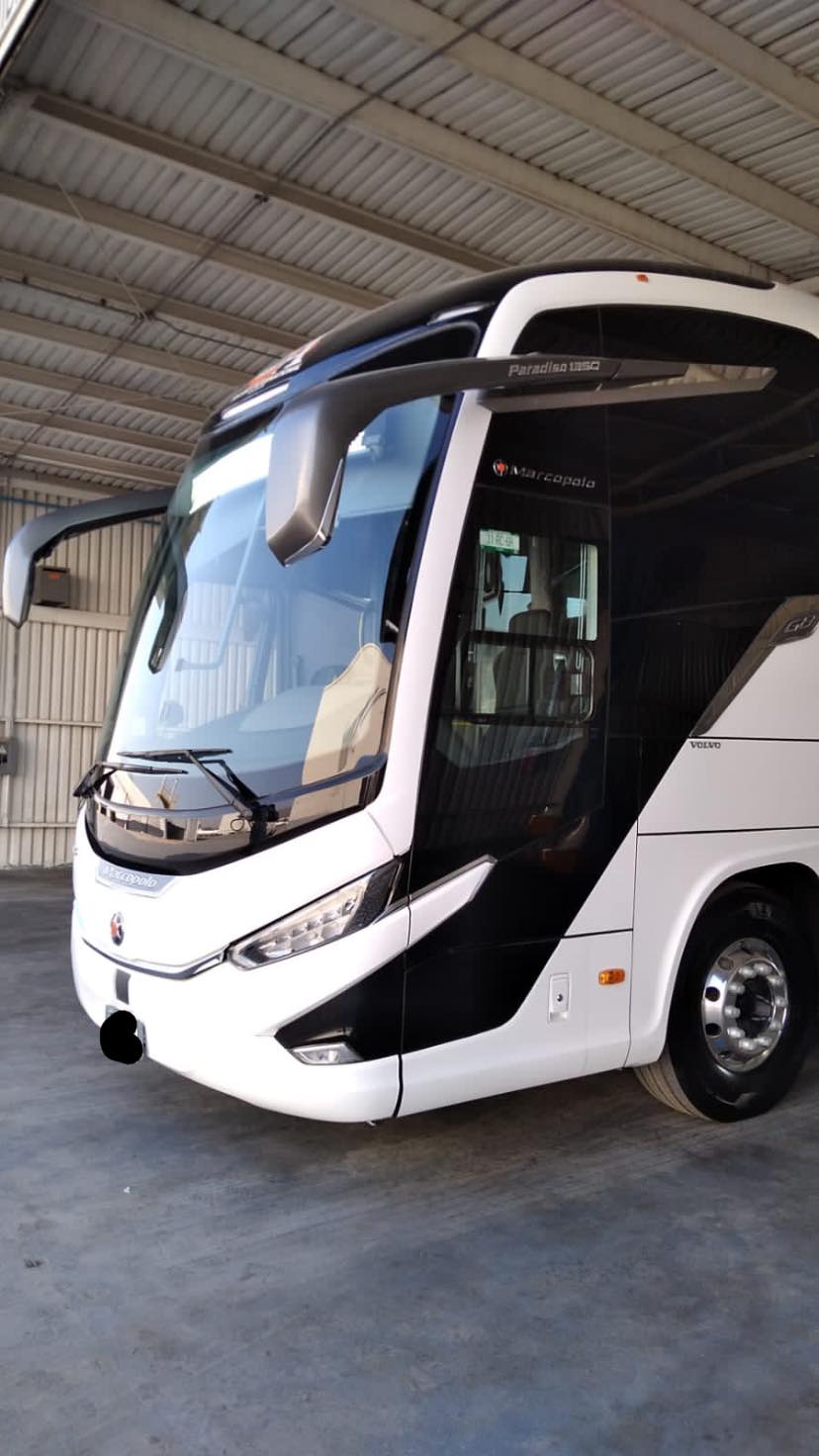
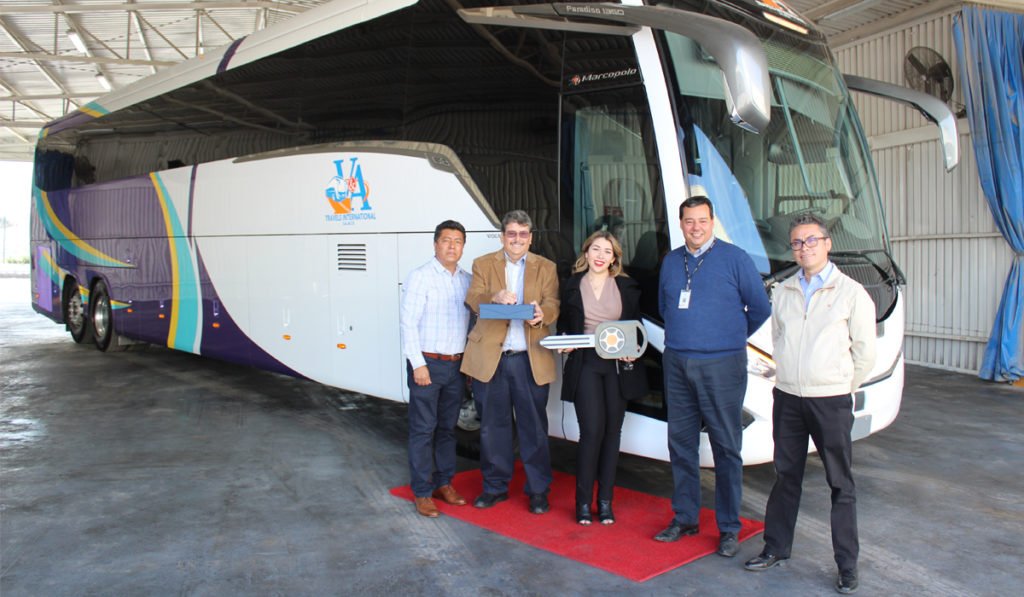
Precisely on the Paradiso 1350, the first unit of the Generation 8 in Mexico has been delivered, for V&A Travels International, operator of tourist services and bus charter. The company based in Hermosillo (State of Sonora) serves clients as important as PepsiCo, AstraZeneca, Tecnológico de Monterrey in the country, but also with activities in the United States, given its border location.

Returning to the bus, this Generation 8 Paradiso 1350 6X2 has a length of 15 meters and is equipped with a semi-bed with three-point seat belts and USB ports in each seat to recharge mobile devices. For entertainment, the bus has five 15.6-inch high-definition digital screens and a new surround sound system with higher-quality speakers. The passenger room includes a LED lighting system with different indirect light configurations, applying chromatherapy to change color and intensity, to have the best internal environment at all times.

The bus incorporates biosafety solutions to offer protection against contamination by viruses and bacteria on trips, such as a UV lamp in the toilet and the air conditioning return, antimicrobial protection on the seats and access handrails. The toilet also has a new design for greater comfort and ergonomics.

V&A Travels has chosen the Volvo B13R chassis, where high performance, maximum safety and respect for the environment are combined. The Volvo D13C engine delivers 500HP of power and 2,500Nm of torque delivered to the wheels with the help of the prodigious 12-speed forward I-Shift automated transmission. The electronics allow self-diagnosis of faults, and it is also equipped with self-protection against overheating, low oil pressure and fire detection sensors.

Regarding safety, it is always important to highlight what the chassis offers, which has a complete equipment to protect the driver and its occupants: EBS5 electronic braking that governs the ABS and ASR traction control; ESP stability program, dual retarder control, hill start assist, brake temperature and wear warning, door brake, automatic differential lock and self-calibration when changing brake pads.

Separate mention deserve the Volvo Dynamic Steering System (VDS) and the Active Safety System (SSA). With the first, the effort of the operator is reduced, it provides greater stability and better adaptability to the speed of the vehicle when moving the steering wheel. The second includes emergency braking and collision warning; adaptive cruise control and lane departure alert.

Marcopolo Mexico gave recognition to V&A Travels, an important client on the border with the United States and the Pacific. “We are sure that with this acquisition, the company V&A Travels International will mark a great differential in the tourist transportation operations of the area, providing an ultra-luxury service in medium and long distance lines.” said José Luiz Goes, General Director of Marcopolo Mexico.

MEXICO CITY LAUNCHES 65 MERCEDES-BENZ URBAN BUSES

THEY WILL TRANSPORT NEAR 65,000 PEOPLE DAILY

Colombiabus newsroom – Motor a Diesel

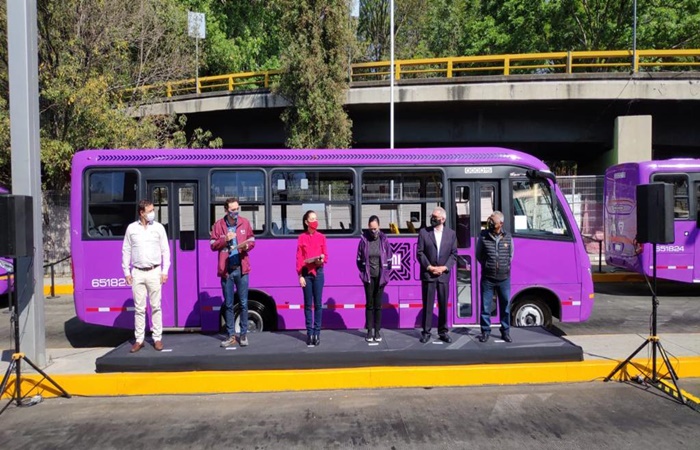
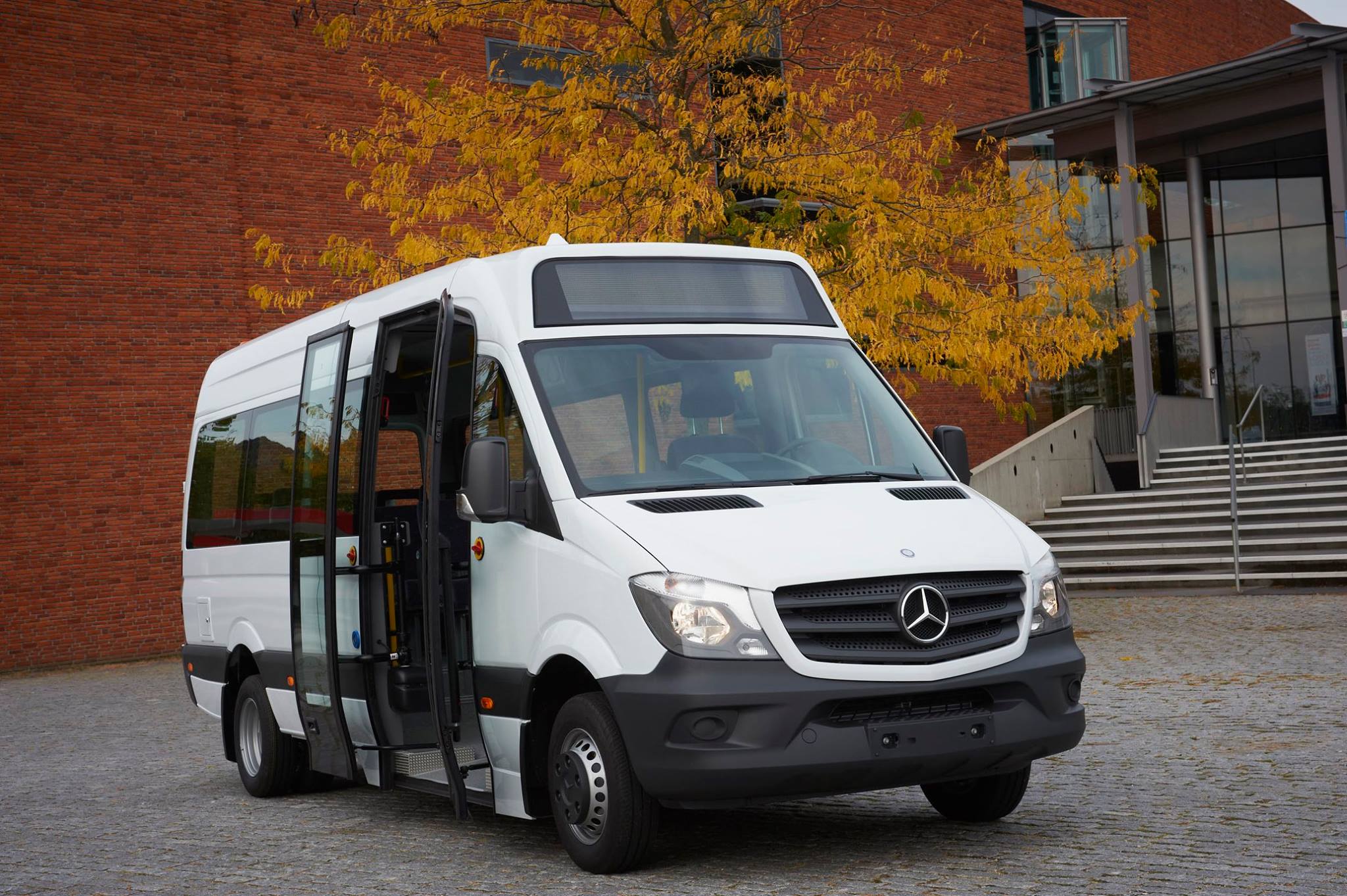
The government of Mexico City gave the starting signal to 65 Mercedes-Benz midibuses with Marcopolo bodywork for the start-up in the Legaria Corridor. These new vehicles represent an important evolution in the mobilization of the Latin American mega-metropolis, since they already have access to all the transportation systems of the big city with the single Integrated Mobility card.

Autobuses Unidos Legaria is the transport company that has obtained the concession for this corridor, which will have 72 fixed stops and which involved training 90 operators with theoretical and practical courses on machine technique, road safety and service experience for that users enjoy more pleasant trips.

These buses have the Mercedes-Benz LO916/48 chassis, powered by the OM924LA four-cylinder engine with 4.8 liters of displacement, turbocharged with intercooler, which delivers 154HP at 2,200rpm and 580Nm between 1,200 and 1,600 revolutions, complying with the Euro V emissions.

The Marcopolo Senior body is manufactured at the García plant, Nuevo León with the 2020 redesign, which reaches a length of 9.15 meters and 2.25 meters in width. It has GPS satellite tracking, surveillance cameras, passenger counting and friendly technology for more comfortable trips.

“Today we are working for a comprehensive transportation network, where more than 40 billion pesos have been invested in this network. The right to quality mobility and transportation has been an initiative of the head of government and for that support today we give the starting signal for these units, replacing the 173 microbuses on route 17 and route 28 that cover the Metro routes Tacuba- Medical Specialties; Metro Tacuba-San Isidro; Metro Tacuba-Tecamachalco; and Tacuba ESIA» indicated Jesús Padilla Centeno, President of Grupo Movilidad de Vanguardia (MOVA).

ECUATORIAN TRANSPORTERS BET ON HIGH-CAPACITY LUGGAGE BUSES

WILL IT BECOME A TREND?

Ecuador is one of the few countries in Latin America with a wide range of local manufacturers, when in other countries there has been a progressie disappearance of bus manufacturers, leaving only the most recognized or those that have been able to innovate to withstand the arrival of the foreign builders.

Although there is an important preference for local manufacturers, regardless of whether many of them have been carried away by copying foreign models; Ecuadorian carriers have been increasingly open to proposals from other countries. The buses of Brazilian origin, followed by the Chinese, Peruvian and occasionally from Colombia; they are in their flotillas.

There is also evidence of a change in the mentality of the country’s transporter, which is gradually passing to the rear-engine bus, especially on longer-distance routes. This arrangement of components allows the incorporation of better-performing vehicles that allow a higher load capacity, an increase in the overall length of the vehicle and its wheelbase.

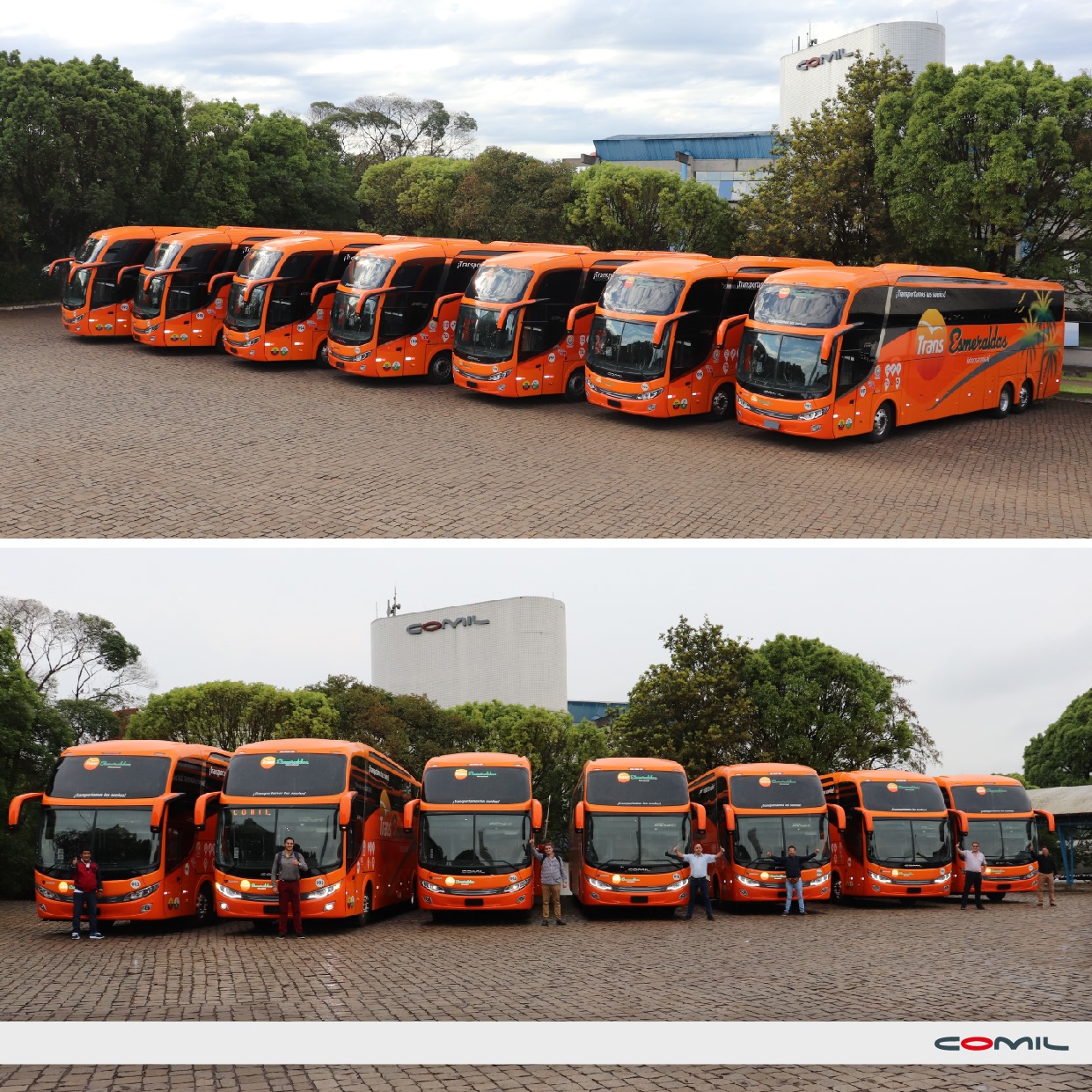
Precisely these characteristics have been used by Ecuadorian transporters, to bet on buses with the largest hold capacity in the market, with the respectable height of 1,600 mm from the floor to the edge of the passenger lounge, which allows offering almost 21 meters cubic of luggage space. With Transportes Esmeraldas, which in September 2021 received its order for 15 buses, the Campione Invictus HD model built by the Brazilian company Comil, located in Erechim.

“It is not very common to see them in Ecuador, but in this time of pandemic, having good warehouse capacity to transport parcels is an alternative to the drop in the number of passengers, that is why companies are considering them and new units are coming,” explains Ángel. Vinueza, Director of Ecuabus.

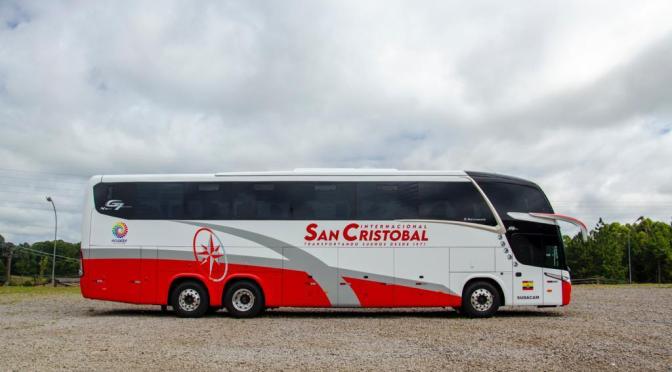
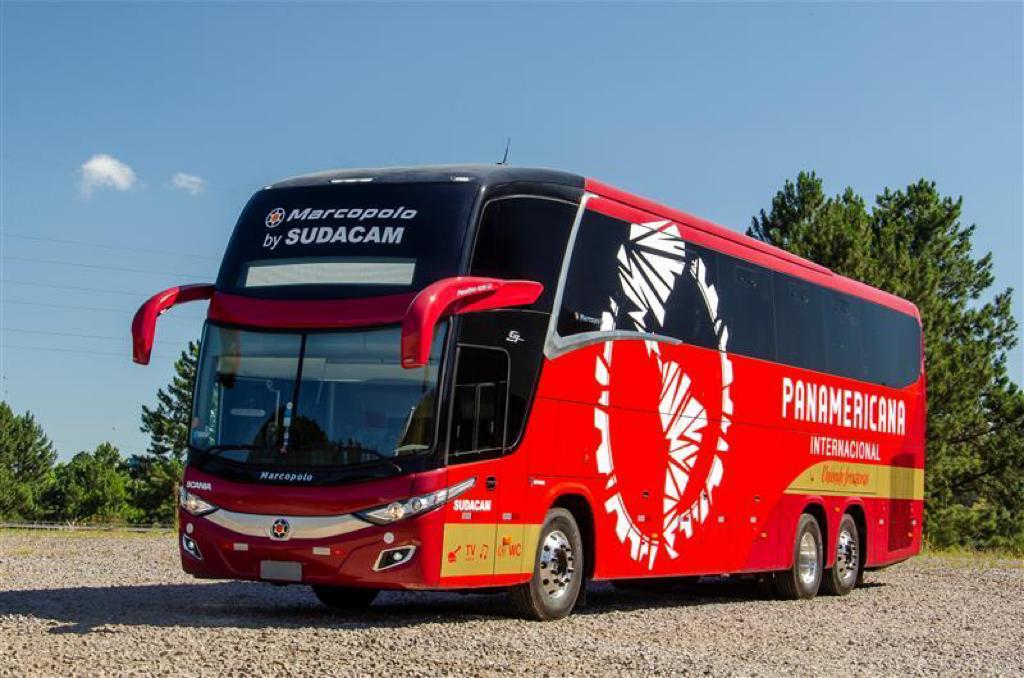
The next step has been taken by the Cooperativa San Cristóbal de Tulcán, near the border with Colombia, and Panamericana Internacional in the capital Quito. Both companies, recognized for their long-distance routes in the country and even internationally, have received their orders for the Marcopolo Paradiso 1600LD model, imported to Ecuador by the brand’s representative, Sudacam.

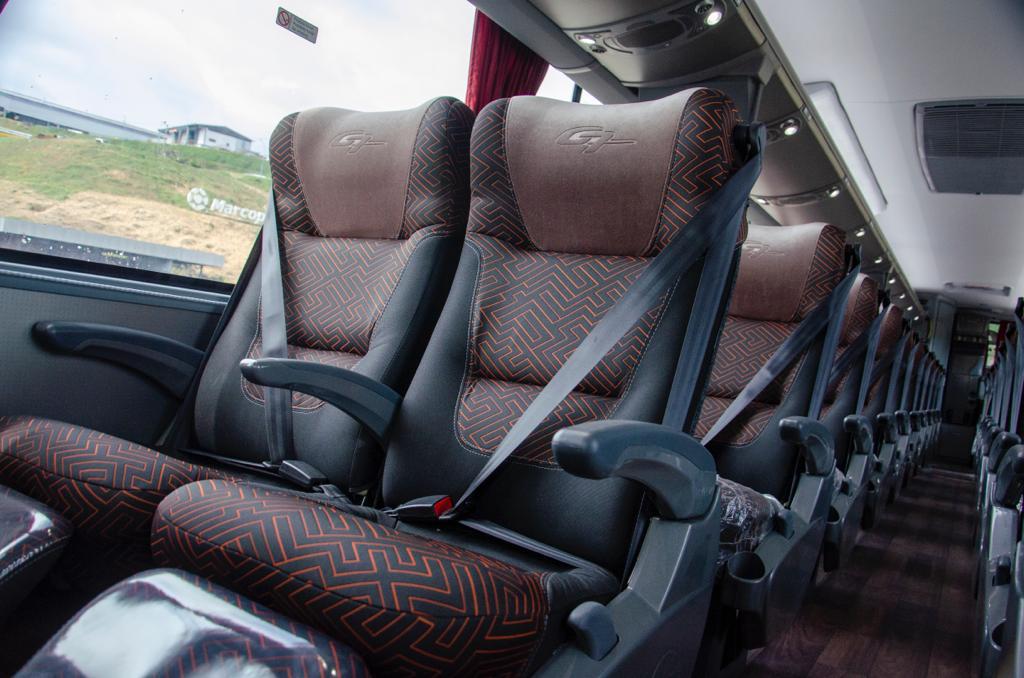
The three companies have opted for the 48-seat configuration, a toilet, half-bed seats with a good level of comfort, and a driver’s bedroom that is located in a lower position. Scania’s participation also stands out, with its high-power K460 platform, with the 12.7-liter engine that is offered throughout South America, but offers more power due to the Euro 3 emission regulations that apply to Ecuador.

To dose that great amount of power, the Opticruise automated 12-speed gearbox is present, while to ensure great ride comfort, the electronically leveling air suspension makes life on board easier. Heavy-duty retarder, ABS and traction control come with safety equipment, which also helps preserve brake material.

Will they become a trend in Ecuador? It cannot be said yet, but new paths have been opened in the matter of passenger transport in the country. “In principle, the novelty was the double-decker buses, but with these high-capacity buses, companies can have an additional line of business and provide facilities to the user because through a transport cooperative it is easier to send packages and merchandise. Companies are taking the issue of parcels very much into account, especially those who can afford to incorporate rear-engine buses into their fleets” Vinueza explains.

At the moment Scania has the leadership in these large buses in 6X2 configuration, gaining more and more market share, capturing this new mentality in transporters that are betting on vehicles with greater driving comfort. This has been motivating other brands, which will not want to lose ground and could surprise themselves in the coming months, with the incorporation of new chassis models for rear-engine buses in Ecuador.

PERUVIAN CIVA READY TO OPERATE ITS FIRST MARCOPOLO G8 WITH VOLVO B450R CHASSIS

INCLUDES SSA ACTIVE SECURITY SYSTEM

While several Latin American markets await the arrival of the first Marcopolo Generation 8 units, carriers that were interested in the proposal and placed their orders close to the launch date are already beginning to receive their buses to assign them to the operation.

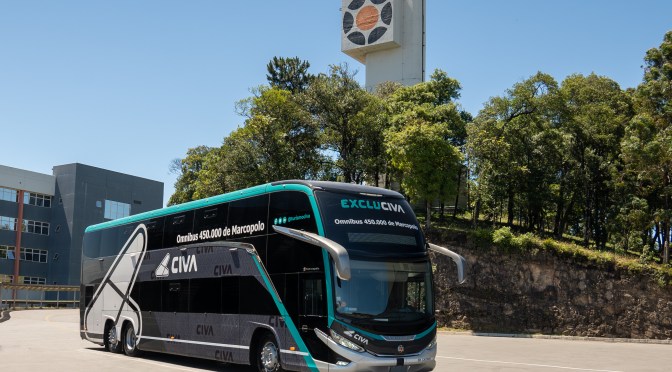
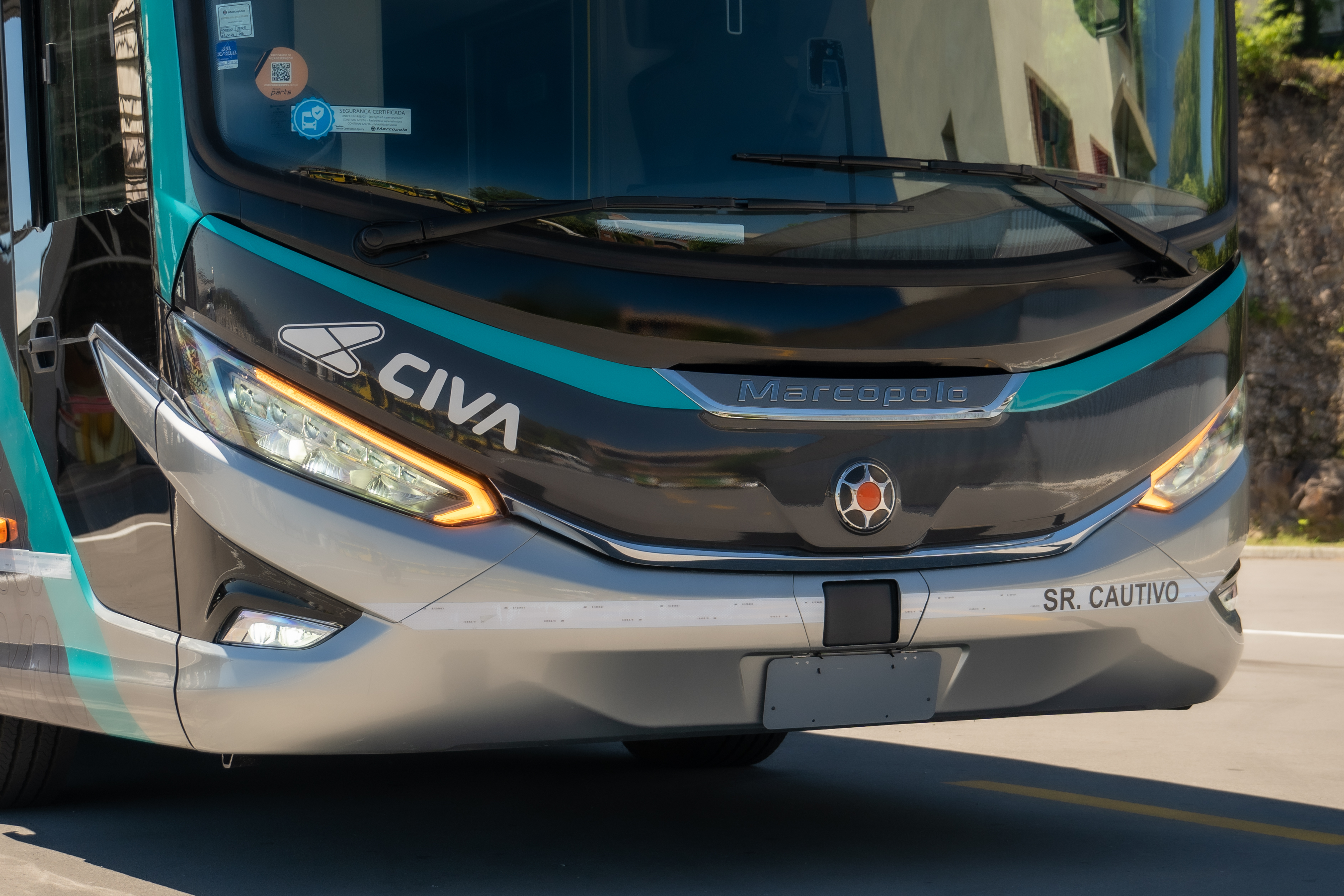
Transportes Civa de Perú, has a relationship of more than thirty years trusting in the creations of the Brazilian giant and became the first company outside of Brazil that received a Generation 8 bus, of its Paradiso 1800 DD model. The Inca operator, recognized for the high level of comfort and added value in its long-distance passenger transport services, will continue to reinforce that image that has made it a benchmark in South America.

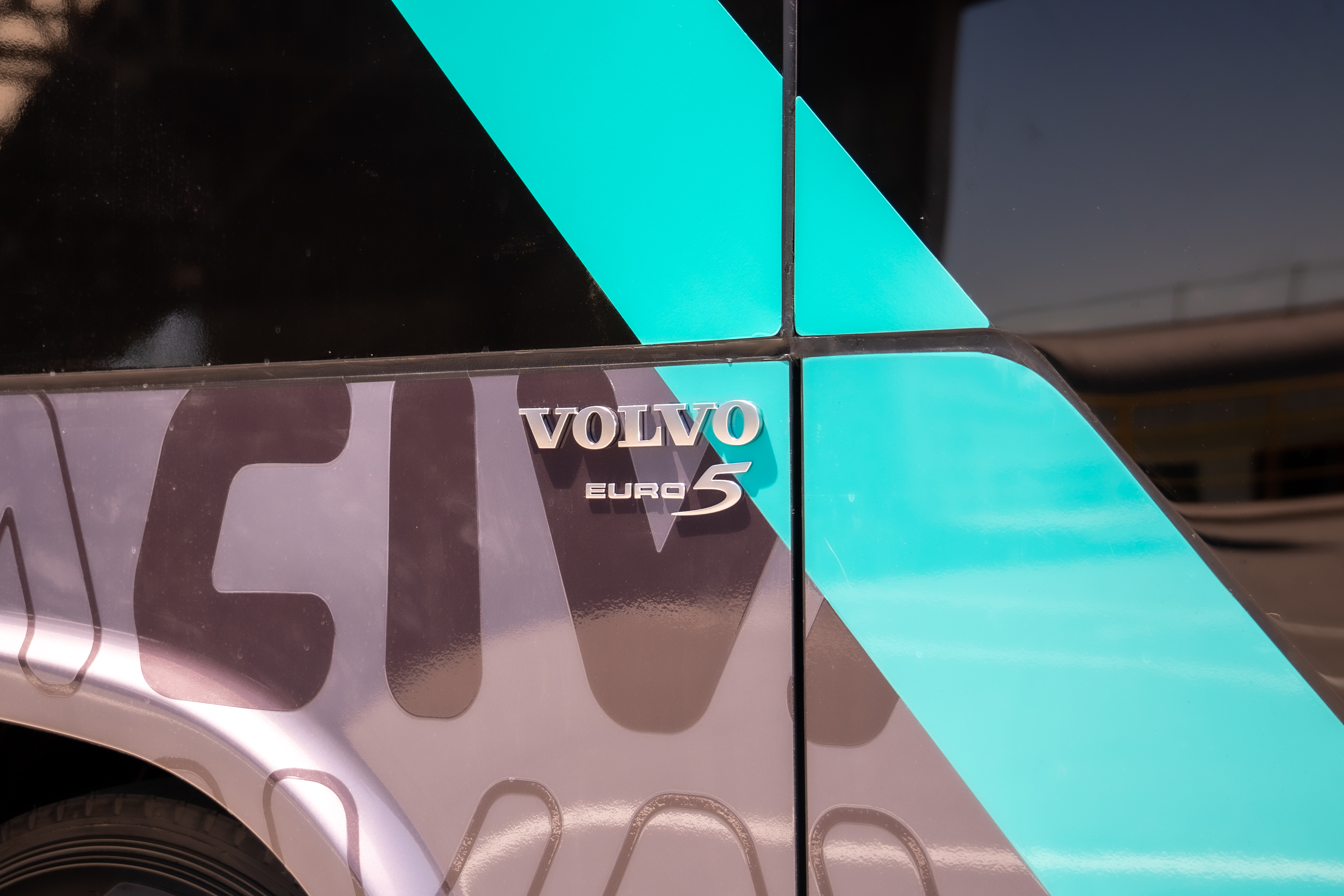
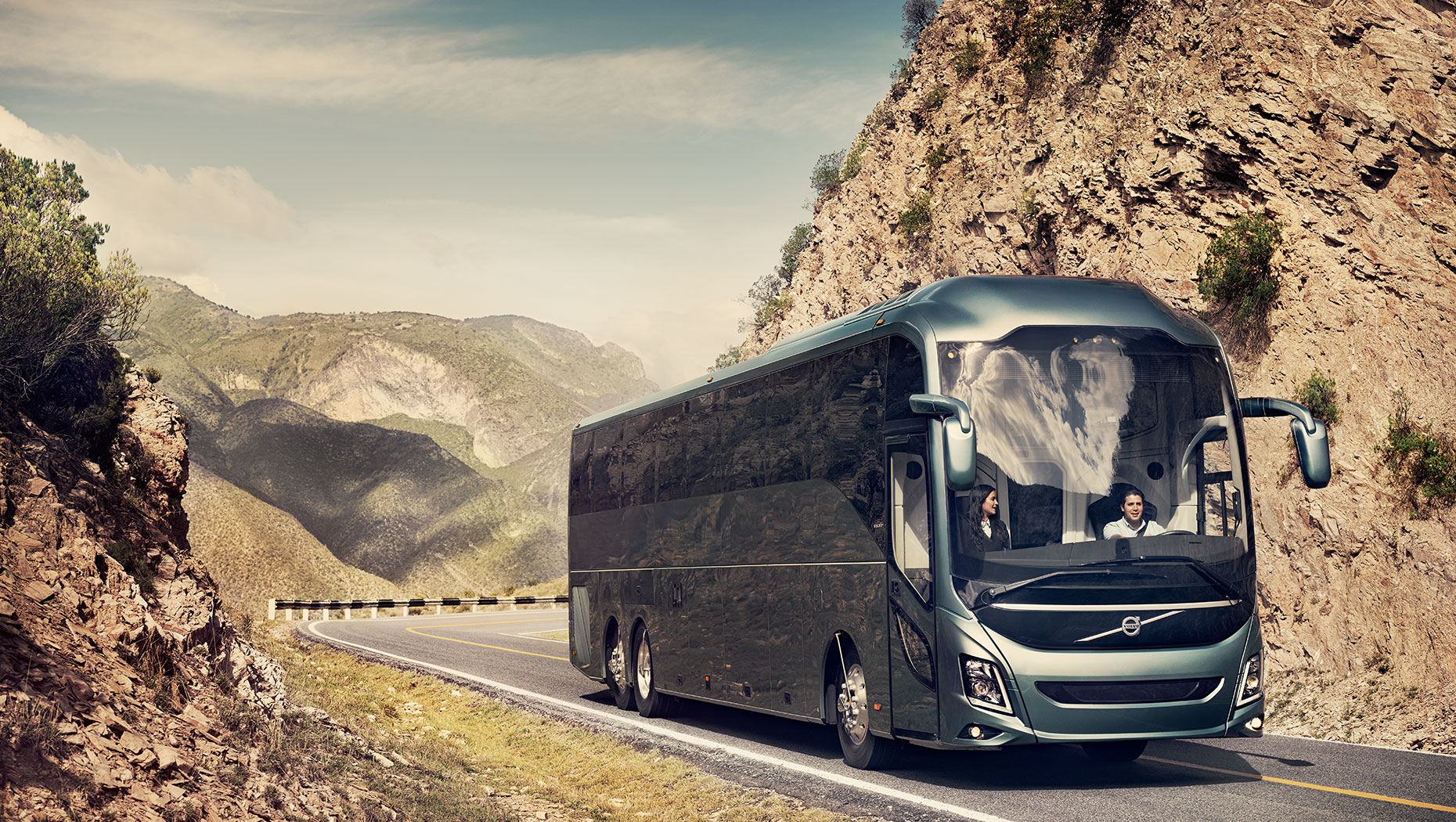
Civa has also been the protagonist of a milestone for Marcopolo, since this first Generation 8 bus they receive is the 450,000th unit produced by the Brazilian manufacturer, in its almost 72-year history. A special bodywork had to be coupled to a very special chassis, which is why the Peruvian transporter has relied on the Volvo B450R, which reinforces those values ​​of safety, performance and respect for the environment that are always sought in any model of the Swedish manufacturer.

A bus that, thanks to the materials chosen for the construction of the platform and a smaller engine with a displacement of 10,800cc, becomes the lightest on the market, which allows greater capacity and improves performance with lower fuel consumption than of its competitors. A propellant that delivers 450HP of power and 2193Nm, of torque, guaranteeing great responsiveness on any terrain and in any condition.

With unsurpassed ride comfort from the 12-speed I-Shift automated transmission, electronically level-adjustable air suspension at the push of a button, and the ability to compensate for body lean, they make long, winding road trips a breeze roads are a real pleasure. The engine management is fully electronic, complying with the Euro 5 emission standard, with a turbocharger and intercooler to provide maximum efficiency when changing altitude.

Safety has always been a value and hallmark of any Volvo, with an arsenal of equipment that gives drivers and passengers peace of mind when on the road: Electronic Brake System EBS with all-wheel discs, ABS, ASR traction control, ESP stability program, pad wear indicator, Volvo VEB engine brake, retarder and the innovative SSA Active Safety System.

The SSA is bringing us closer to what autonomous driving will be, but it is a huge advance in engineering, as it will help reduce road accidents and contribute to that “zero vision” so that in the future there are no fatalities in accidents in traffic. This system includes forward collision warning with emergency braking, inadvertent lane departure alert, adaptive cruise control to maintain speed according to a safe distance from the vehicle in front, along with the audible and vibration alarm in the seat.

A bus that reaches the ranks of the most luxurious and comfortable service offered by CIVA: the famous “Realmente Cama 180°” with the ExcluCiva badge. With wide leito armchairs on the first level capable of reclining 160°, equipped with a massage function and adjustable lumbar adjustment with remote control, attention on board. The second level also offers wide leito armchairs, but convertible into a 180° bed, with individual entertainment. Likewise, there are separation and connectivity curtains on the two floors of the bus.

Safety, design and comfort in one, so that the reactivation and economic recovery of long-distance bus transport continues and travelers can enjoy unique travel experiences, thanks to the combination of Volvo, Marcopolo and Civa.

COLLABORATION BETWEEN GLOBAL PASSENGER NETWORK (GPN) AND BUSWORLD LATAM

The union of these three coach companies has been only the beginning of the expansion in this region.

Colombiabus newsroom– Busworld

In recent years, Global Passenger Network (GPN) has focused its attention on expanding its network in Latin America. This expansion began in 2019 with the adhesion to GPN of three new coach company members:

  • SGM Solutions & Patagonia Transfers – GPN Argentina
  • ASB Chile – GPN Chile
  • Viamex – GPN Mexico

The union of these three coach companies has been only the beginning of the expansion in this region. Going forward, GPN is looking to further expand its membership in more countries in this area of ​​the globe. Efforts are being focused on strengthening its affiliation program with Latin American companies in the sector, which will consequently provide more value to the member companies of the network that are part of GPN in Latin America. Therefore, the GPN structure is currently being revised to include a future focus focused on the regionalization of the organization.

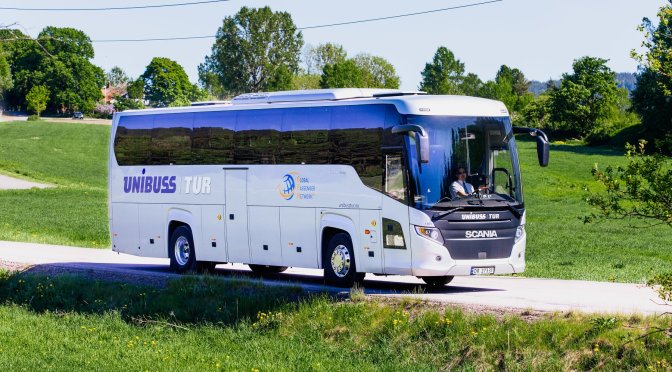
To help this new approach, the collaboration of GPN with Busworld LATAM will help a lot by participating in the Event that will take place in Buenos Aires, Argentina from September 21 to 23, 2022. Busworld LATAM is perfectly aligned with the GPN regionalization action plan . For this reason, GPN has decided to organize its Fall 2022 General Assembly in Buenos Aires (which will be organized by GPN Argentina “SGM Solutions & Patagonia Transfers” and its CEO – Mauro Gaspar) – in parallel with Busworld Latin America. This collaboration will be mutually beneficial for both Busworld and GPN.

GPN members and partners who attend the General Assembly will also visit Busworld Latin America, since GPN will exhibit at the Event and GPN members will be invited as speakers to the seminars organized during the Busworld LATAM Event to share their experience and knowledge with the entire coach industry in this region.

On the other hand, it will be a great opportunity for coach operators and providers of coach companies in this region to have a better understanding of the benefits they would have by joining the organization as members or partners and to receive more information about GPN.

VOLVO BUSES RETURNS TO THE LEADER IN THE ROAD SEGMENT IN MEXICO WITH 230 UNITS IN 2021

THE VOLVO-IRIZAR COMBINATION, NOW THE MOST PREFERRED

Colombiabus newsroom – Revista Via Libre / William Marroquín

Volvo Buses landed in Aztec lands in 1998, thanks to the purchase that the Swedish manufacturer made of all the rights of the former Mexicana de Autobuses (MASA), always at the Tultitlan facilities of Mariano Escobedo, in the state of Mexico. It currently employs more than 1,300 collaborators and in its production facilities it allocates 50,000 square meters, in an area of ​​more than 22 hectares that allows future expansion.

There, 4 integral buses are produced, 3 road buses (9800, 9800DD and 9700 for North America) together with the 7300BRT. While in chassis versions for bodywork, Access and ProCity models are available for the urban segment, while in highway or foreign applications as they are called in Mexico, the portfolio is made up of the B8R, B11R and B13R.

2021 has been a very important and successful year for the road segment in Volvo Buses México, as the brand returned to the first place in sales of road buses, exceeding 230 units between January and October of this year, reaching a market share close to 60%, surpassing Scania which registered 119 units, Mercedes-Benz with 26 and MAN with 6.

The possibility of offering both integral and chassis buses has helped to improve the portfolio for the country’s transporters and also a more intense work with the bodybuilders, where since the end of 2020, the approach with Irizar de México has allowed the constructor of Spanish origin reached 70% of its sales, with units mounted on Volvo chassis, and also, this is the preferred combination at the moment by Mexican highway operators.

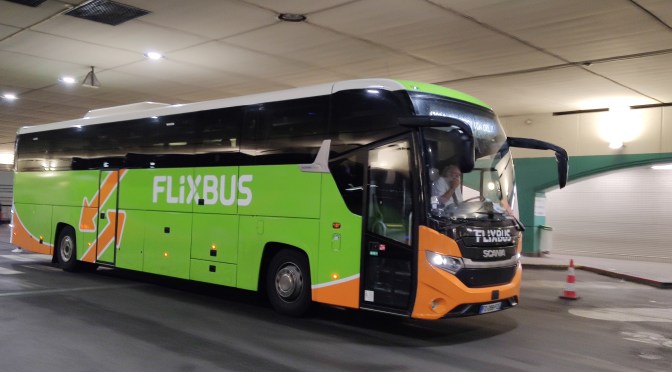
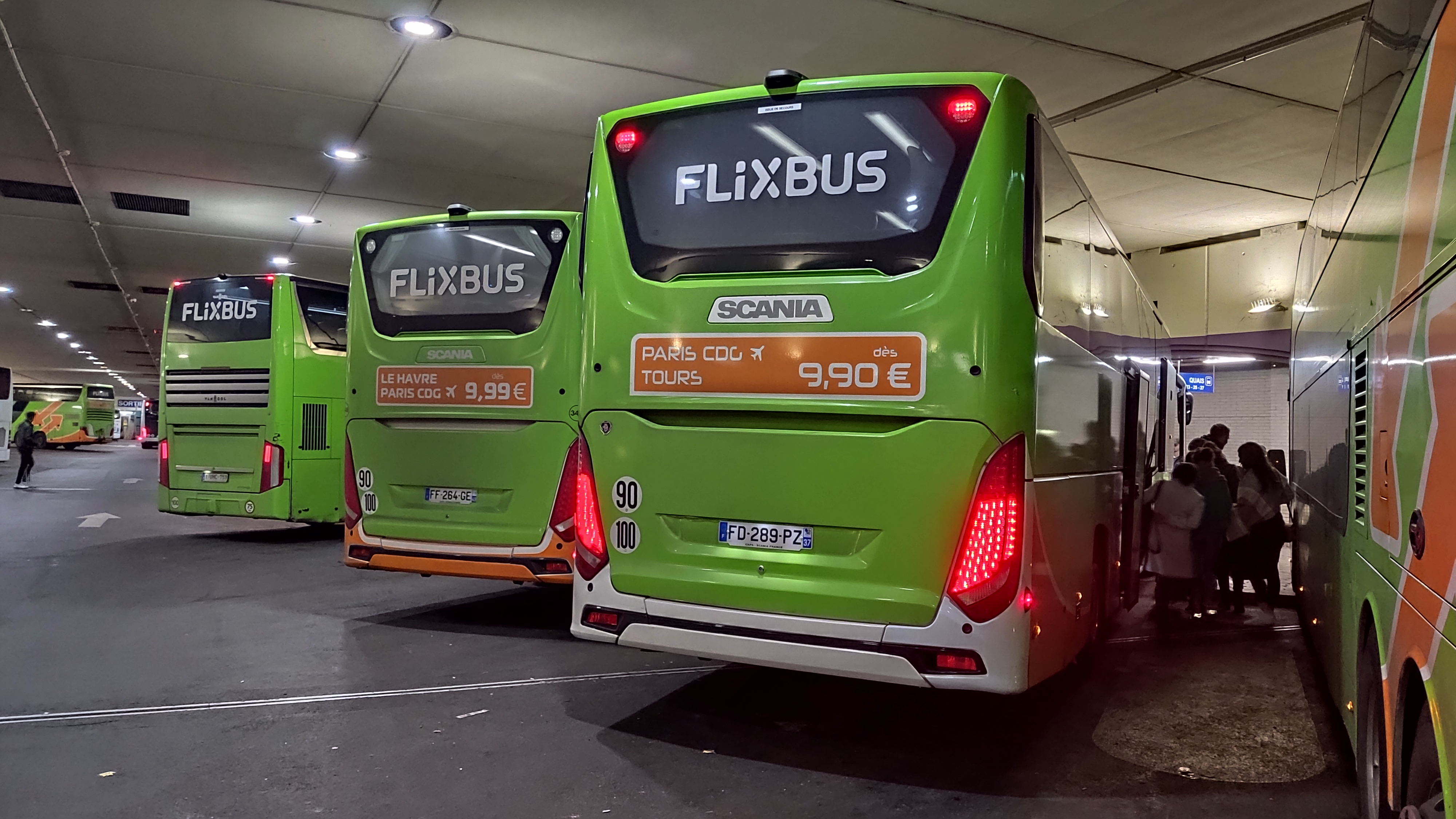
FLIXBUS BEGINS OPERATIONS ON REGULAR ROUTES IN BRAZIL AS OF DECEMBER 1

ADAMANTINA WILL BE THE FIRST ALLY OF THE GERMAN GIANT

Colombiabus newsroom – FlixBus / William Marroquín

Since mid-2021, the intention of the German passenger transport giant FlixBus to enter the Brazilian market was announced, where the regulatory framework that would allow the operation was pending. Well, the time has come, and the company is getting ready to serve its first two routes, connecting São Paulo with Rio de Janeiro and with Belo Horizonte.

Unlike many European cities, where there are predetermined stops for boarding, considering that few has or have adapted terminals, in the Brazilian case the departures from São Paulo will be at the Tiete Terminal, with arrivals at both the central transport centers from Rio as Belo Horizonte.

To link São Paulo with Rio de Jainero, FlixBus, together with its ally Expresso Adamantina, will have eight frequencies, while to connect Belo Horizonte, four offices have been defined. The company’s website is now available for travelers to purchase tickets, and the first departure will be at 00:30 on December 1.

To quickly attract more travelers, tickets are being offered at a very special price and the first 1,000 who registered and redeemed a promotional code were able to purchase them for less than one real, equivalent to 18 cents. FlixBus’ initial operation will be focused on the Southeast of Brazil, so they hope to rapidly expand their radius of action with five additional routes, whose destinations are currently being kept in reserve.

Although the lines will be operated by Adamantina, the company’s first local partner, the buses will have the FlixBus brand and will follow the company’s international standard, which includes services such as free Wi-Fi on board. Promotional prices will turn the market upside down, since a Rio de Janeiro – São Paulo ticket has a regular price of 49.90 reais ($9.03) and is being offered in this new scheme for 19.90; for its part, the route to Belo Horizonte is announced to be 33% cheaper.