LICITACIONES: CON LOS PANTALONES ABAJO

LAS EMPRESAS SIEMPRE DEBEN ESTAR PREPARADAS

Editorial Revista Latinobús – Número 48

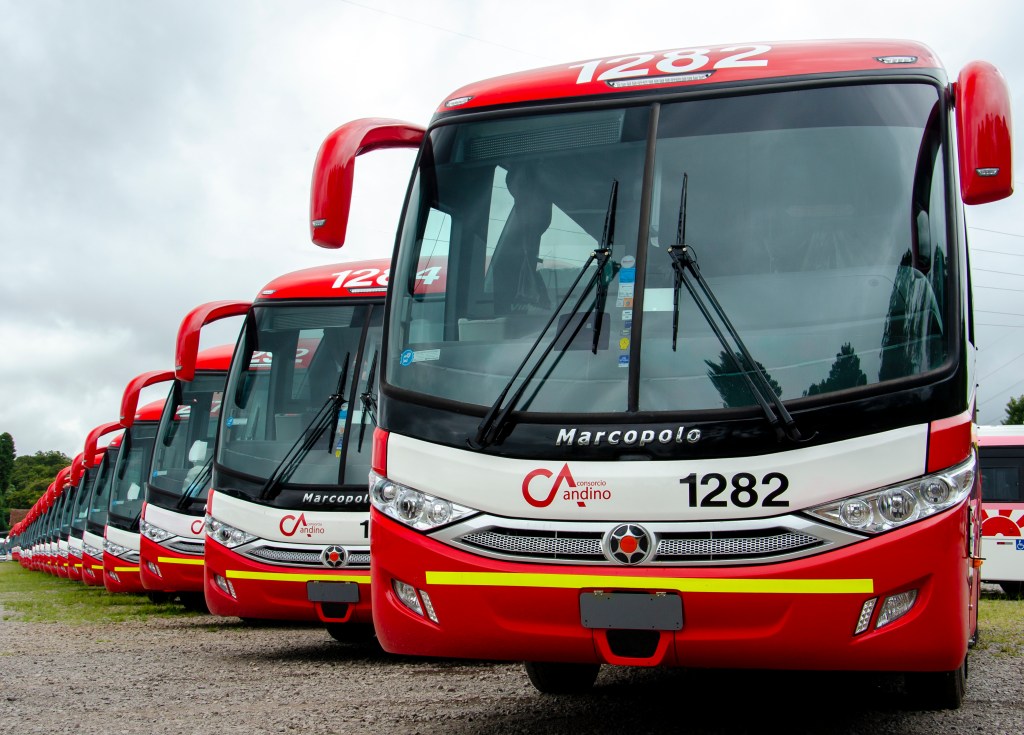
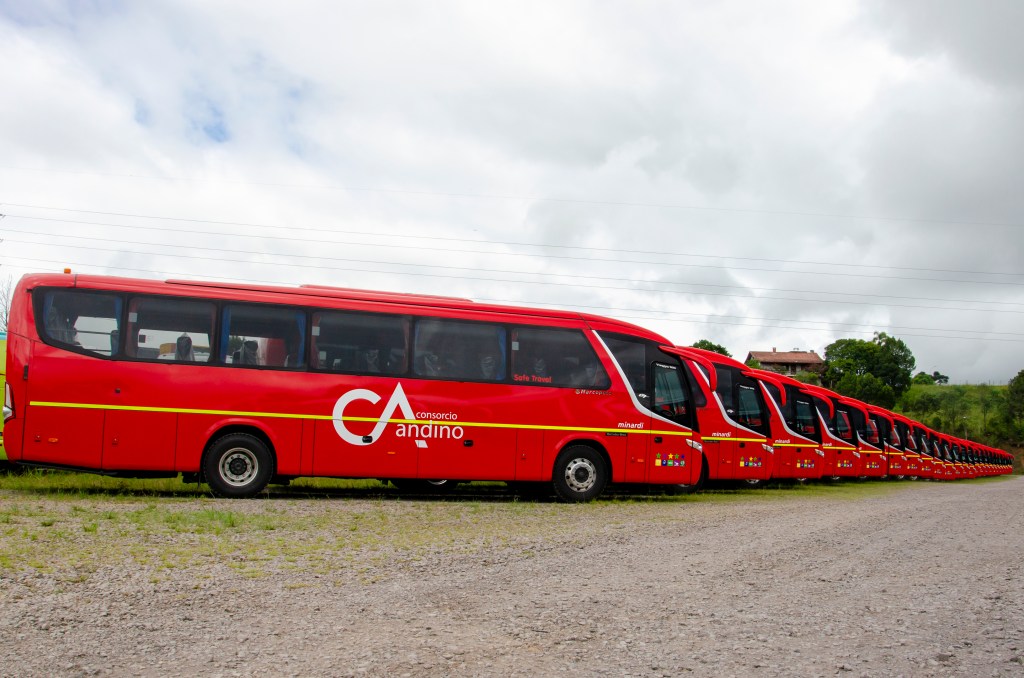
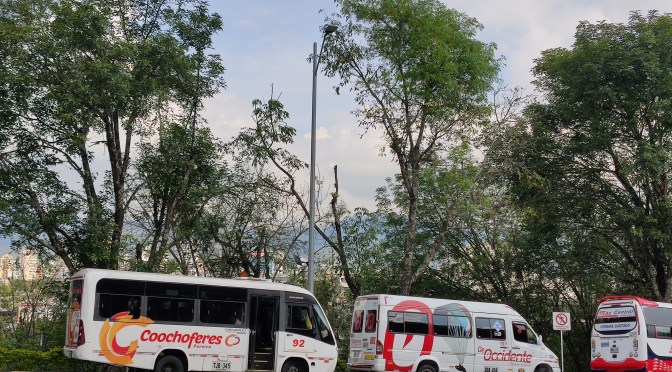
Ha llegado a su etapa decisiva el proceso licitatorio que puso a disposición de las compañías de transporte de mediana y larga distancia del país, la posibidad de acceder a nuevas rutas bajo la modalidad de “pliegos tipo”. Un acontecimiento que ha mantenido atentos a empresarios, fabricantes y comercializadores de vehículos, así como a los pasajeros, dada la oportunidad para ampliar la oferta de movilidad en regiones con carencia de frecuencias, y así mejorar las finanzas de las ya golpeadas operadoras del servicio.

Los documentos a presentar incluían características técnicas de los autobuses a ofertar según la tipología de cada ruta, registros de capacitación de conductores, seguridad vial y planes de mantenimiento al interior de las compañías, además de certificaciones que demostraran las experiencia en la operación de rutas similares y estados financieros. Nada complicado, pensaría cualquiera ajeno al medio, dada la basta trayectoria de la mayoría de empresas del sector, algunas con 70 o más años de actividad en el territorio nacional. Creíamos que con facilidad, alcanzarían puntajes cercanos a 100 (el tope de calificación), haciendo de la subasta una interesante y reñida competencia empresarial.
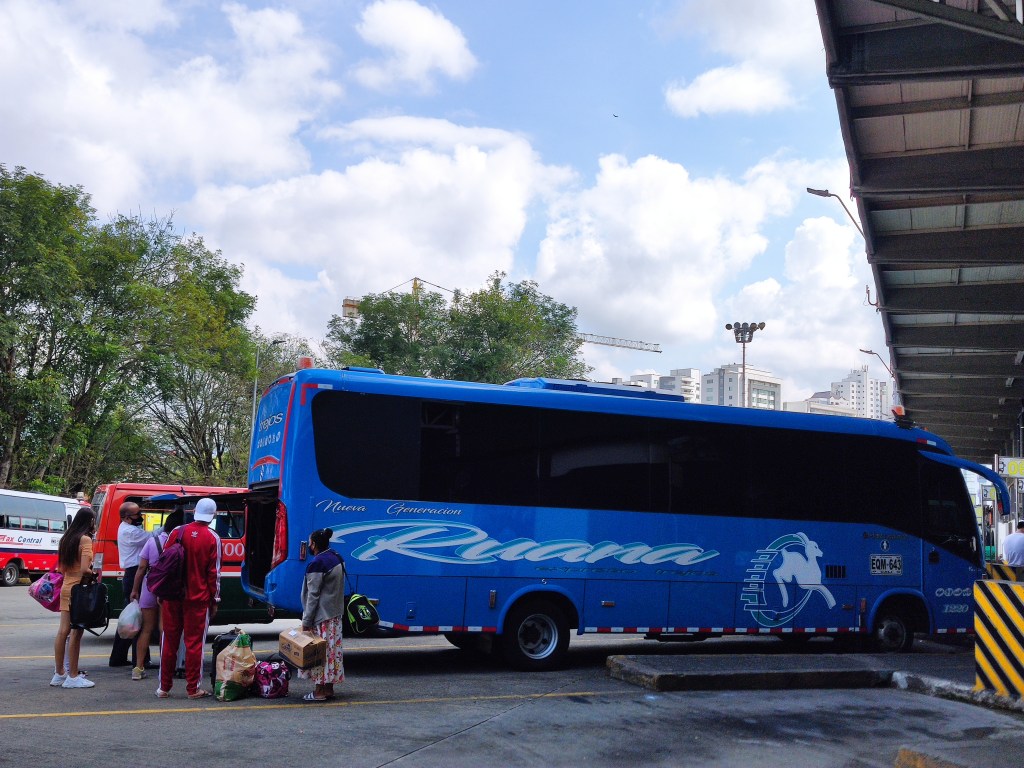
Qué amarga sorpresa nos hemos llevado al conocerse los informes que ha publicado Mintransporte con resultados de la puja (en la cual participaron 44 firmas buscando quedarse con alguna de las 14 rutas licitadas), dado el pésimo puntaje obtenido por compañías de gran renombre y reputación, algunos de ellos estando más cercanos al cero, que a alcanzar los lugares más destacados de la clasificación. ¿Cómo puede suceder esto, después de décadas de servicio, la evolución de las tecnologías de información y hasta la implementación de costosos (y de paso, tediosos) sistemas de gestión de calidad en las empresas?

De otro lado, un aspecto que también vale la pena tener en cuenta, es que uno de los componentes que también influía a la hora de presentar los pliegos y asignar la calificación a las propuestas (otorgaba 20 puntos), era la edad del parque automotor. De los 44 oferentes, 40 entendieron “cómo se juega a licitar” y se postularon con equipo cero kilómetros, para lo cuál indicaron las características técnicas y en algunos casos, incluyeron las cotizaciones de los fabricantes de chasis y carroceros que respaldaran la oferta.
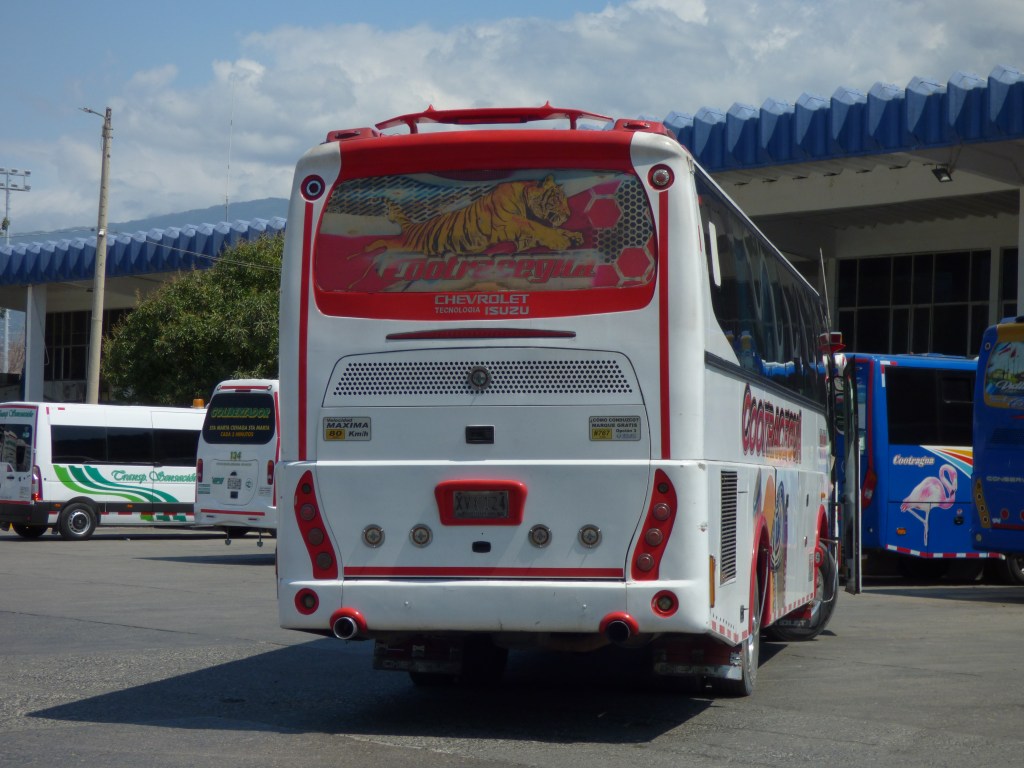
Pues llama la atención que, primero, cuatro postulantes creyeran que podían ganar puntos ofreciendo flota de hasta cinco años de uso, y segundo, que los proponentes con la mayor puntuación tuvieran la misma marca de carrocería y chasis en los documentos presentados. ¿Acaso ningún otro carrocero se dio a la tarea de conquistar a las empresas con ofertas de valor lo suficientemente atractivas para ir de la mano a las licitaciones? ¿Qué pasó con los importadores de chasises que incluso teniendo productos competitivos, se dejaron tomar ventaja de los demás?

La respuesta a las anteriores inquietudes es muy sencilla, y tan simple como preocupante: capacitación, organización y humildad. Es increíble que empresas de renombre, con décadas de evolución, que mueven millones de pasajeros al año y manejan miles de empleados, aún tengan prácticas arcaicas y se manejen cual negocios de barrio y no como verdaderas compañías organizadas, responsables y eficientes.
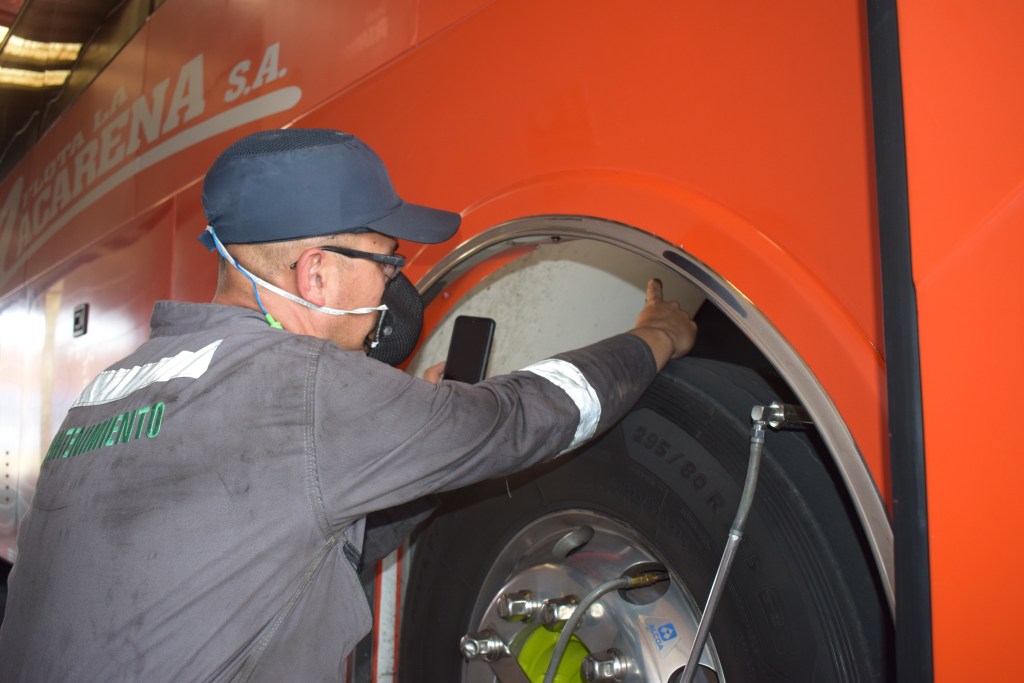
No se trata de dar “palo” a las empresas y hacer leña del árbol caído. Queremos invitar a reflexionar y abrir los ojos de quienes lideran algunas de las más importantes organizaciones de transporte del país, haciéndoles ver que la solución no es contratar un asesor de licitaciones para los concursos venideros; la respuesta está en planear, hacer, documentar y ejercer el servicio con disciplina, de tal manera que mañana mismo, la tarea de la próxima puja ya esté hecha.
EL BUS ELÉCTRICO MAN LION´S CITY E YA SUPERA LOS 700 PEDIDOS PARA CIUDADES EUROPEAS

EN 2025 EL 50% DE LAS VENTAS DE BUSES MAN, SERÁN eBUSES

Redacción Colombiabus – MAN Truck & Bus

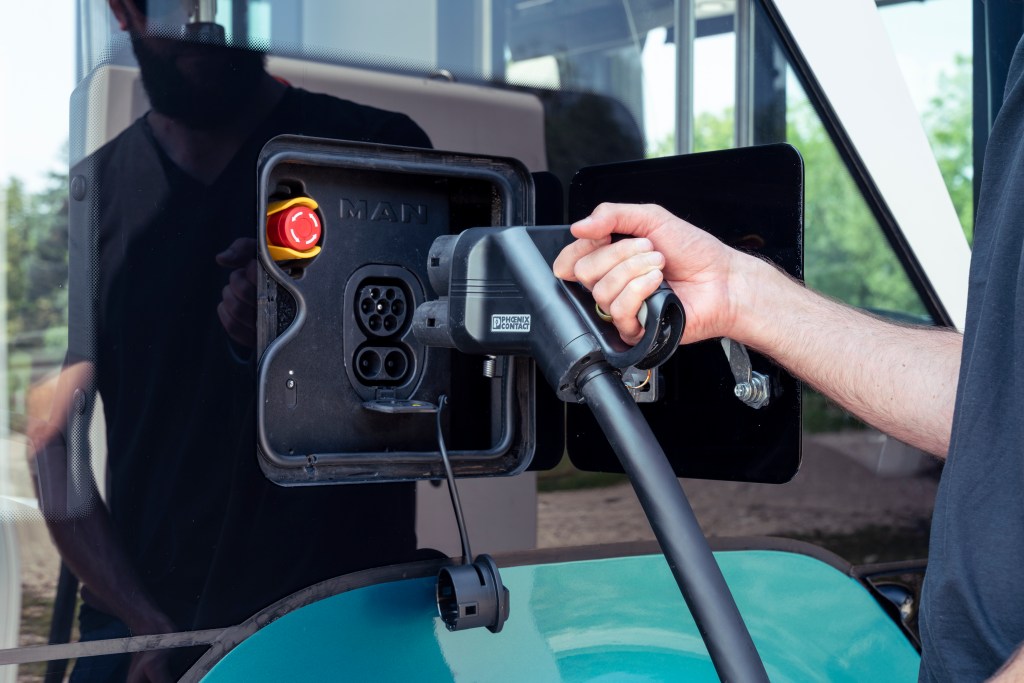
Cada vez son más los operadores que apuestan por los vehículos eléctricos, especialmente en el transporte público de cercanías. Después de todo, realmente pueden mostrar sus puntos fuertes en las ciudades, ya que son particularmente silenciosos y sostenibles. Como resultado, satisfacen la creciente demanda de reducción continua de emisiones contaminantes y sonoras.

Según Chatrou CME Solutions, el 59,4 % de los 14.990 autobuses urbanos matriculados en Europa en 2021 tenían un sistema de propulsión alternativo. La proporción de autobuses con batería (BEV) aumentó de manera particularmente pronunciada: del 14,8% al 21,7% y en términos de unidades, 3.282 buses eléctricos se registraron por primera vez en el mercado europeo el año pasado.

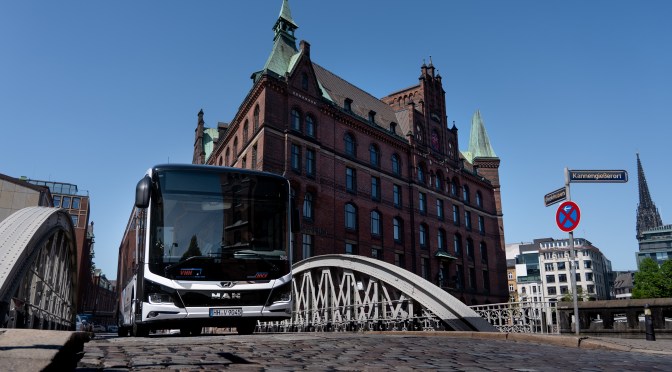
El hecho de que la electromovilidad tenga tanto éxito en el transporte urbano se basa, entre otras cosas, en vehículos como el MAN Lion’s City E. Este autobús urbano en 2019 y ahora rueda por muchas ciudades europeas, asimismo, los operadores de autobuses y los conductores están muy entusiasmados como expertos y pasajeros sobre las opciones, fiabilidad, comodidad y sostenibilidad del vehículo localmente libre de emisiones.

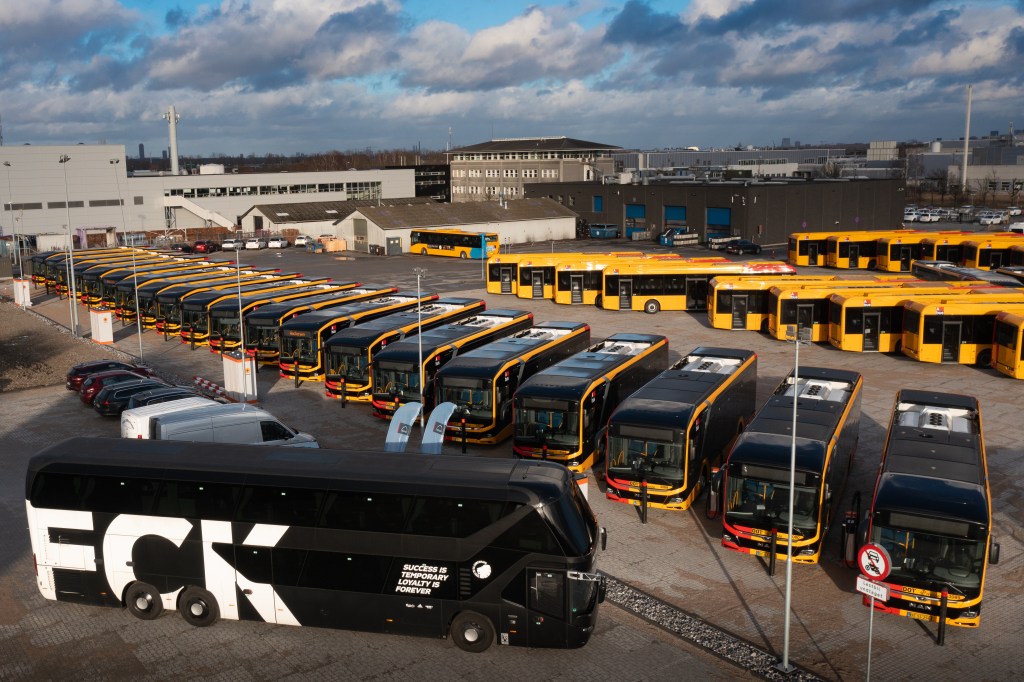
Cada vez son más autobuses eléctricos MAN que ruedan en las vías. Las ventas anuales ascendieron a 133 Lion’s City E, que corresponde a una participación de alrededor del 5,5% de los dedicados al segmento urbano vendidos por la marca en Europa el año pasado (2.402 vehículos). En Alemania, esto coloca a MAN en el tercer lugar en términos de eBuses matriculados en 2021. “Nuestro El objetivo es claramente poner aún más autobuses eléctricos en la carretera: para 2025, la mitad de nuestros nuevos autobuses urbanos tendrán energía alternativa. Y esperamos que solo cinco años después, en 2030, se entregará el 90 por ciento de nuestros autobuses urbanos con accionamiento por batería”, dice Rudi Kuchta, Jefe de la Unidad de Negocios de Autobuses de MAN Truck & Bus.

MAN Truck & Bus ha firmado contratos con clientes para la entrega de más de 700 autobuses eléctricos desde que salió a la venta el Lion’s City E. Recientemente consiguió dos pedidos por un total de 53 eBuses de Hamburgo. Hamburger Hochbahn AG encargó 17 autobuses MAN Lion’s City 18 E, una novedad para la empresa de transporte, que encargó por primera vez eBuses a MAN. La entrega de los primeros autobuses está prevista para finales de este año, y ya se encuentran en funcionamiento operados por VHH 37 MAN eBuses, que están deleitando a pasajeros, conductores y operadores día tras día en Hamburgo y Norderstedt.

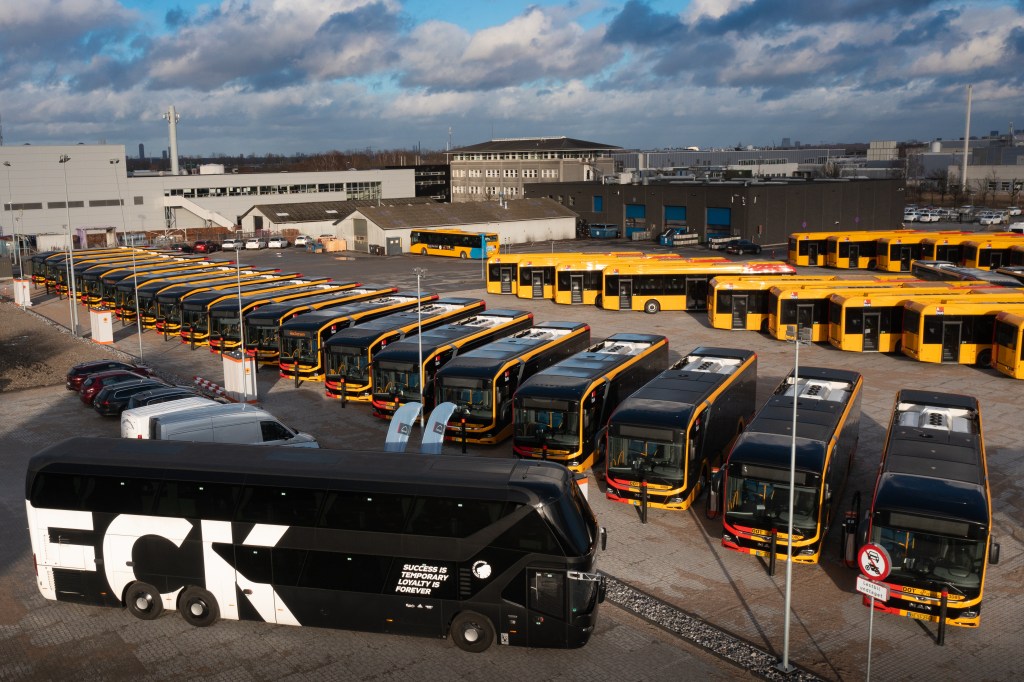
También en la carretera hay 25 autobuses MAN Lion’s City 12 E en Copenhague. Recientemente se entregaron otros doce eBuses a Vikingbus en Odder, lo que significa que 37 autobuses eléctricos ahora están circulando por las carreteras danesas. También en la vecina Suecia, el MAN Lion’s City E garantizará que los pasajeros lleguen a sus destinos de forma segura, fiable y respetuosa con el medio ambiente. KEOLIS ha pedido un total de 75 autobuses MAN Lion’s City 18 E para Suecia. “Este es uno de los mayores éxitos de ventas hasta la fecha para nuestro autobús urbano totalmente eléctrico”, dice Rudi Kuchta.

60 autobuses articulados MAN eléctricos van a Gotemburgo y 15 a Estocolmo. Otros 12 MAN Lion’s City 18 E pronto estarán funcionando en Uppsala, Suecia. Esta es la primera vez para Gamla Uppsala Buss AB (GUB), que ordenó los vehículos. Esto se debe a que son los primeros autobuses eléctricos que se utilizarán en Uppsala. El acuerdo marco también incluye una opción para otros 65 autobuses eléctricos, 45 de los cuales son autobuses individuales Lion’s City 18 E y 20 Lion’s City 12 E. Ya están en servicio 22 Lion’s City E en la ciudad costera de Malmö, en la región sureña sueca de Skåne. Son operados por Nobina Suecia AB.

Los 39 eBuses de VAG Verkehrs-Aktiengesellschaft Nürnberg también ya están en funcionamiento. La empresa encargó inicialmente 15 y luego, como parte de un pedido de seguimiento, otros 13 Lion’s City 18 E y 11 Lion’s City 12 E de MAN Truck & Bus. MAN también obtuvo un éxito de ventas en Suiza y a partir del otoño de 2022, 15 MAN eBuses estarán en servicio en Zúrich en las rutas de autobús estándar de la ciudad.

Verkehrsbetriebe Zürich (VBZ) persigue una estrategia coherente eléctrico y ha optado por el MAN Lion’s City 12 E como parte de esta estrategia. Se espera que los autobuses ecológicos hagan una contribución significativa a los objetivos climáticos de la ciudad de Zúrich. “Y eso es precisamente lo que hace que nuestro MAN Lion’s City E sea tan exitoso. Hace posible una conducción sostenible, sin que los operadores, conductores y pasajeros tengan que sacrificar aspectos como la comodidad y la seguridad”, dice Kuchta.

SCANIA MEXICO DELIVERS FIRST K500 EURO 6 BUSES WITH XPI TECHNOLOGY TO GRUPO ESTRELLA BLANCA

THEY ARE EQUIPPED WITH THE IRIZAR i8 MODEL

Latinobus – Scania Buses México / William Marroquín

Grupo Estrella Blanca (GEB), with 81 years of history, is one of the main conglomerates of passenger road transport in Mexico, connecting 25 states in the country and with 21 brands, offering three levels of comfort for travelers. Its fleet exceeds 5,000 vehicles and has more than 20,000 collaborators.

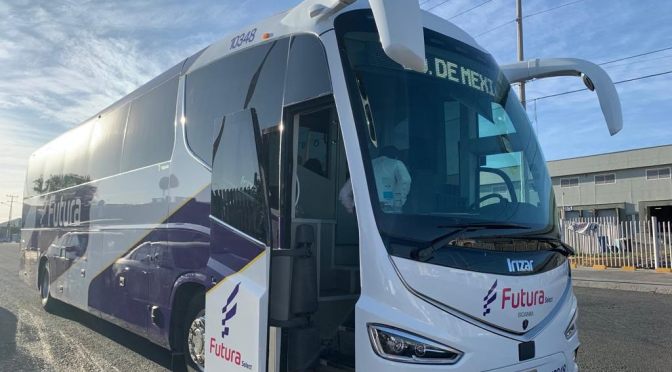
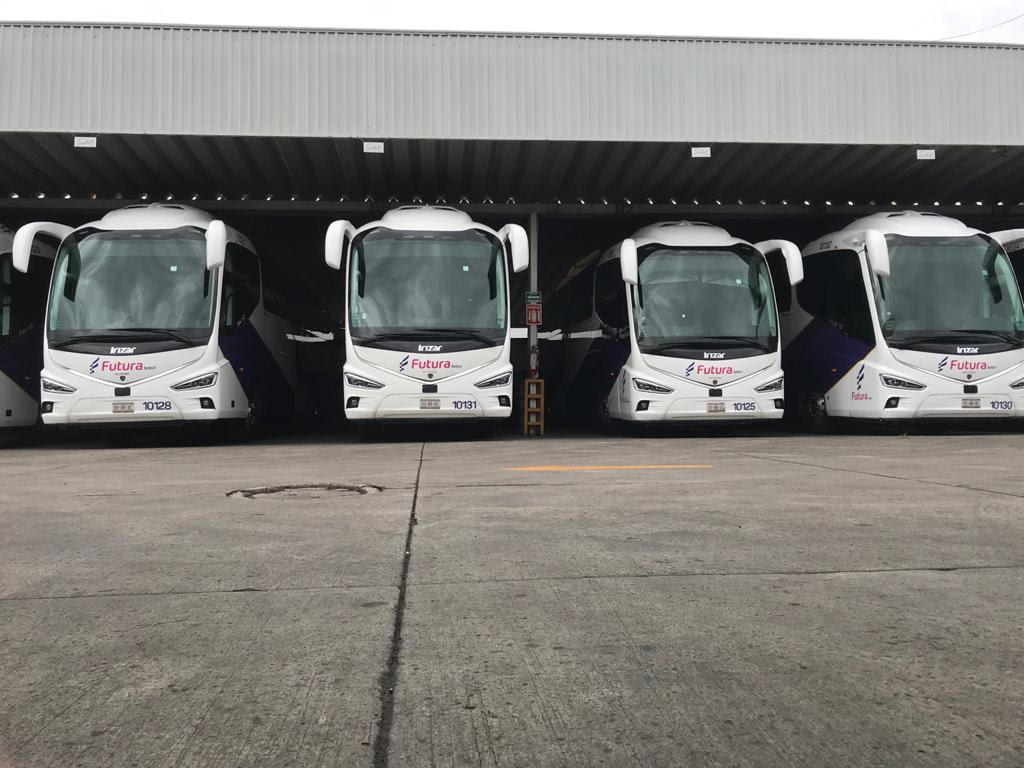
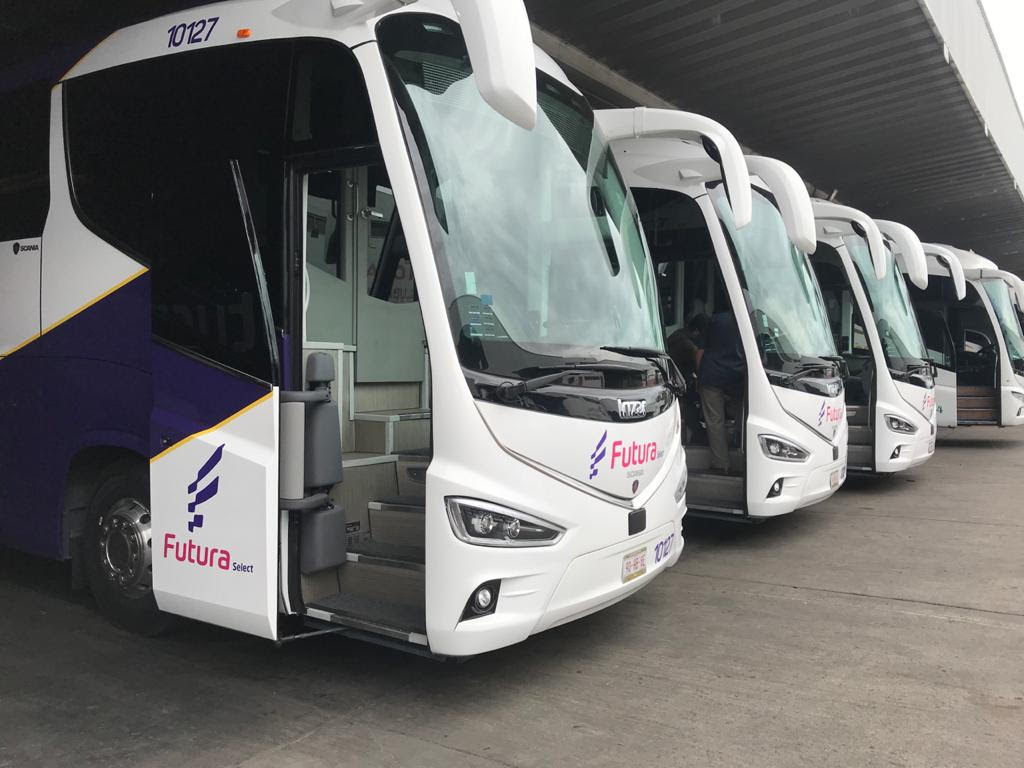
The group has had a long-standing relationship with Scania and its foreign K-series, which remains firm with the announcement in March 2022 of the first deliveries of Scania New Generation buses, with the K500 Euro 6 XPI platform, accompanied by the model Irizar i8.

With these new units, Grupo Estrella Blanca (GEB) is positioned as a sustainable leader in the passenger transport segment in Mexico. This measure adds to GEB’s efforts with the aim of achieving a lower impact on the environment, with a significant reduction in polluting gases, since Euro 6 technology significantly reduces CO2 emissions, as well as other pollutants.

The main element in these Euro 6 engines is the XPI ultra-high pressure fuel injection system, which allows pressures of up to 2,400 bars to be achieved in the combustion chambers, when they generally reach 1,800 bars. In addition, the injectors have eight nozzles and can have three injection pulses per cycle to optimize the air-fuel mixture.

The great modularity of the Scania power plants is still valid, and the DC13/165 engine has 12.7 liters and 6 cylinders in line. It delivers 500HP of power at 1,800rpm and if the horsepower appeals to you, the torque figure is more impressive, as the XPI engine produces 2,550Nm, constant between 925 and 1,400 revolutions per minute.

The implementation of this technology has environmental benefits linked to the reduction of emissions, since a bus will emit 18 tons of emissions less per year, if compared to a Euro 5 technology. In addition, thanks to the improvements in the powertrain, there will be a considerable benefit in fuel economy, compared to the previous generation of Scania Euro 5 PDE engines (pump-injector technology).

With the arrival of these vehicles, GEB will be able to impact the environment to a lesser extent, since the acquisition of these units meets the objectives of continuing to be a company with high social responsibility.

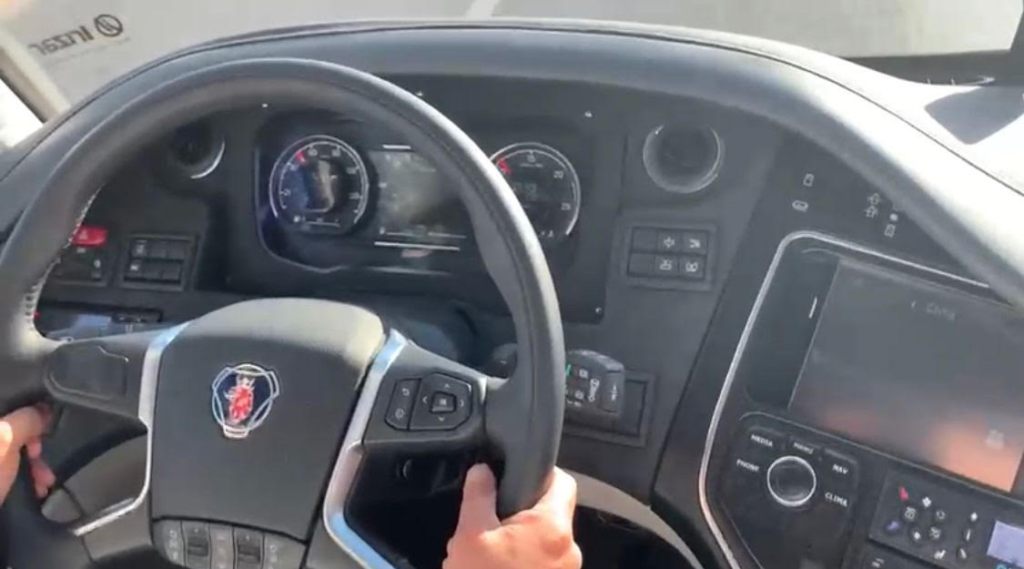
The driving position also features the new steering wheel with chrome details and completely redesigned instrument layout, seen at the end of 2019, which will make it easier for drivers to be aware of what is happening with the bus and provide them with an environment more up-to-date in their command posts.

For the safety of the occupants and other road users, the bus has the ADAS active safety package, with lane departure warning (LDW), automatic emergency braking (AEB), cruise control Intelligent Adaptive Control (AICC) and Electronic Stability Program (ESP).

“Since our foundation, we have characterized ourselves as a company busy seeking disruptive solutions for all our clients. For us, it is very important to seek efforts that go beyond offering transportation for people, we seek above all their comfort and this new chassis will meet those expectations, additionally we are betting on having the most current technologies on the market where one of the main aspects is environmental care”, indicated Luis Gerardo Mora, General Director of GEB.

These units are equipped with the most avant-garde technology of recent years. This reflects the high sense of responsibility of GEB and Scania towards the environment.

HINO EXPANDS ITS DEALER NETWORK IN COLOMBIA AND NOW HAS 21 SHOWCASES

HINO ARRIVES IN MONTERIA, CARTAGENA AND DUITAMA

Colombiabus newsroom – Distribuidora Hino de Colombia

Hino, the Japanese manufacturer of buses and trucks of the Toyota Group, arrived in Colombia almost 30 years ago and was always clear that its entry into the country was not a product of the economic opening winds of that time. For the brand founded in 1910 in Tokyo, landing in the Colombian market was the first step, with a view to staying and being one of the carrier’s preferred brands.

This commitment has been reaffirmed with the diversification of models, the increase in the dealer network and the establishment of the assembly plant in Cota, which to date has produced more than 40,000 buses and trucks for the local market, the countries from the Andean area and Chile.

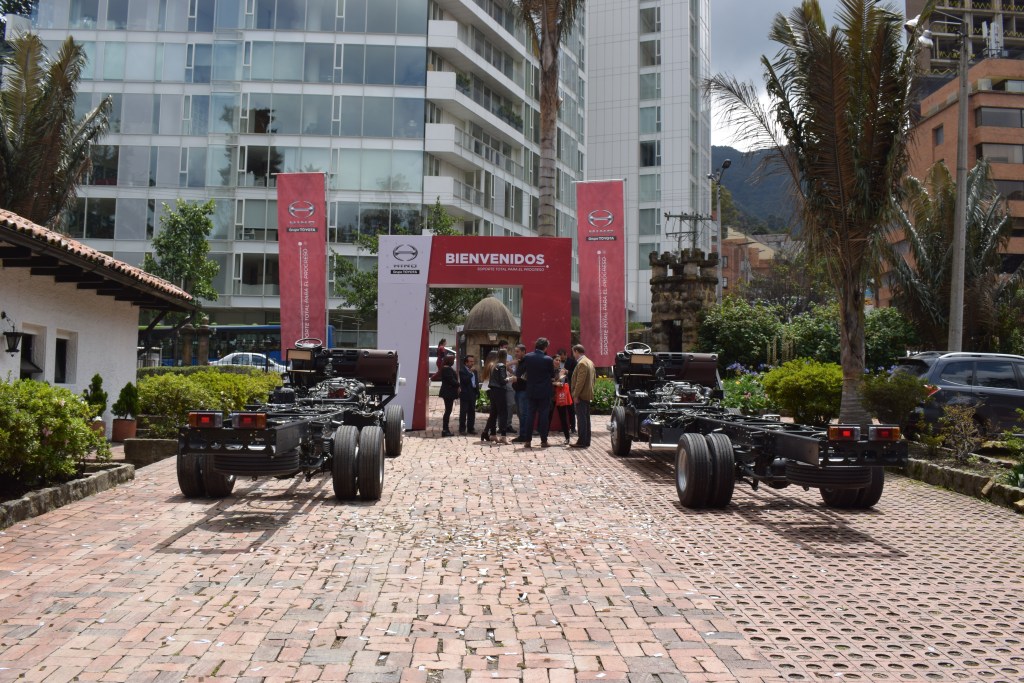
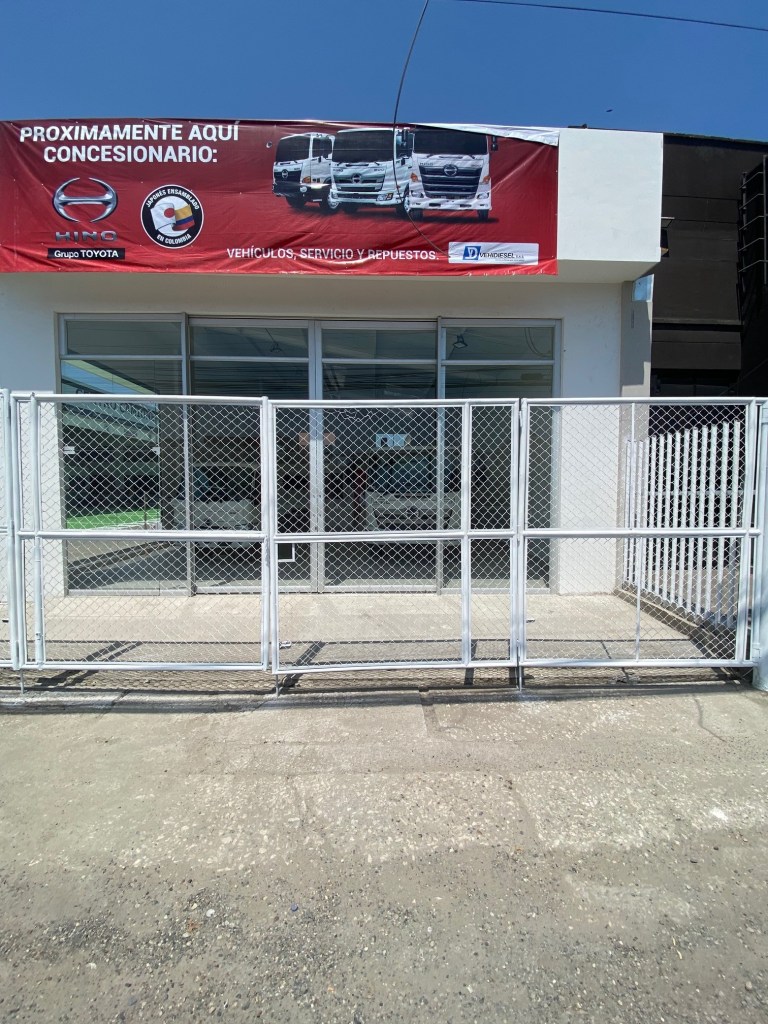
True to this premise of being close to the customer and having the best coverage, Hino has announced the opening of 3 new sales and service points in the country: Cartagena, Montería and Duitama.

The company wants to be one of the main players in these cities, to meet the needs of local cargo and passenger transporters, with offers of state-of-the-art buses and trucks, as well as to strengthen the service network and the sale of spare parts with the which currently counts.

“Cartagena, Montería and Duitama are key cities due to their geographic location, population, growing economy, quantity and variety of transportation needs such as imports, food, beverages, raw materials and passengers to all points of our country. That is why the HINO brand establishes new facilities to serve these carriers with the best of Japanese technology and strengthen its network coverage” says Juan Fernando Muñoz, commercial manager of Colombia’s Hino Distributor.

Vehidiesel, which already has a showcase for the brand in Barranquilla, will increase its presence on the Caribbean Coast with its new showcase in Cartagena. This is located at Diagonal 21 # 45A – 112, Barrio Bosque.

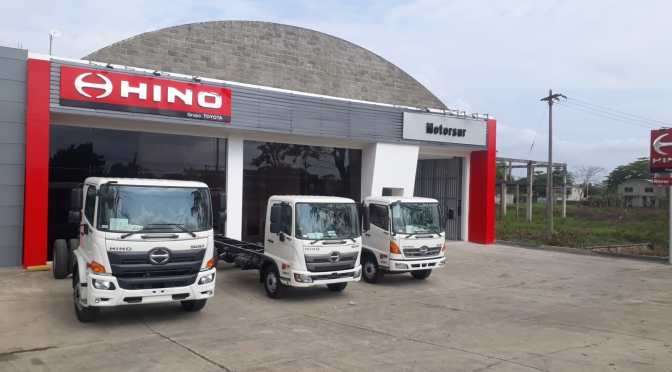
For its part, Montería will host a new headquarters of Motorsur, which already has experience as a distributor of the brand, since it serves Huila and Caquetá. Now it will reach the savannahs of the Atlantic coast and its headquarters are located at Carrera 6 #117-625, Barrio Los Garzones. For its part, Duitama, an important commercial and transportation city in the heart of Boyacá, will have its point of sale located at kilometer 4 via Paipa, Vereda San Lorenzo.

In these showcases, the brand will have a varied portfolio of buses and trucks with the latest innovations in the development of commercial vehicles, in order to offer products with the highest standards of quality, performance and safety.

Additionally, each point will have its technical center, in charge of offering after-sales service for trucks and buses: sale of spare parts and original parts; maintenance, revisions, diagnoses and recommendations for the use of the units, among many other activities to accompany the transporters.

“The value offer, in addition to the proven quality of our vehicles, is to offer our users Total Support, this means that our relationship with the client does not end when the bus or truck leaves the dealership, on the contrary , we have a structure which focuses on providing permanent support to our customers through our exclusive virtual support system “Hino Connect”, training and courses (which are given throughout the year), so that they know the machine in detail, how to operate it so that it has a long useful life and so that the operating expenses are minimal”, adds Muñoz.

HINO, which is the bus and truck unit of the Toyota Group, will also offer the transporters of Cartagena, Montería and Duitama, the HINO Connect tool. A technological development based on telematics, allows knowing in depth and improve the vehicle’s operating processes and also find solutions at hand in everything that has to do with the general condition of the vehicle, performance, schedule maintenance and the network of nationally authorized workshops, among other functions.

Hino Connect comes as standard on all buses and trucks from the 2020 models and is a vital element to control the operation of the brand’s buses and trucks. This allows improving driving habits by helping to professionalize drivers, contributes to efficient use of the machine and control of operating costs, for greater business profitability.

“There are many added values ​​that we have as a brand so that the offer is attractive and competitive compared to other offers of buses and trucks in these cities”, concludes the Manager. With these new openings, HINO reaches a total of 21 showcases, located in the main cities of the country, to offer more than 20 truck and 7 bus references.

MARCOPOLO’S G8 MOTIVATES THE INCREASE IN ORDERS FOR DOUBLE DECK BUSES IN BRAZIL

CHANGES THE ROAD TRANSPORTATION SCENE IN BRAZIL

Latinobus newsroom – Secco Comunicaciones

The enormous expectation for the arrival of the Marcopolo Generation 8 destined for the highway segment had been brewing for several years and when it was officially presented in July 2021, it did not disappoint anyone. In the international markets, the orders are being confirmed and their arrival to them is gradually taking place.

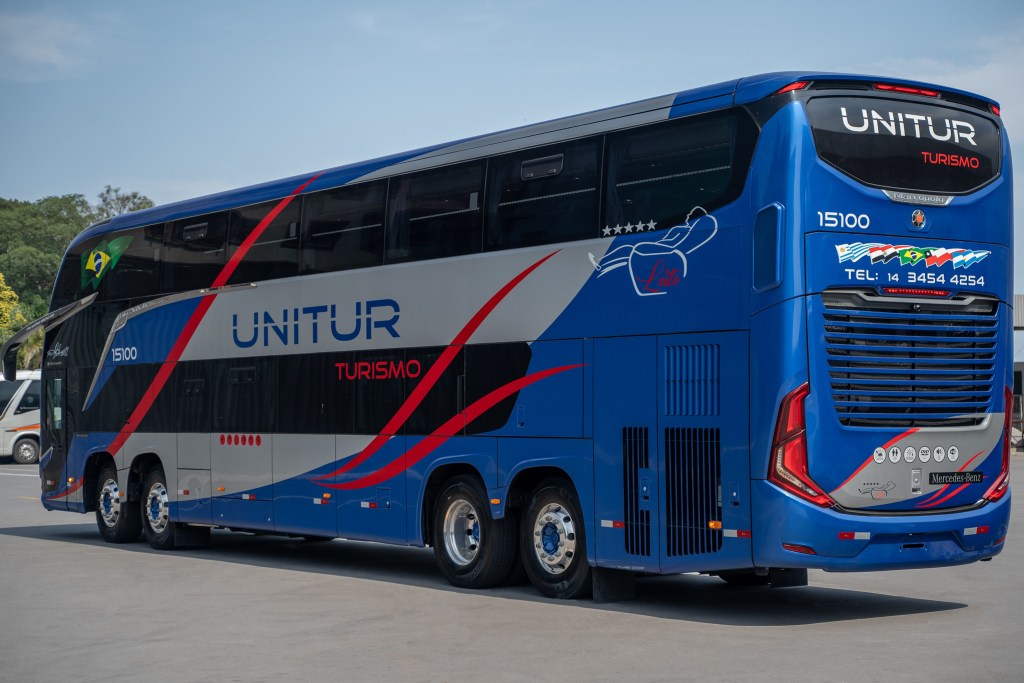
However, in the Brazilian market, the arrival of Generation 8 has been transforming the road transport scenario in the country and surprisingly, leading to the participation of double-decker buses in the segment growing faster. So much so that a few years ago, only 10% of two-tier vehicles were produced for local operators. Now, thanks to the new model, more than 50% of Paradiso 1800DD G8 orders are for companies in Brazil.

This market movement had been brewing as travel restrictions were lifted due to the pandemic and companies prepared to welcome travelers again “Even before the launch of Generation 8, we were already seeing this market movement, and we expected strong demand for more sophisticated DDs, but it is proving to be even more positive. Since the launch of the G8, most of the orders have been for the 1800 DD model, which represents a change in the behavior of customers who bought more the Paradiso 1200 model”, explains Ricardo Portolan, Director of Commercial Operations MI and Marketing of Marco Polo.

“Of Marcopolo’s intercity bus production in 2021, the Double Decker model represented more than 50% of the volume. And of that volume, when we consider only the Generation 8, the participation of the model is more expressive, exceeding 70% of sales”, highlights Portolán.

According to the Marcopolo executive, this change in the behavior of operators is an important sign that road transport is going through a complete transformation to offer more and more safety, comfort and convenience to attract more users, including those who opted by air transport. “For medium-distance trips, such as São Paulo-Rio de Janeiro or even São Paulo-Belo Horizonte, many people prefer the bus, due to its comfort and practicality, which has made operators intensify the acquisition of DD, with flat-bed seats and different classes of service.

For many years, Marcopolo has devoted special attention to the evolution of road transport and the change in the profile of passengers, focusing on the development of products, solutions and even services that greatly improve everyone’s experience. From the passenger to the operator, passing through the driver, mechanics and other professionals involved in the entire production chain.


Another detail that deserves to be highlighted is that the Generation 8 double-decker buses are not only appreciated by more companies dedicated to the segment of interstate or international routes. Also, companies in the rental, excursion and charter sector have incorporated the Paradiso 1800DD into their fleets.

The new G8 received a new design of wider stairs, with wide and soft steps, indirect LED lighting and a new design of the door opening system, more efficient and robust. All internal linings, including handles, roof and sides, are lined with ‘easy clean’ material, saving time during downtime, and are produced with antimicrobial fabric (standard on all Marcopolo models).

MERCEDES-BENZ EXPORTS 328 BUSES TO CHILE FOR PERSONNEL TRANSPORTATION COMPANIES IN MINES

CHASSIS O500RS CONTINUES TO GAIN ACCEPTANCE IN CHILE

Latinobus newsroom – Mercedes-Benz Do Brasil

As happened in other Latin American markets, the business transportation segment during the pandemic was the one that lost the least ground, compared to other transportation modalities and, additionally, it has been the one with the fastest recovery and growth during these months. The activities of large-scale extractive industries, such as mining, have motivated the dynamism in bus orders by service operators for rental, chartering or mobilization of personnel.

Chile is a country where the mining sector has a very important participation in the country’s GDP. There, the Mercedes-Benz O 500 RS road buses have gained wide preference for transporting employees of companies engaged in mineral extraction. Several operators that provide this charter service acquired 328 chassis for fleet renewal, 253 of the O 500 RS 1941 model with a 410 HP engine and 75 units of the O 500 RS 1936 with a 360 HP engine.

Negotiations with Chilean operators were carried out in partnership with Grupo Kaufmann, representative of Mercedes-Benz in Chile. The first new buses began to be delivered in January this year, bound for the central region of the country. The buses are used to transport employees between their homes and the mining units where they work.

“Most of the vehicles involved in this sale have the most innovative bus chassis anti-corrosion treatment developed by Mercedes-Benz do Brasil, which was presented at LatBus 2021 in São Paulo, the largest mobility fair in Latin America, and that stands out as a strength and durability solution in tough mining operations,” says Jens Burger, general manager of the Daimler Regional Center for Latin America.

In response to customer needs, Mercedes-Benz has developed the most innovative process on the market for the anticorrosive treatment of the brand’s bus chassis, further expanding the quality and resistance standard of the products. This special protection applied to the chassis is indicated for charter vehicles that transport employees and travel in severe operating environments, with a high degree of salinity, high levels of humidity, low temperatures and intense heat, which occurs, for example, in mining.

In other words, these bus chassis leave the factory even more protected against corrosion and other impacts that result from the extreme conditions of vehicle application. This requires less maintenance of the chassis structure and a longer service life of the bus. This solution is available for the O 500 city and road chassis and for the LO minibus line. In addition to the application of anti-corrosion treatment of the chassis, these vehicles receive special tires for severe operations and an extended safety package, being able to circulate both in mining environments and in cities.

In addition to the rust protection features, the O500RS buses have extensive safety equipment including: ABS (anti-lock system), speed limiter, ACC (adaptive cruise control), ASR (traction control system), Hill Holder (hill start assist), ESP (Electronic Stability Control), LDWS (Lane Warning System), EBS (Electronic Brake System) and suspension with anti-roll system.

Since 1950, Kaufmann has been in charge of the entire portfolio of both light and commercial Mercedes-Benz vehicles, beginning with the sale of the revolutionary rear-engine O321H buses. Through its subsidiaries, it also has the distribution of the brand’s portfolio in Peru, Costa Rica, Nicaragua and Panama.

SUPERPOLO WILL SEND ANOTHER 80 ARTICULATED BUSES WITH VOLVO CHASSIS TO THE SUBUS OPERATOR IN SANTIAGO

GRAN VIALE BRT BODYWORK AND B8R CHASSIS DO NOT CHANGE

Colombiabus newsroom – William Marroquín

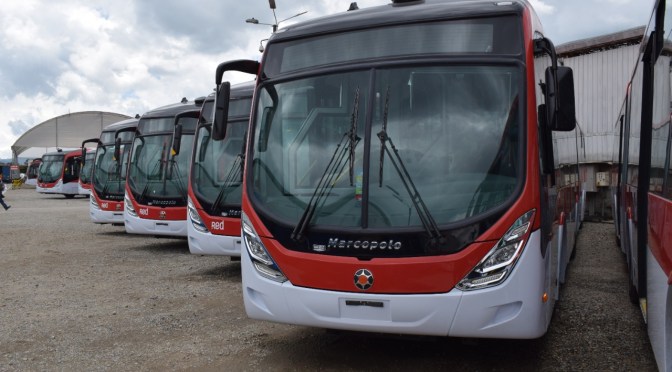
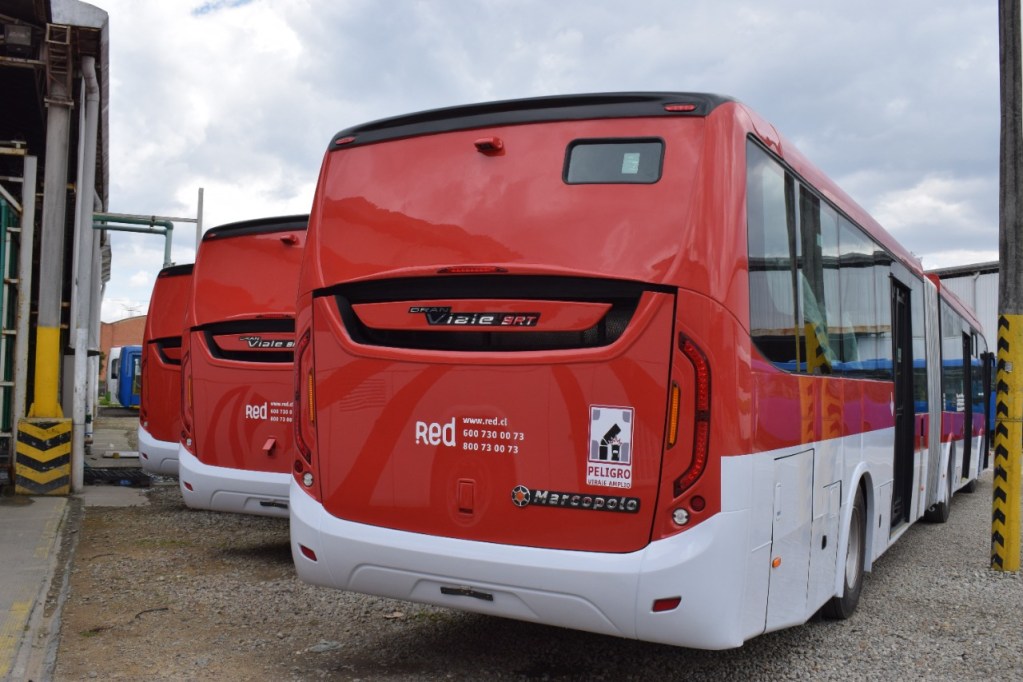
SuBus, operator of the Santiago de Chile Metropolitan Mobility Network system, which is in charge of the Business Unit 2 corridors, continues to work on renewing its bus fleet. To continue with this update, it has once again opted for the combination of the Marcopolo bodywork with the Volvo chassis and will soon receive an additional 80 articulated buses, bodied in Colombia by Superpolo.

These new buses are added to the 200 that were bodied in 2020 at the Marcopolo-Superpolo facilities, at its plant located in Cota, on the outskirts of Bogotá. The process related to confirming the order and preparing the details of the production line has been defined by the end of 2021 and the buses are practically ready to be shipped to Chile.

The vehicles have the same chassis-body configuration as the previous 200 units built in Colombia. The Volvo B8R LEA platform (low entry – articulated) is coupled to the Marcopolo Gran Viale BRT body. The engines comply with the Euro 6 emission standard, recalling that Chile was the first country in Latin America to implement this standard in 2017, making it a standard for the incorporation of new buses in the BRT system of the capital Santiago.

The low entry chassis promotes accessibility and adapts to the height of the stop stations, complemented by the kneeling system and the electronically leveled air suspension. The Euro 6 D8K diesel engine with 7.7 liters of displacement delivers 350 HP and 1,400 Nm of constant torque between 1,200 and 1,600 laps. To comply with all chemical reactions and release the least amount of emissions into the atmosphere, it is equipped with: SCR aftertreatment system (Requires AdBlue), DPF particulate filter, DOC oxidation catalyst and improved nitrogen monoxide reductions NOx, with the ASC component.

To deliver the power to the wheels, the B8R is equipped with the Voith DIWA 864.6 automatic transmission, with torque converter and 6 gears for maximum smoothness, comfort and productivity. Also, if you want to take advantage of all the functions of the bus and professionalize operators, Volvo I-Coaching contributes by informing about opportunities to improve driving habits and integrate with a good deal of telematics and fleet management functions. Volvo.

Another outstanding component is the air conditioning system developed by the Colombian company Transaire, which has a system installed for 12-meter buses in one wagon and another for 9-meter units in the second. This makes it possible to deliver a cooling capacity that exceeds 200,000 BTU/hour, allowing adequate heat extraction and the emission of fresh, dry air inside, which can accommodate 34 seated passengers and 116 standing.

The front and rear optical units incorporate LED technology, which are very easy to replace in the aftermarket, and are used in other Marcopolo models such as the Torino, helping to lower operating costs. Access is very easy thanks to the low platform and for people with reduced mobility, at the central door, there is a manual access ramp, which is very simple to operate and offers great practicality, and also communicates directly with the spaces provided inside for those traveling in a wheelchair.

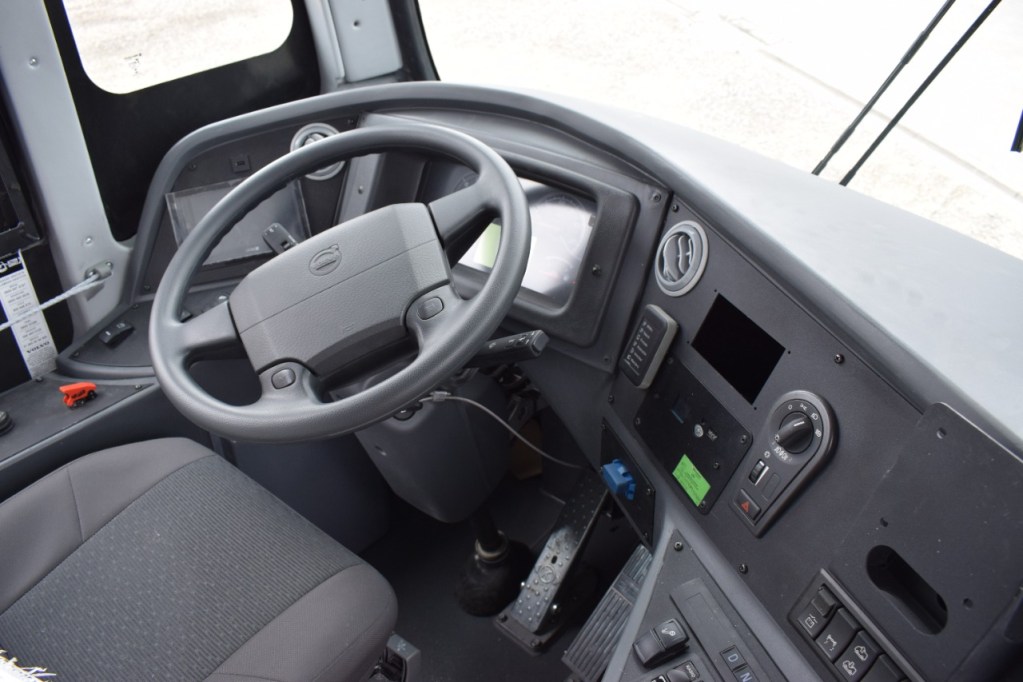
The driver is totally isolated from the passenger room, thanks to the complete cabin division, which was improved by changing the arrangement of some windows, which generated reflections. The light and chassis controls are at the right hand of the operator, who from this position can control the multiplex system and climate control.

The chairs are equipped with armrests and padding, numerous handles and grips for the support of those who travel standing up. There are also different color codes and textures for the handrails and handles near the preferred seats in red. In this area, the bell buttons have braille language for the blind.

The interior also has USB ports to recharge mobile devices, spaces to store the cell phone and great luminosity taking advantage of natural light. Cameras arranged throughout the passenger lounge and in the operator’s position to report everything that happens during the trip, internal amplification system and microphone connection. It is also equipped with signage and warning messages about the height of the bus, the handling of the air conditioning, and access to the vehicle.

SuBus, the Chilean operator that will receive them, is a company that began activities in 2004, has about 5,600 employees and 1,300 buses, to serve more than 50 routes through the Chilean capital. Made up of Colombian capital, since it has the support of Fanalca, since its inception it has relied on Volvo chassis for its fleet of standard and articulated vehicles. On the other hand, the buses have been bodied mostly by Marcopolo, coming from both the Caxias do Sul plant (Brazil) and the Superpolo factory in Cota (just outside Bogotá).

This order for eighty units reaffirms the capacity of the Colombian facilities to serve large volumes of foreign operators. Let us remember that in 2011 Marcopolo Superpolo delivered about 1,200 buses for the MiBus system in Panama on Volvo chassis. Other important orders followed, such as the 80 bi-articulated Torinos for Quito, which were shipped in 2016, and the 200 articulated ones that left the Cota plant for SuBus in Chile, all of them with many local suppliers and workforce, which contributes to the generation of quality jobs.