Tag Archives: Colombiabus

MADRID WILL BUY 520 NEW CNG AND 50 ELECTRIC BUSES IN 3 YEARS

Colombiabus Newsroom – EMT Madrid

EMT MADRID WILL INVEST 177 MILLION EUROS

The Municipal Transport Company of Madrid (EMT) is a company that belongs to the City Council of the Spanish capital and is in charge of managing the mobility of the city in the different means of transport: bicycles, cable car, municipal cranes, public parking lots and of course, city buses.

EMT recently held the tender to acquire 520 new Compressed Natural Gas (CNG) buses for the years 2021, 2022 and 2023, in addition to the purchase of 50 new electric buses. These orders will help to further renew the fleet in the Spanish capital, removing the oldest and most polluting vehicles from the municipal company. These new fleet orders are aligned with the announcements of the Madrid City Council, whereas of January 2023, EMT will not provide service with diesel buses and its entire fleet will be made up of electric, natural gas and hybrid vehicles.

The awarding of the CNG buses, which had a basic tender budget of 161.2 million euros, will ultimately involve an investment of 151.5 million euros. The procedure has been divided into three lots: the first, for 250 buses, has been awarded to Solaris Bus with the Urbino CNG model; the second, of 170 buses, has gone to Scania and its Scania N280 CNG Castrosúa model and the third batch, of 100 vehicles, has been awarded to Evobus with the Mercedes Citaro CNG model.
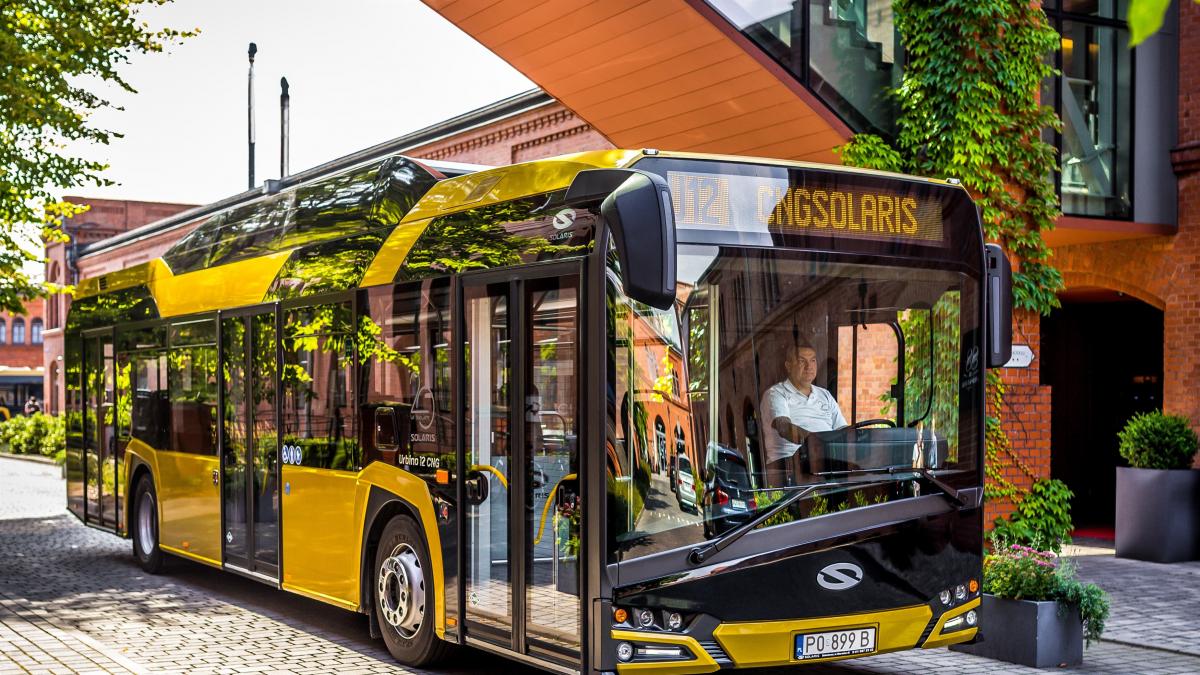
The delivery of the 520 buses will take place in three years: the first 190 buses of this acquisition will arrive in 2021, in 2022 another 200 buses will be added and in 2023 another 130 vehicles will be received. With this delivery schedule, the 383 diesel buses that the municipal company currently has can be withdrawn from service. This year 250 vehicles will stop operating and next year, the remaining 133.

On the other hand, the award of the electric buses will involve an investment of 25.9 million euros. The procedure has been divided into two lots: the first, of 30 standard electric buses, which will be assigned to Irizar and its ieBUS model, and the second, of another 20 units, will correspond to the BYD K9UB bus. With this order, the electric fleet will grow to 179 units at the end of this year and the electrification of 8.6% of the EMT park will be achieved.

Currently, the EMT Madrid fleet is one of the most modern in Europe, with an average age of 5.75 years and vehicles that incorporate the latest technological advances in terms of safety, comfort, environmental requirements and accessibility.
BRAZILIAN BUSINESS AND SPECIAL TRANSPORTATION ESTIMATED RECOVERY IN 2021

Colombiabus Newsroom – Marcopolo Brasil

ROAD BUS SALES REMAIN LOW

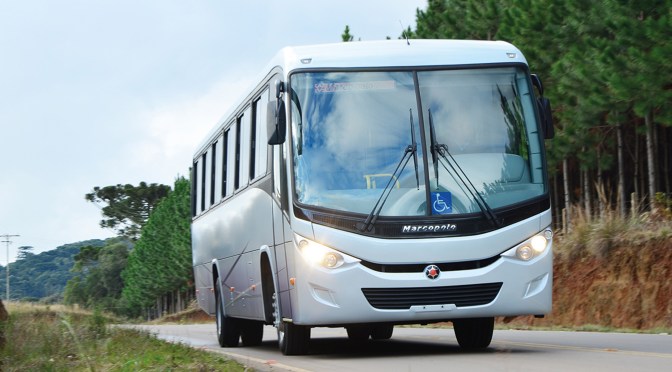
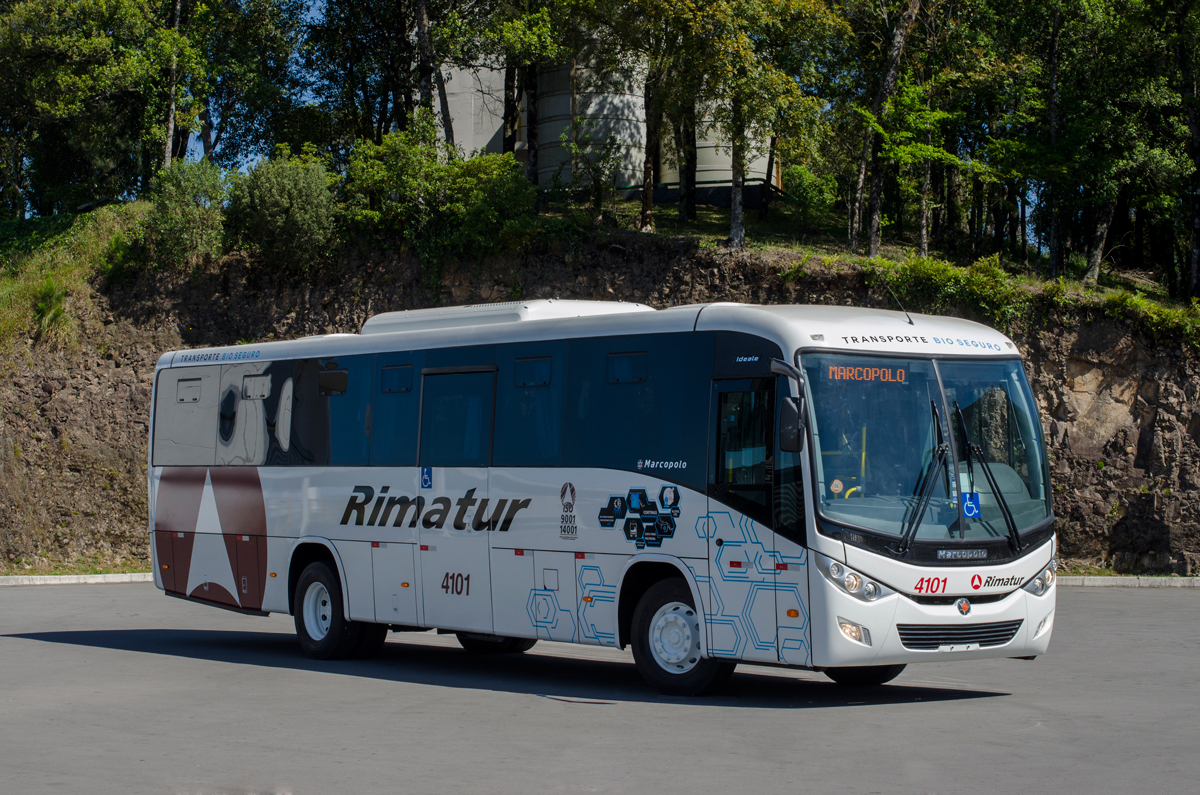
While the road bus segment registers a decrease in sales volume due to the new coronavirus pandemic, the charter sector continues to boom in 2021. Marcopolo, leader in the Brazilian bus body sector, with 52.7 % of market share, already shows an increase in the sales of vehicles destined for this segment. Until April, the company will deliver more than 200 units for the transport of personnel in urban areas and in the mining and agribusiness sectors, in several Brazilian states.

“The need for companies to adapt to the distancing determinations imposed due to the pandemic generated a demand for more available vehicles. This represented an important part of Marcopolo’s results in 2020, especially in the agribusiness and mining sectors. Both industries remained hot even during the pandemic and, with the requirements of social distancing, companies increased their fleets of transporting employees to maintain this distancing within buses,” explains Leandro Sodré, Marcopolo’s national sales manager.

Jaime Silva, president of the National Association of Tourism and Charter Transporters (ANTTUR), comments that the eventual charter, made for tourism events or activities, was strongly affected by last year’s pandemic. “On the other hand, the continuous charter, like the transport services of the civil servants, has been strengthened. In 2021, there has already been a recovery in these first two months and the expectation for the year is the resumption,” he evaluates.

Social distancing also benefited Volare’s sales. The daily production of Marcopolo’s micro bus brand grew by 66% between the first and third quarters of 2020, from 12 to 20 cars. In large part, the growth was driven by the warming of the agricultural market in the Southeast, Midwest and South regions. For 2021, the outlook is for growth with the reopening of tourism, as well as schools and universities.

In 2020, 2,251 units were produced for the domestic market compared to 2,305 in 2019, however, there was a recovery in the volumes sold during the period due to the search to replace vans, less adequate to the new regulations. It should be remembered that Volare is a leader in the microbus sector and operates in 35 countries in Latin America, the Middle East and Africa.

CHILE WITH THE LARGEST FLEET FOR HIGHWAY ELECTRIC BUSES IN SOUTH AMERICA

Colombiabus Newsroom – Vivipra / William Marroquín

17 KING LONG BUSES JOIN FOR TRANSPORTATION IN MINES

The race for leadership in electromobility in public transport in Latin America is far from defining a winner, although it can be mentioned that some countries in the region have taken the lead in different segments of passenger mobilization. Chile is currently the country with the largest fleet of urban electric buses operating in the capital Santiago, although it will soon lose that distinction at the hands of Bogotá, which expects to have more than 1,500 vehicles of this type.

However, in road mobilization, since 2019 the country became the pioneer in the incorporation of electric road buses, starting with a joint project between TurBus (one of the main passenger transport companies in the country), Vivipra (representative from the Chinese manufacturer King Long) and Copec Voltex (a division of Copec dedicated to electromobility). It has been followed by companies such as Tandem, Buses Hualpen, Viggo, among others, who use it on regular routes or to transport personnel.

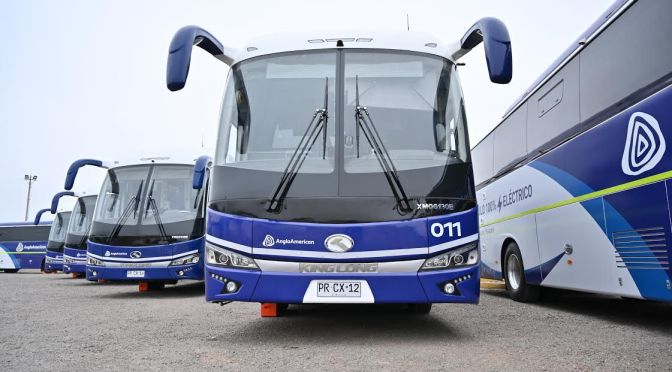
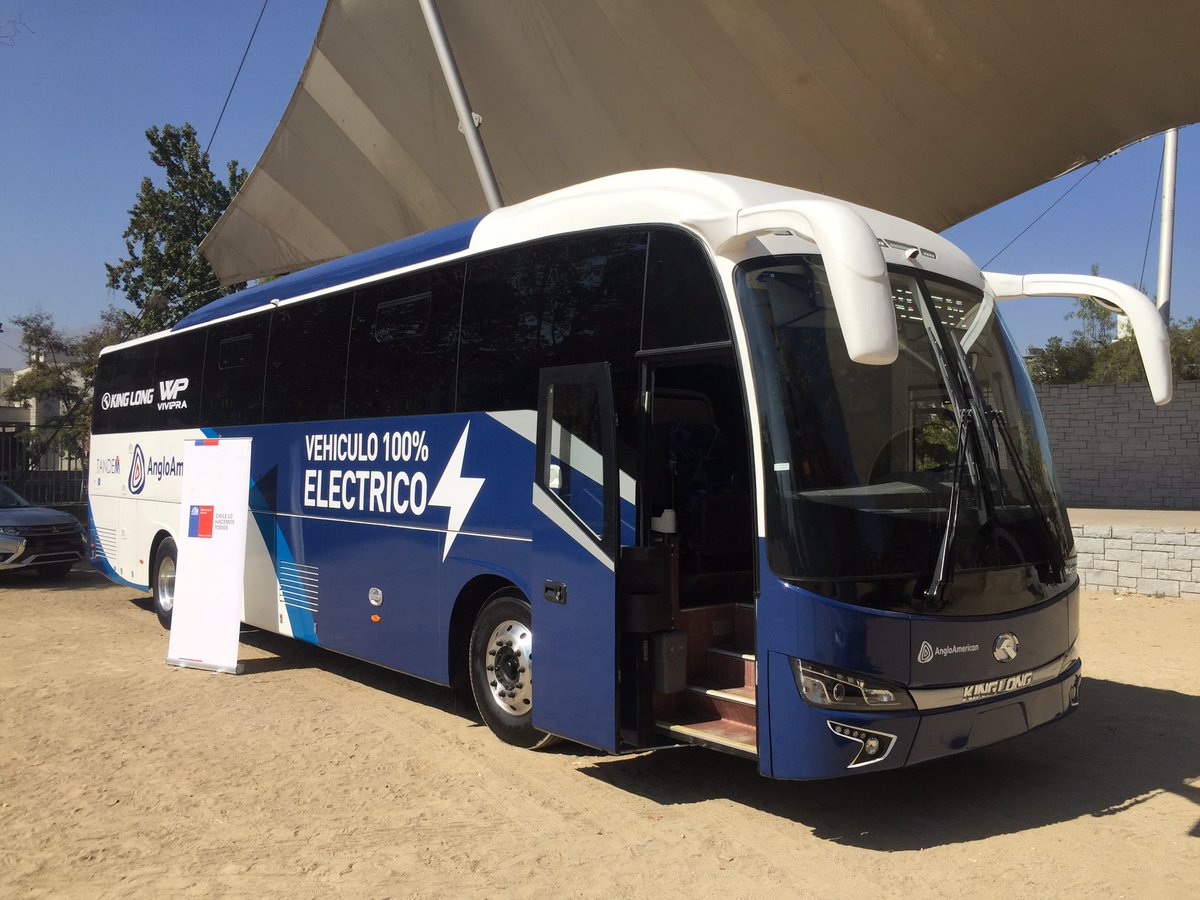
A few days ago, a very important delivery took place commissioned by the Anglo-American mining company, which seeks to reduce the carbon footprint in all aspects and being the extraction of minerals, the main economic activity in Chile, it should be the leader in that energy transition. For this reason, the operator Transportes Hualpen launched 17 electric buses to mobilize the personnel that work in the mine, although the plans are quite ambitious, because it is expected to have 50 buses that will replace an equal number of diesel vehicles.

The 17 King Long XMQ6130EYWE5 buses with a length of 13 meters, with the capacity to carry 44 passengers that are transported to the Los Bronces mining complex, located on the edge of Valparaíso and the Metropolitan region of Santiago. They are equipped with a pack of 10 batteries that allow to accumulate 314KWh that grant an autonomy of up to 250Km without recharging. You can also save when riding between 5 and 10 km / h since it does not consume load, electric generators provide a maximum power of 350Kw (469HP).

They are equipped with all the comfort features of a road bus such as air conditioning, reclining seats with their seat belts, toilet, WiFi internet connection, electrical outlets and environmental entertainment screens for the well-being of the workers. On the other hand, the 17 vehicles have systems for mitigating Covid-19 transmitting agents, including the screening tower, gel dispensers, as well as separation of the driver and passengers.

También cuentan con el sistema avanzado de asistencia al conductor, que comprende el control de crucero adaptativo, las advertencias de cambio involuntario de carril y el sistema de frenado de emergencia automático. Adicionalmente se le incluyó el detector de fatiga y las cámaras 360 en el exterior y las que captan imágenes del salón de pasajeros. A través de los sensores instalados por todos los autobuses y la información que recoge el GPS se registran todos los parámetros de operación, permitiendo el monitoreo del vehículo a través del centro de control que está atento 24/7.

They also feature the advanced driver assistance system, which includes adaptive cruise control, lane departure warnings and automatic emergency braking. Additionally, the fatigue detector and 360 cameras on the exterior and those that capture images of the passenger lounge were included. Through the sensors installed by all buses and the information collected by the GPS, all operating parameters are recorded, allowing the vehicle to be monitored through the control center that is attentive 24/7.

“This fleet will be a great contribution that will reduce emissions, reduce noise pollution and fuel consumption. In addition, it will provide greater comfort to our workers, since traveling in these buses is completely silent and without engine vibrations”, expressed Aaron Puna, Executive President of Anglo-American Chile.

This Chinese brand reaffirms itself as a leader in the segment of electric road buses in Latin America.

MARCOPOLO AND MERCEDES-BENZ DELIVER 102 URBAN BUSES TO URUGUAY

Colombiabus Newsroom – Secco Comunicaciones

87 BUSES TORINO AND 15 AUDACE INCLUDE THE FLEET

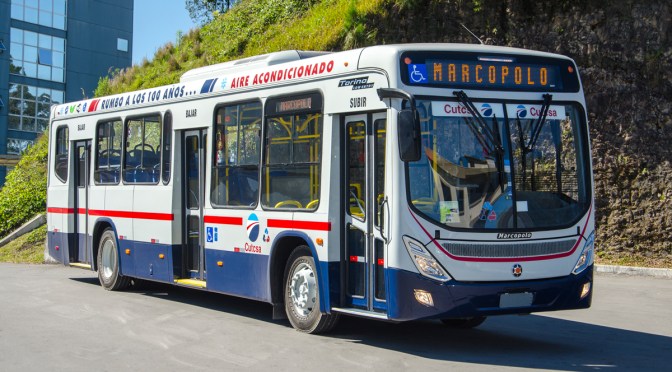
Marcopolo and Mercedes-Benz supplied 102 new buses to Compañía Uruguaya de Transporte Colectivo S.A. (CUTCSA), the leading company in the segment in Uruguay. The delivery includes 87 units of the Torino Low Entry model, with OH 1721/62 LE Euro 5 chassis and 15 units of the Audace 800 with OH 1622/52 L Euro 3 chassis, both models have OM 924 rear engine, renewing the fleet of the company with operations in the capital Montevideo and its surroundings.

The sale was negotiated by representatives of Dloner and Autolider, in charge of distributing Marcopolo and Mercedes-Benz products in Uruguay, respectively. “The new vehicles reinforce our presence in Uruguay and mark the first offering of the Audace 800 model to be used for intercity travel. They are models that make the company more competitive and further raise the standard of comfort and safety offered to passengers”, in the words of Juliano Leoratto, Marcopolo’s business operations consultant responsible for the Uruguayan market.

The 87 new buses in Torino carry 63 passengers, 34 standing and 29 seated in City seats. They have an access ramp for people with reduced mobility in the central door on the right side, with a specific place for wheelchairs. They are equipped with a Valeo air conditioning system and six USB sockets installed throughout the vehicle. The vehicles are 11,800 mm long, a six-speed Allison automatic transmission with torque converter and air suspension on both axles.

In addition, the 15 Marcopolo Audace 800 with a total length of 11,100 mm, have the capacity to transport 41 passengers seated in Executive model seats, with USB sockets, lift for total accessibility and Multiplex system. Among the comfort and safety equipment are the preparation for the installation of a monitoring system with five cameras and entertainment with multimedia playback, two front electronic routers and front fog lights.

CUTCSA is one of the urban transport companies with the longest tradition in Uruguay, with more than 80 years of activity and operating on around 100 different interurban and urban lines. The operator has a fleet of around 1,100 vehicles, almost all with Marcopolo bodywork.

BLANCO Y NEGRO MASIVO DE CALI ESTUDIA INCORPORAR MÁS E-BUSES A SU FLOTA

Redacción Colombiabus – Portal Movilidad

CALI NECESITA 110 BUSES ELÉCTRICOS ADICIONALES

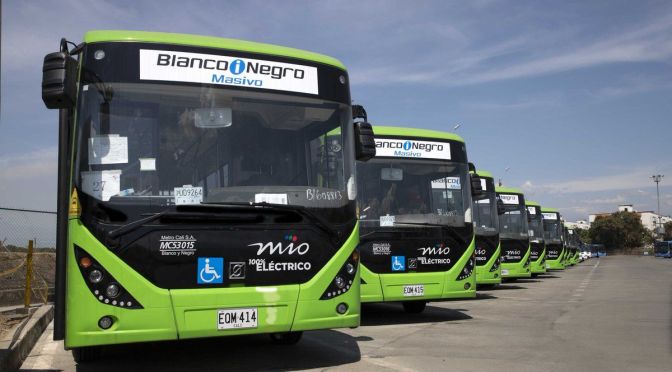
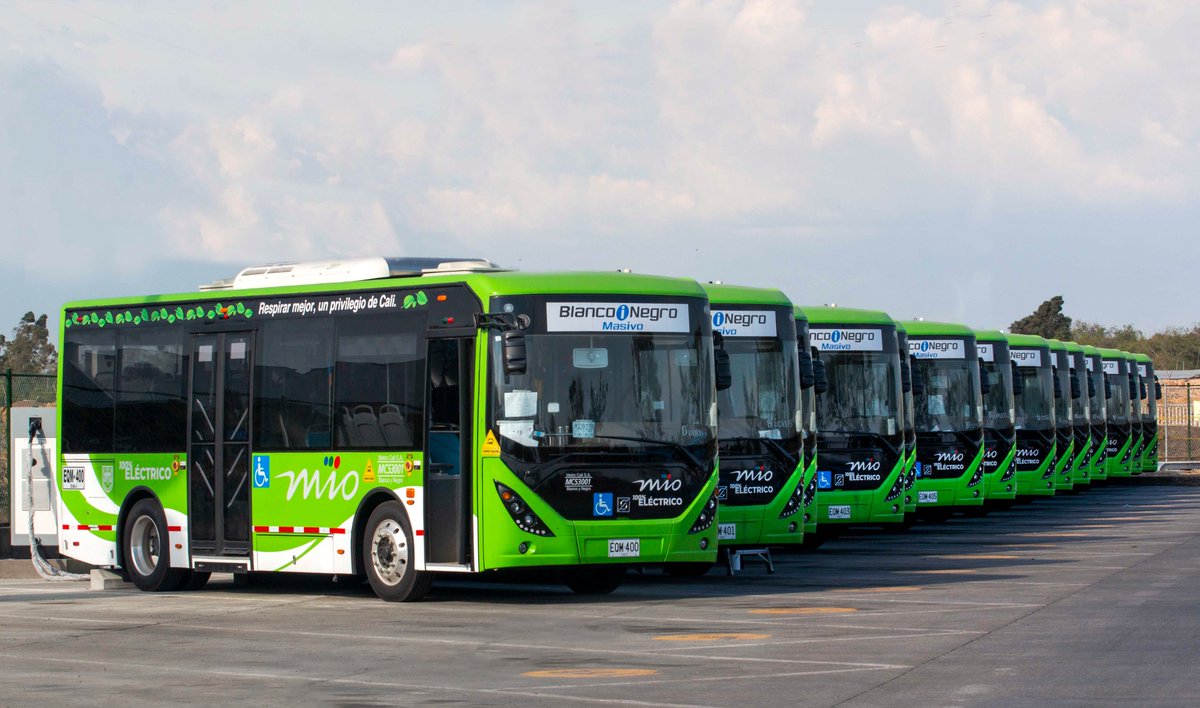
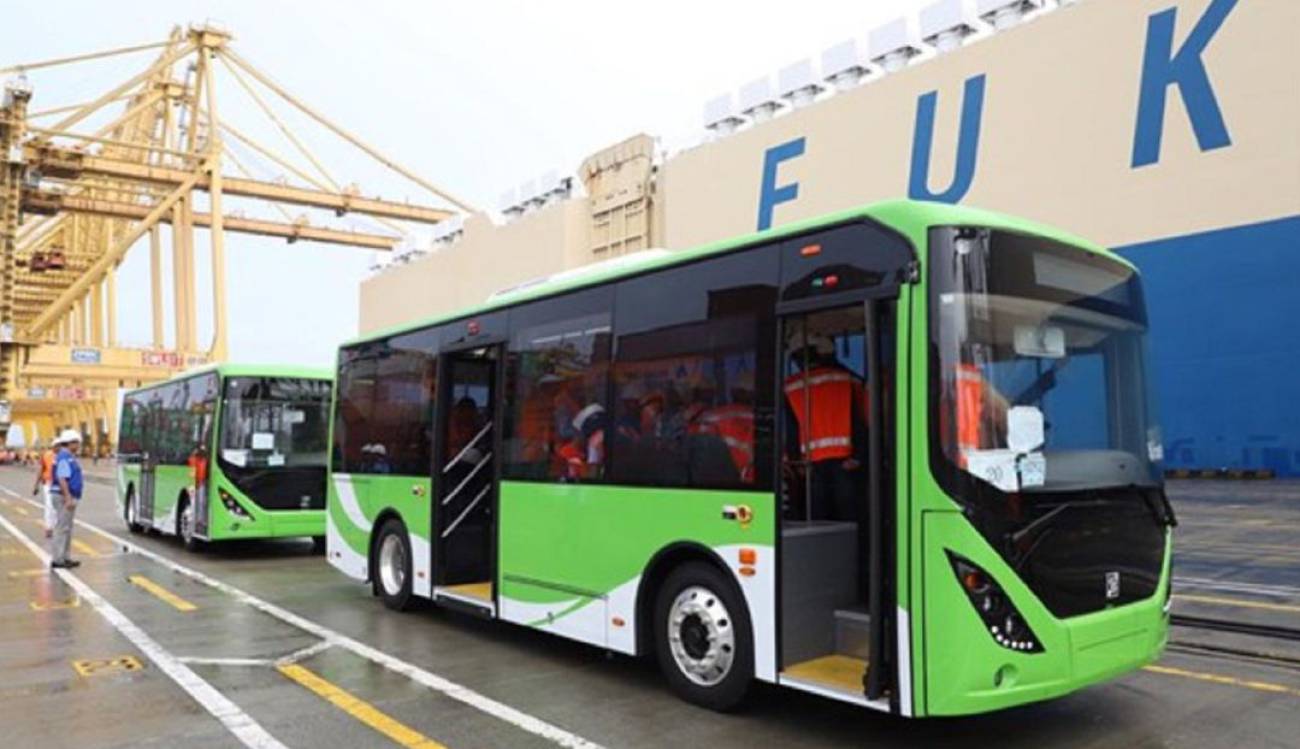
Cali necesita incorporar 110 buses eléctricos adicionales y tanto GIT Masivo que confió en BYD como Blanco y Negro Masivo, tienen experiencia en la utilización de este tipo de buses. Y es justamente el segundo concesionario que evalúa incorporar más vehículos a su flota, considerando el trabajo realizado para el esquema de provisión en conjunto con Celsia.

Actualmente esas unidades tienen un rendimiento promedio de 1,22 km/kwh, pueden alcanzar una autonomía de hasta 270 kilómetros, aunque diariamente recorren cerca de 200. “Los resultados son muy satisfactorios ya que logramos llegar a los parámetros de rendimiento proporcionados por el fabricante, adicional la disponibilidad y la confiabilidad de esta flota eléctrica es superior a flotas con motores de combustión interna” manifiesta Diego González, Director de Mantenimiento de Blanco y Negro Masivo.

Para recargar las baterías se dispone de un espacio durante las horas valle, entre las 10 de la mañana y las 3 de la tarde, mientras que el nocturno cuando termina la jornada, se realiza entre las 11 de la noche y las 2 de la madrugada, siempre en el patio taller de Blanco y Negro Masivo. En dos horas de conexión un bus puede contar con el 80% de la energía de la batería, pues el 20% restante corresponde a un margen de seguridad que se deja para prolongar la vida útil de los acumuladores.

Para realizar la sustitución de los autobuses del sistema que deben salir, Metro Cali como ente gestor del sistema de la capital caleña espera que ingresen de forma gradual 55 unidades, en lo que respecta a los buses de 50 pasajeros. Los responsables de mantenimiento se encuentran estudiando la operación y comportamiento de los vehículos, para estimar la viabilidad de incorporar nuevos vehículos. Cabe recordar que el sistema inició su operación en Marzo de 2009, por lo que la carrera por la renovación debe comenzar pronto.

Para establecer el análisis, lo primero es estimar la demanda para que de acuerdo con ella, se defina la capacidad de la flota que debe responder. En el mismo se estudian variables como la cantidad de pasajeros y rutas para determinar la cantidad de buses y frecuencias, lo que determina la operatividad, que irá de la mano con los requerimientos técnicos.

HIGER BUS WOULD ASSEMBLE BUSES IN BRAZIL AND STUDY OTHER LATIN COUNTRIES

Colombiabus Newsroom – Portal Movilidad

THEY HAVE ALSO EVALUATED OPTIONS FOR TRANSMILENIO

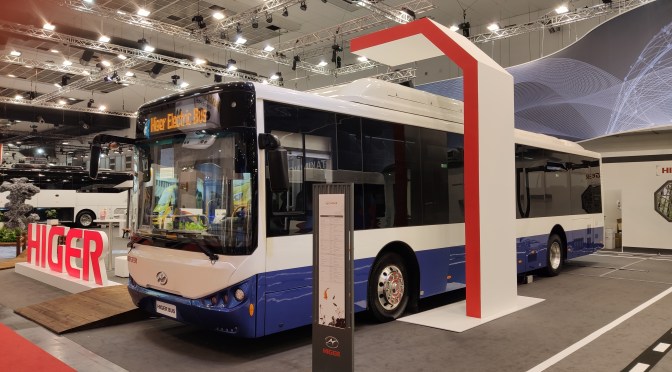
Higer Bus is one of the main Chinese bus builders and was established in 1998, it belongs to the same business group that owns the King Long and Golden Dragon brands, being capable of producing about 35,000 buses per year of all technologies (diesel, gas, electrical and fuel cell). Likewise, it has maintained the alliance with Scania with which they manufacture 10,000 vehicles per year.

This alliance continues to consolidate and is now taking another step with the Azure line, designed with technical support from Scania, with 100% electric technology, concentrating for the moment on the Brazilian market. Although they are preparing the development to have the version powered by hydrogen. Currently, the Chinese firm has electric models that range up to 18 meters and with developments in the Latin American nation of 23-meter bi-articulated and 15-meter standards with double rear axles.

However, they recognize that they have a disadvantage compared to other Chinese brands such as BYD, Yutong and even their King Long cousins, who have taken steps in Latin America not only with electric vehicles. “We are a bit behind in Latin America, our introductory force today is Brazil, which has a very fast absorption capacity and good prospects for the next few years,” said Marcello Barella, Higer’s Director for South America.

The idea is to participate in the fleet renewal plan of the city of Sao Pablo, which by 2034 estimates a replacement of 1,200 buses per year. They also hope to participate in electromobility projects in countries such as Argentina, Chile, Colombia, Mexico and Peru, although it will depend on alliances with energy providers such as Enel or Engie, which are the main investors.

“In the case of Transmilenio, we talk a lot with companies, but the problem in South America is not the type or what brand, it is financing. Without an investment group that accompanies the manufacturers, it is very difficult to enter the markets”, Barella mentioned to Portal Movilidad.

SALDIVIA BUSES FROM ARGENTINA PREPARES TO ARRIVE IN PERU AND ECUADOR

Colombiabus Newsroom – Ecos 365 / William Marroquín

ALSO NEGOTIATES TO ARRIVE IN URUGUAY

From an undertaking that had its origins in 1999 in Argentina, with the MCM company, dedicated to distributing auto parts to the current Saldivia Buses, a path has been traveled to build vehicles that transport much more than passengers, in which more than 50,000 people are transported daily, with a portfolio that includes from midibuses with a vehicular weight close to 9 tons, to double-decker buses.

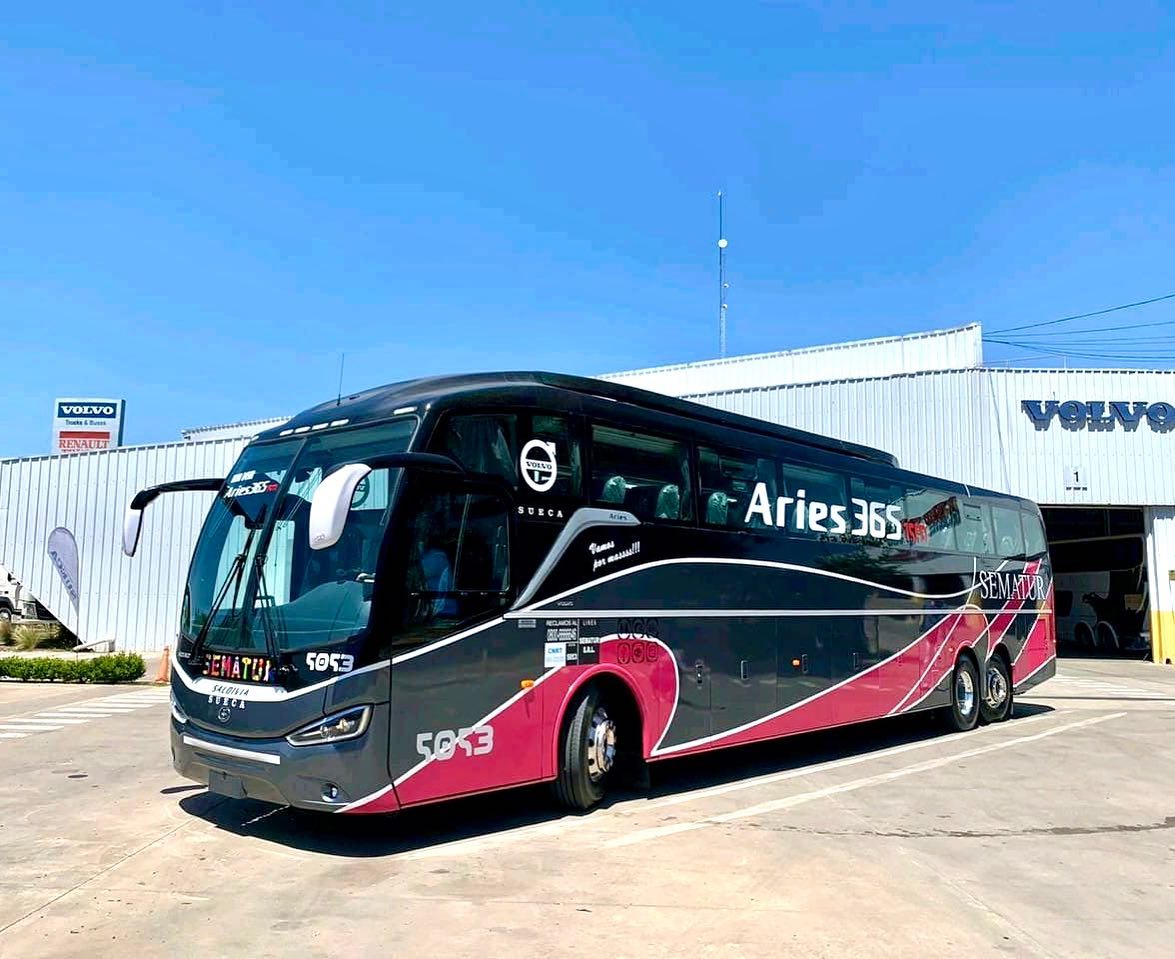
In 2020 despite the pandemic, its Aries 365 road model gave much to talk about due to its advances in design and comfort, as well as the ability to adapt to a trend that has been growing in Argentina where operators are switching to single-deck buses and large passenger and cargo capacity, but without the costs of double-decker buses. This was also reinforced in the alliance with Volvo Buses, whose B450R served as a platform to present that configuration for long distances in a single tier.

An investment of close to 9 million dollars to refurbish its plant, incorporate machinery and modernize its production processes, has been the basis for presenting new luxury road buses to the market, which have been gaining acceptance both in Argentina and abroad. They were able to resist the inactivity caused by the pandemic and the confinement measures, to resume exports to Chile and negotiate the disembarkation in other countries of the region. Saldivia had managed to leave his country, moving to his neighbors, where there was a good demand for road buses for both medium and long routes, as well as for the transport of mining personnel.

“That previously implied carrying out a market study on the needs that existed, designing the model, putting together an entire after-sales structure in Chile, standardizing products and carrying out a commercial deployment abroad,” said Adrián Saldivia, who leads the company. For that market, they have already managed to close the sale of the first four units and expect that at least 20 buses of the brand will roll in 2021.

The models with which they are arriving are the Aries 345 and 365, which stand out for their high level of safety, driving aids and a high level of comfort. Being able to equip them with all the options for a high-level trip with refrigerators, chromatherapy, wide seats and maximum recline, air conditioning and more separation between passengers and cabin.

Thanks to the arrival in Chile, opportunities have opened up for Peru and Ecuador, in addition to negotiating to start selling buses in Uruguay. It is a key issue, since currently more than 90% of production is destined for the domestic market. «We made a significant investment in technology, tools, tooling, welding machinery, laser cutting, bending machines, among other equipment to achieve the necessary quality to be able to compete abroad. The idea is to consolidate abroad and continue to modernize our fleet” said Saldivia.

MY PANAMA BUS SYSTEM WOULD BE BIDDING ELECTRIC BUSES IN 2021

Colombiabus Newsroom – Portal Movilidad

THE SPECIFICATIONS WILL BE PUBLISHED IN BRIL

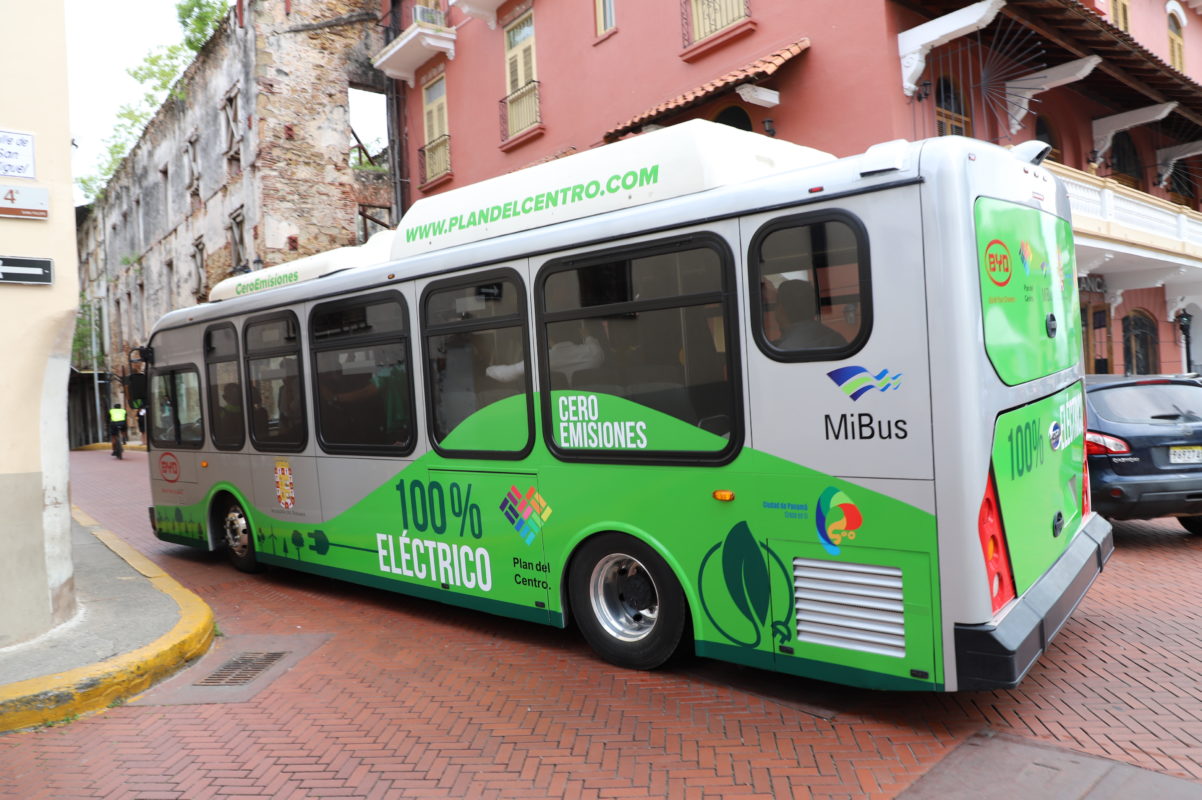
A few months ago, the MiBus system in Panama reported that it had approval to buy 35 electric midibuses and an additional 160 powered by diesel or natural gas. The process had some delays, following the recommendations of the Inter-American Development Bank and C40 Cities who carried out additional analyzes of technical, operational and financial feasibility that would leave the door open to incorporate more electric buses.

The results of these studies include recommendations such as evaluating a new scenario where medium and large units are combined based on the fact that, in some routes where they would be inserted, the medium ones would not be so profitable due to autonomy. The studies analyzed the operation with large buses and electric midis, in addition to buses with internal combustion engines.

“The acquisition will probably be in phases, for example 100 in the first and about 100 or 50 in a second and third stage. That is one of the details to be defined, but we are sure that it will be more than 35”. Indicated Luis Camapana, General Manager of MiBus

Another key issue is the financial scheme to guarantee the purchase of the buses, which must be defined for the presentation of the bidding conditions in April. It seeks to include acquisition and maintenance, or with an operating lease where MiBus continues as manager, and the contractor is in charge of supporting the buses in exchange for their monthly payment.

The charging infrastructure must be in charge of whoever provides the buses, responding for the electrical installations and chargers in a place that MiBus must assign. It should be remembered that the company is operating two 100% electric buses provided by BYD to evaluate the operation and performance of the units.

“LA AMENAZA NORMATIVA”, EL EDITORIAL DE REVISTA COLOMBIABUS – NÚMERO 39

Redacción Colombiabus

MÁS PREOCUPACIÓN PARA LA INDUSTRIA

Durante muchos años, carroceros, academia, fabricantes de chasises y
proveedores de la industria, trabajaron para encontrar un referente que definiera los requerimientos técnicos para construir y comercializar vehículos de pasajeros en Colombia. Este objetivo se alcanzó en 2016 con la Resolución 3753 del Ministerio de Transporte, que indica el obligatorio cumplimiento de las pruebas y certificaciones, para garantizar la calidad y la seguridad en los autobuses. Ese mismo año, la Resolución 4200 estableció los parámetros para certificar la conformidad del vehículo con la normatividad técnica.

En la actualidad, el fabricante o importador del vehículo estaba facultado para demostrar de primera parte el cumplimiento de la normativa técnica, así como sus condiciones de seguridad y construcción. Sin embargo, el equipo jurídico del Ministerio de Comercio, Industria y Turismo indicó que a los dos años de haberse acreditado la primera entidad certificadora (lo que ocurrió en marzo de 2019), se suspenderían los procesos donde el proveedor del equipo aseguraba el cumplimento de la norma, quedando un tercero, con la respectiva idoneidad, encargado de otorgar el visto bueno al autobús.

La gran preocupación que ronda nuestra industria carrocera, es la proximidad del vencimiento de los dos años transcurridos desde que se acreditó el primer ente certificador, implicando una instancia adicional para lograr que un vehículo demuestre su cumplimiento del reglamento técnico. El otro agravante, es la exigua cantidad de laboratorios certificados, que no tendrían la suficiente capacidad para realizar las pruebas a todos los carroceros, conduciendo a unos costos exageradamente altos en un momento que coincide con la peor crisis del transporte de pasajeros en Colombia. Quiere decir esto que ahora, para
poder homologar un vehículo, debería incurrirse en onerosos procesos de certificación y verificación ¡por cada una de las variantes del mismo
modelo sobre cada chasís que se monte!

Los fabricantes entienden que los procesos de conformidad ayudan a depurar la oferta y aseguran tanto la calidad como la seguridad de los
vehículos, pero la claridad en las reglas de juego y que se mantenga el escenario de competencia y costos racionales para estar certificados, es
fundamental para asegurar su supervivencia.

Actualmente la cadena industrial del autobús sufre con la reducción en el aforo, baja demanda de viajeros, enormes dificultades económicas, entre muchos males. Si los procesos de certificación no están acordes a estos padecimientos, tanto con la realidad actual de la industria y sus posibilidades de recuperación, serán un mensaje negativo para quienes por décadas han construido los vehículos en los que rueda el país y han
evolucionado a la par de las necesidades de la sociedad y sus normativas.

METROBÚS ADDS 10 NEW YUTONG ELECTRIC BUSES ARTICULATED TO THE OPERATION

Colombiabus Newsroom – Portal Movilidad

IT IS EXPECTED TO HAVE A 100% ELECTRIC CORRIDOR

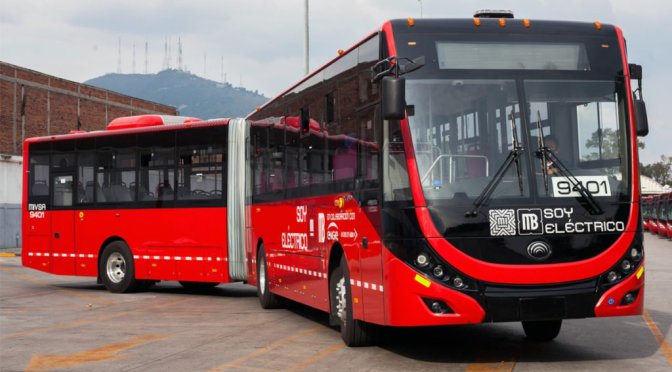
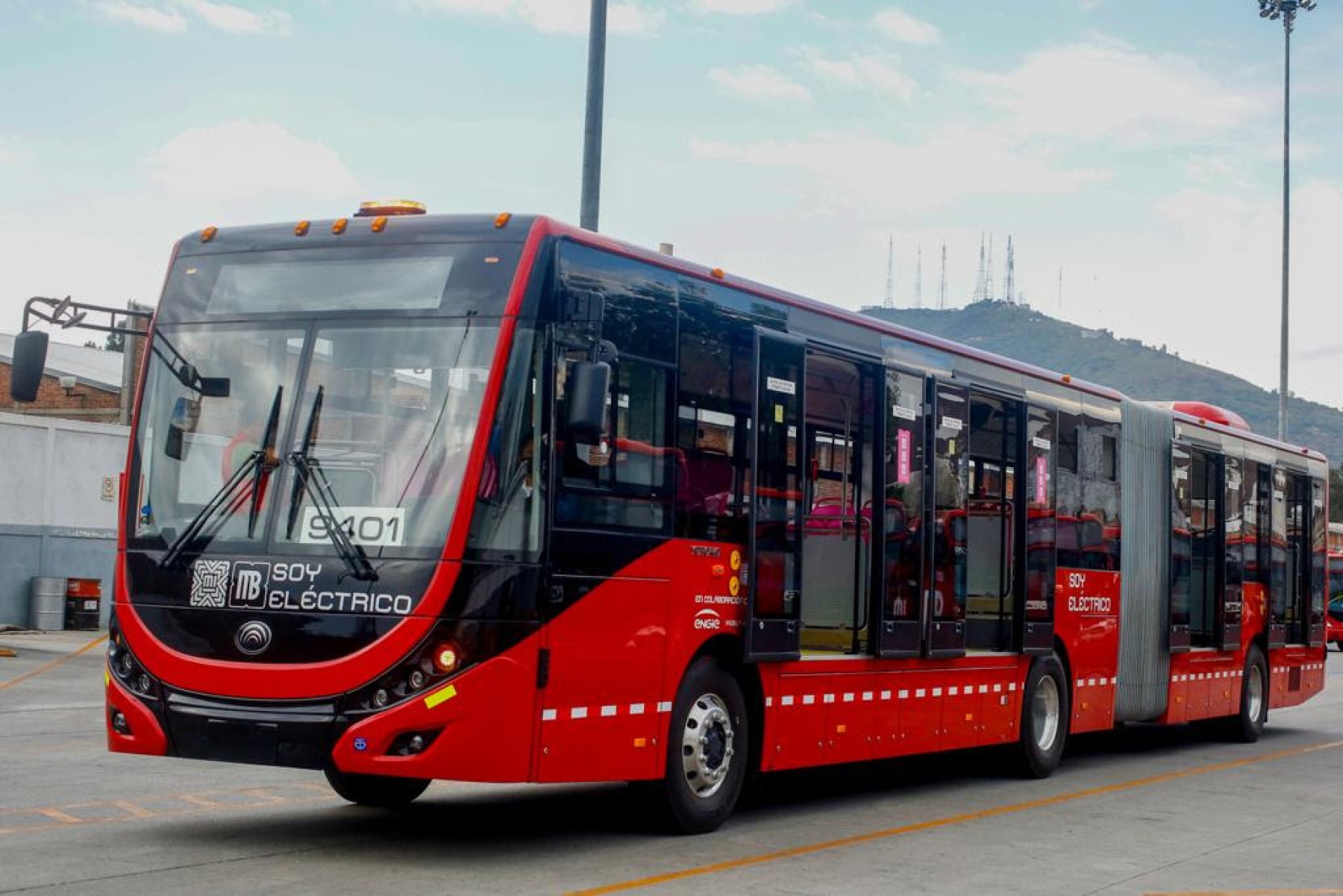
With ten articulated Yutong electric buses on Line 3, and another 10 on Line 4, the Mexico City Metrobús continues its route towards electromobility. Likewise, for the next 18 months, the creation of a 100% electric line in the interior circuit is planned, seeking to expand the urban interconnection.

Additionally, a cautious but ambitious foray into electric mobility is expected with a clear proposal that is difficult to ignore, seeking to attract more bus manufacturers with sustainable energy. In this way, it would be easier to access and incorporate the benefits they bring, which are both for the user and for the environment itself.

Electromobility is not the only technological renovation that the company has incorporated and seeks to promote. To offer a better service to the user, Metrobús works in two more dimensions: connectivity and the collection system.

In the first case, reference is made both to the connectivity that links the rolling infrastructure and the stations, as well as to the connection with people. That is why they seek to have a “greater service management capacity, through advanced control centers”. In the second case, it is sought that direct payment can be accepted in more lines with a charge to the card both in the payment machines, but also with direct validation.

The entry of the Mexico City Metrobús to electric mobility is quite recent. In August 2020, the first, with a capacity for 160 people and a dimension of 18 meters, was enlisted on Line 3, which runs from Tenayuca to Ethiopia, in an alliance with Mobility ADO and Engie México with the Yutong ZK6180BEVG1 buses.