Category Archives: ENGLISH

SCANIA MEXICO SOLD 740 UNITS IN 2021 AND EXPECTS TO BREAK RECORDS IN 2022

SEEKING LEADERSHIP IN BUSES AND GROWING IN TRUCKS

Colombiabus newsroom – Scania México

2021 was not easy for the transport, cargo and logistics sectors due to the ravages of the pandemic, supply chain and the semiconductor crisis, causing entire plants to stop production, a global problem for which no one was prepared. For Scania Mexico it was no exception, however, the Swedish brand in Mexico came out ahead and managed to close the year with 740 units sold between buses and cargo trucks, in addition to already venturing into the motor segment. The foregoing defines the impact that the brand has managed to position over more than 25 years of history in Mexico.

For the cargo segment it was a record year, it gained market share and doubled sales in 2020, closing with a total of 567 vehicles, of which 527 were tractor trailers and 40 were class 8 rigids. This placed Scania in fourth place after national level in trucks according to data from the ANPACT (National Association of Producers of Buses, Trucks and Trucks) and INEGI.

“It is an achievement for us to reach these figures in Mexico, without a doubt it has been the best period in the history of the brand in Mexico in terms of trucks and tractors that we started four years ago, despite all the problems that occurred during the year, we went from selling 276 trucks in 2020 and grew 105.4% compared to that year, having a market share of 2.85%. We still need to grow more, and we are on the right path, our customers recognize the brand for the differentials that we have presented in the sector, and we are doing our job in a very important market for Scania”, commented Mauricio de Alba, Director of Sales and Scania Trucks aftermarket.
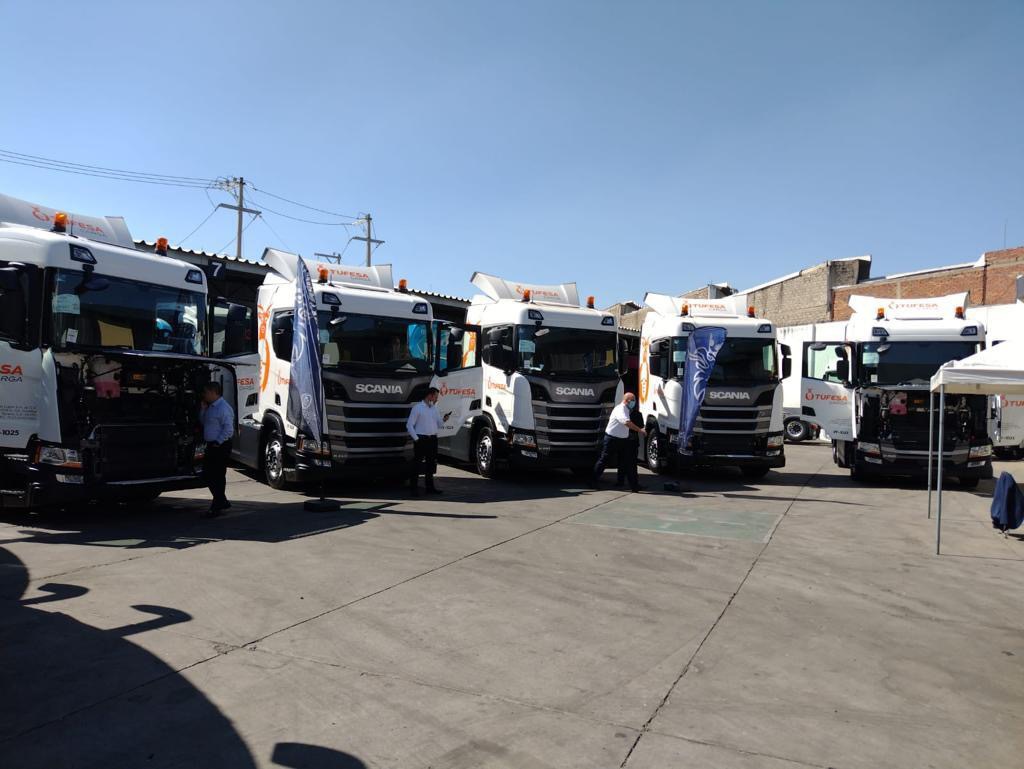
It is important to mention that, thanks to the trust of customers in the segment, all the stock that was available for sale in 2022 is already assigned to various customers. During this year, orders will be received for 2023, where the objective will be to place 3,000 trucks in the Mexican market.

In the bus and passenger transport segment, Scania continues to be a leading brand and an improvement in demand was noted compared to 2020. 173 units were sold during 2021, with 154 foreign units sold and 19 urban units. “In the bus and passenger transport segment, we had a notable improvement, although we are not yet at pre-pandemic levels, we have to continue working along the same lines, the only way to grow is to continue doing the good work we have been doing during all these years: demonstrating the value of our sustainable products, innovating and offering comprehensive solutions in each of the services” said Jorge Navarro Inostroza, Sales and After Sales Director of Scania Buses.

Similarly, the numbers for the engine segment have been of great value to Scania, proof of this were the 31 power generation engines placed in the Mexican market throughout the year and 64 more that are already ordered by 2022. “We want Scania quality to be in each of the products and services we offer and engines could not be the exception, we have started knocking on doors and customers have responded quite well, so the outlook for our engines looks promising”, commented Raúl Rodriguez, Director of Power Solutions.

One of the strengths of the Swedish brand is in after-sales and the “Customer Workshop Services” (CWS) which consists of taking the Scania workshop to the customer’s facilities to provide support and maintenance to the vehicles, so the brand takes care of the vehicle and the customer of your business. Currently, there are 49 points covering the entire Mexican Republic, with 70% of the fleet (between buses and trucks) with a direct maintenance policy from Scania, so the brand’s offer is completely comprehensive.

The start of operations of the brand’s finance company was vital during 2021 since it supported 70% of commercial operations, a differential that has enabled important businesses to be enabled and which means total brand confidence with its own products.
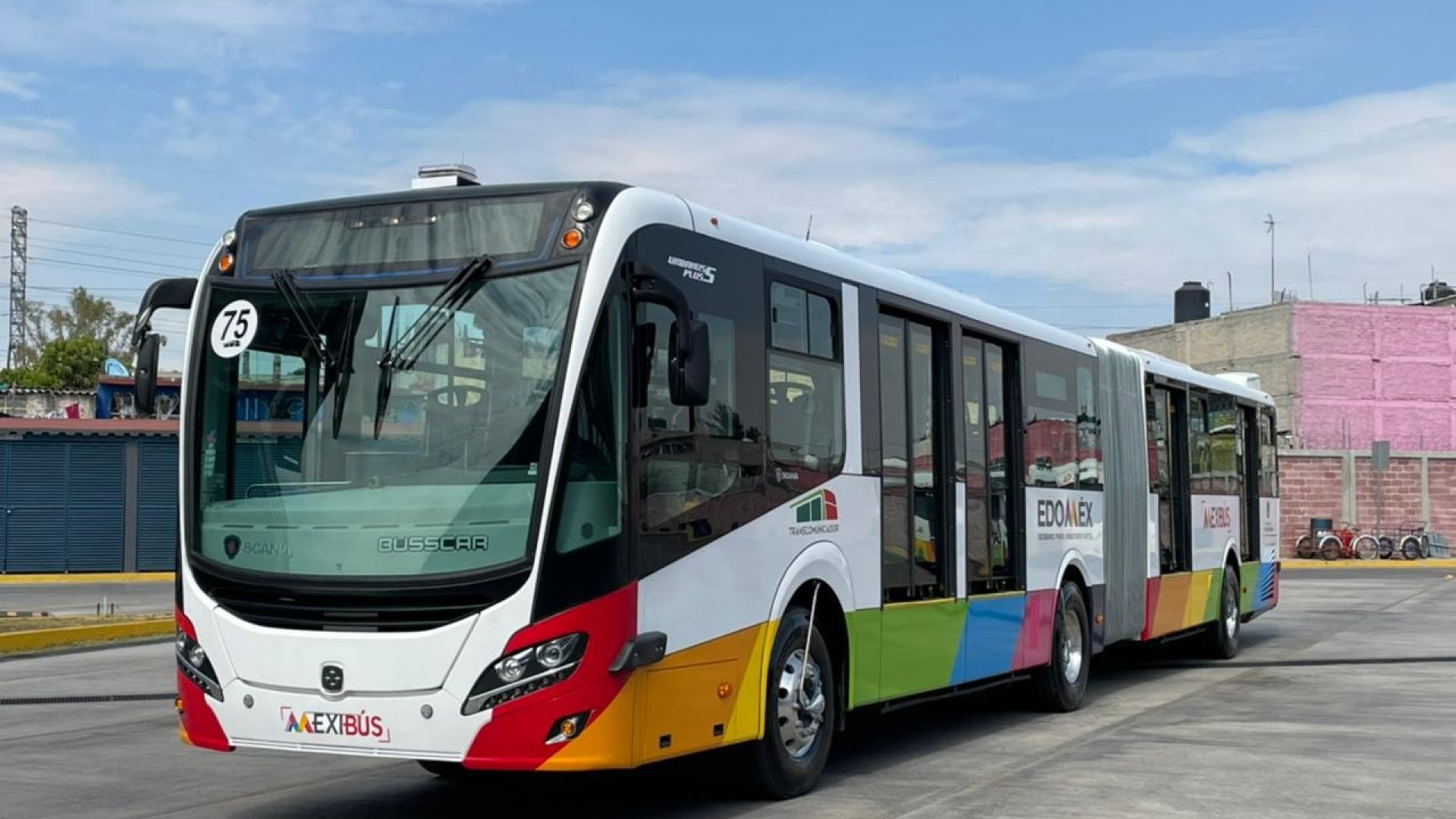
Scania currently has 5,743 vehicles connected with Scania Communicator, a brand-specific tool that offers the customer all the information on the units by Scania’s team of professionals; As part of its Driver Coaching program, with more than 1,000 subscriptions focused on driver support, the brand provides personalized attention to learn in detail the driving habits of each vehicle and each operator, as well as support maintenance management and the location of the same, focused on a safer, more sustainable and profitable operation, one more example of Scania’s commitment to each of its customers, to have more durable and efficient fleets.

Among the most relevant news for the brand in 2021 was the announcement of the launch of the electric truck by the CEO and President of Scania Mexico, Alejandro Mondragón, within the framework of the XXI National Forum for the Transport of Goods by the ANTP (National Association of Private Transport). There, it was mentioned that in 2022, the best electric truck in the world will arrive in Mexican territory.

Likewise, in the bus segment, the arrival of the first electric bus for the Swedish brand in the country was announced, with October 2021 being the month in which pilot tests began on the electric platform with which this urban bus will be manufactured in Mexico hand in hand with Beccar for this 2022. Additionally, one of the most anticipated moments for the brand that will undoubtedly set a precedent will be the presentation of the new generation of chassis, which will have great benefits for its customers and for the environment.

The brand is firm in its commitment, willing to continue innovating to grow, having financing schemes for each of its clients and consolidating new technologies hand in hand with sustainable products of the best quality. In this 2022, the focus of the brand will be on the after-sales offer and innovation in the development of service and connectivity solutions.
VOLVO BUSES WILL SUPPLY 564 NEW EURO 6 BUSES FOR THE RED SYSTEM IN SANTIAGO DE CHILE

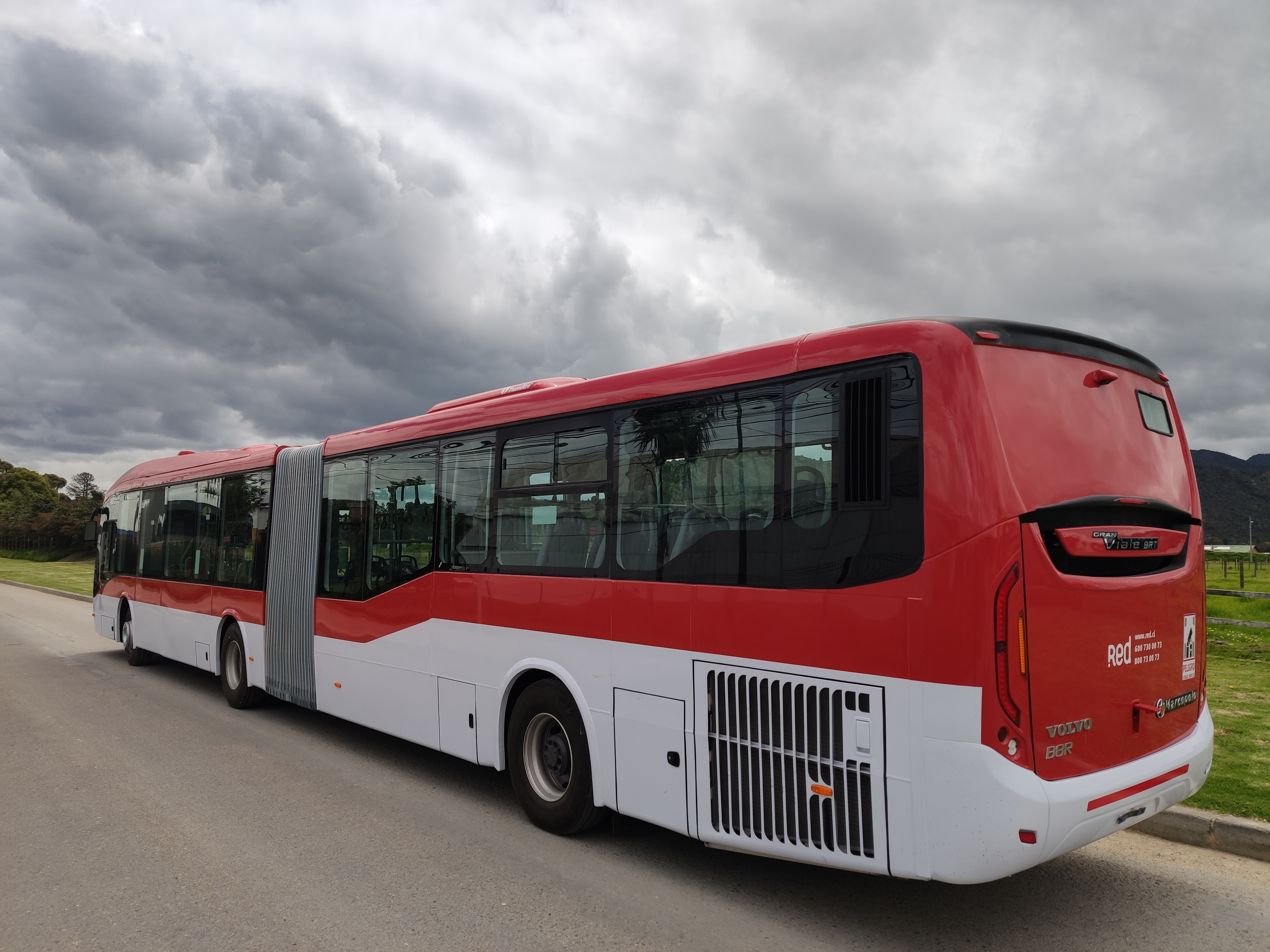
THERE WILL BE 472 PATTERNS AND 92 ARTICULATED B8R EURO 6

Latinobus newsroom – Volvo Group

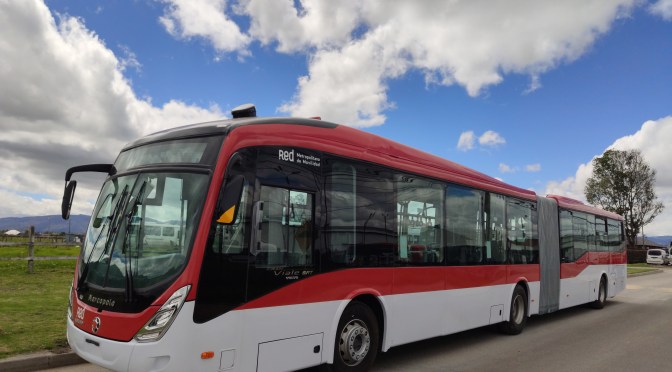
In the most important urban bus tender in Latin America in 2021/2022, Volvo will once again be one of the main vehicle suppliers for the Chilean capital. A few days ago, the Comptroller General of the Country awarded the concession for the use of the roads of the six service units of the capital. As adopted in Bogotá, for the Transmilenio system tenders that have been held since 2018, the fleet provider component has been separated from the fleet operator. This has been one of the main changes adopted by the Metropolitan Mobility Network, as the Santiago bus system is called.

The Volvo vehicles will be operated by RedBus, one of the concessionaires that already make up the Metropolitan Mobility Network, and by Metropol, a traditional Argentine operator that is making international inroads into this process in Chile. “We have a long experience in Santiago, with participation from the beginning of the city system. For years, Volvo buses have contributed to improving urban mobility in the Chilean capital, offering comfort and safety to passengers”, says Fabiano Todeschini, President of Volvo Buses Latin America.

With the separation of the two key components of the tender, to ensure financial closure and investment commitments, the companies that own the buses, called “Fleet Providers” (Capex) and the companies that will operate the vehicles, called “Operators” remain of Fleet” (Opex). The first group guarantees the supply of the buses, while the second is dedicated to the daily start-up of the vehicles, including their maintenance. The Volvo buses will be owned by Volvo Financial Services, the Group’s financial division, which will receive monthly amounts to make the vehicles available to the operating companies.

“This operating model is a pioneer in the continent. We are prepared to evaluate this concept also for the other cities in our region, always in partnership with Volvo Buses”, assures Carlos Ribeiro, president of Volvo Financial Services in South America. The new parameters require mechanisms that raise the quality of the new system design. “The contracts establish permanent certification of the maintenance of the buses throughout their lives. The objective is to guarantee the maximum availability of the vehicles, with safety for the passengers”, points out Alexandre Selski, Director of Strategic Sales at Volvo.

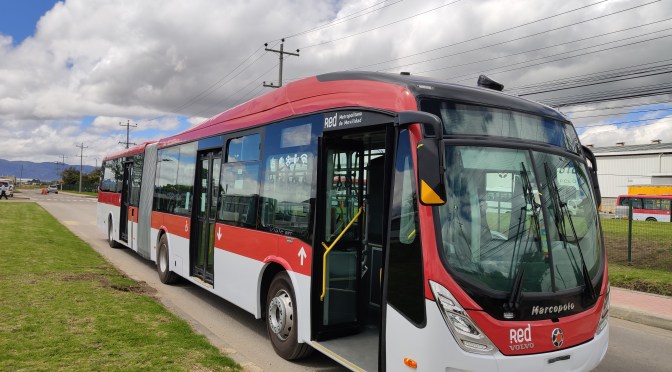
Training of drivers and maintenance personnel is also required, as well as telemetry systems for online bus management and operation. State-of-the-art bus The 92 articulated units are of the articulated Volvo B8R model, with the same specifications as the 200 units delivered by the brand to Santiago, which were bodied in Colombia by Superpolo.

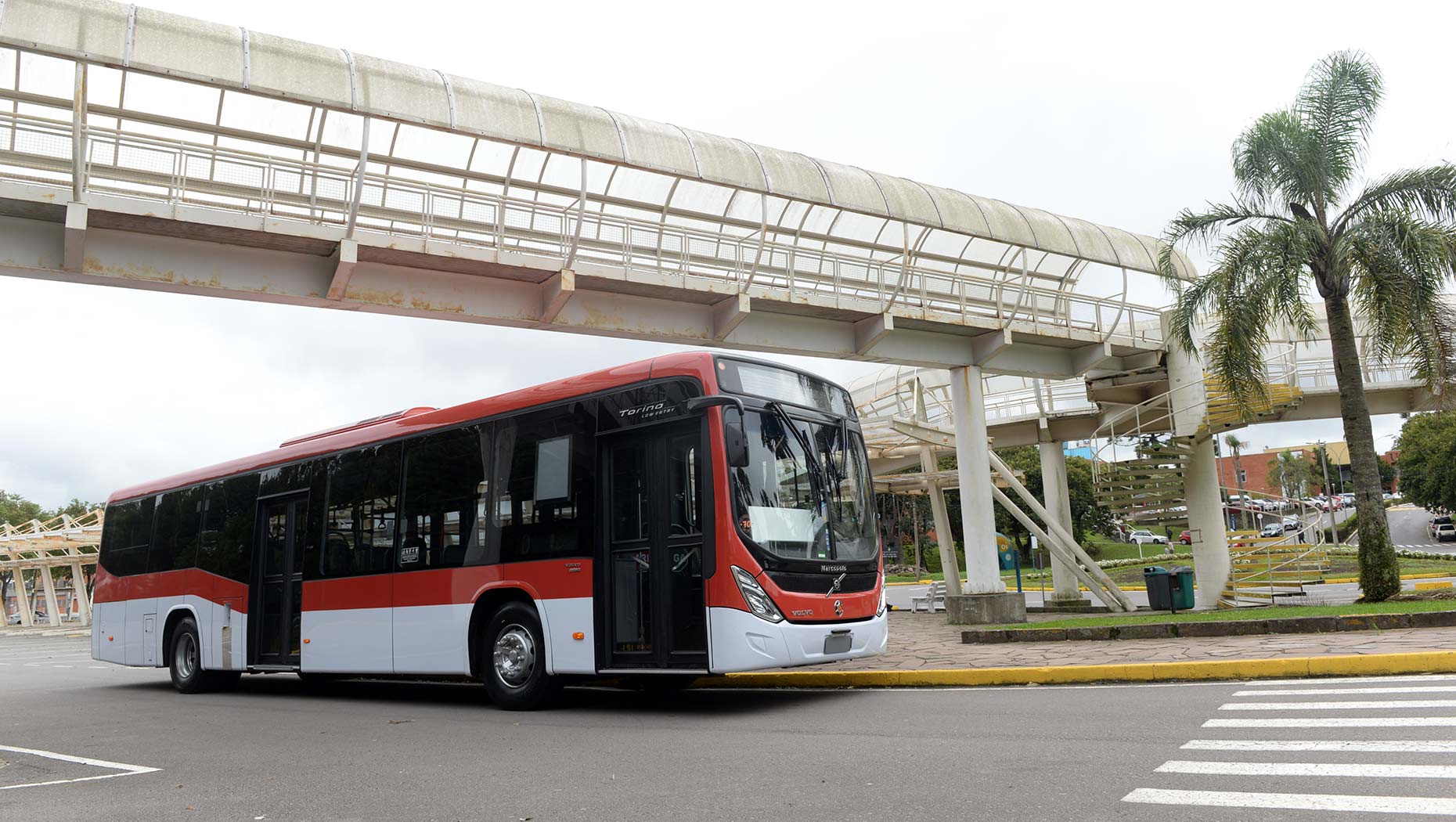
It is a chassis with a low entry, capacity for 180 passengers and a 7.7-liter rear engine, while the remaining 472 buses are also low-entry Volvo B8Rs, but in the conventional monocoup configuration (standard), for 78 or 95 passengers, depending on the internal configuration.

Volvo chassis will be produced at the brand’s factories in Curitiba (Brazil) and Borås (Sweden); while the bodies will be The bodies of the RedBus operator will be supplied by Marcopolo, produced in Caxias do Sul (RS) and the bodies of the Metropol operator will be supplied by Caio, produced in Botucatu (SP).

The Volvo B8Rs have the Euro 6 Volvo D8K diesel engine, six cylinders in line with a power of 320 hp and a torque of 1,200 Nm. from 1,050 to 1,600 rpm, complemented by a Voith D864.6 automatic transmission with integrated retarder from the Diwa family. The brakes are Volvo EBS5 electronically controlled disc brakes, ABS system, combined braking with retarder, hill start assist, brake assist, and hydraulic retarder integrated into the transmission.

The Red bus system serves around 6.2 million users in the 32 municipalities of the Metropolitan Region, plus Puente Alto and San Bernardo, a geographic and urban area of ​​around 680 square kilometers. On a business day, around three million transactions are carried out on more than two thousand buses in the system.

SCANIA MEXICO SOLD 740 UNITS IN 2021 AND EXPECTS TO BREAK RECORDS IN 2022

SEEKING LEADERSHIP IN BUSES AND GROWING IN TRUCKS

Colombiabus newsroom – Scania México

2021 was not easy for the transport, cargo and logistics sectors due to the ravages of the pandemic, supply chain and the semiconductor crisis, causing entire plants to stop production, a global problem for which no one was prepared. For Scania Mexico it was no exception, however, the Swedish brand in Mexico came out ahead and managed to close the year with 740 units sold between buses and cargo trucks, in addition to already venturing into the motor segment. The foregoing defines the impact that the brand has managed to position over more than 25 years of history in Mexico.

For the cargo segment it was a record year, it gained market share and doubled sales in 2020, closing with a total of 567 vehicles, of which 527 were tractor trailers and 40 were class 8 rigids. This placed Scania in fourth place after national level in trucks according to data from the ANPACT (National Association of Producers of Buses, Trucks and Trucks) and INEGI.

“It is an achievement for us to reach these figures in Mexico, without a doubt it has been the best period in the history of the brand in Mexico in terms of trucks and tractors that we started four years ago, despite all the problems that occurred during the year, we went from selling 276 trucks in 2020 and grew 105.4% compared to that year, having a market share of 2.85%. We still need to grow more and we are on the right path, our customers recognize the brand for the differentials that we have presented in the sector and we are doing our job in a very important market for Scania”, commented Mauricio de Alba, Director of Sales and Scania Trucks aftermarket.

It is important to mention that, thanks to the trust of customers in the segment, all the stock that was available for sale in 2022 is already assigned to various customers. During this year, orders will be received for 2023, where the objective will be to place 3,000 trucks in the Mexican market.

In the bus and passenger transport segment, Scania continues to be a leading brand and an improvement in demand was noted compared to 2020. 173 units were sold during 2021, with 154 foreign units sold and 19 urban units. “In the bus and passenger transport segment, we had a notable improvement, although we are not yet at pre-pandemic levels, we have to continue working along the same lines, the only way to grow is to continue doing the good work we have been doing. during all these years: demonstrating the value of our sustainable products, innovating and offering comprehensive solutions in each of the services” said Jorge Navarro Inostroza, Sales and After Sales Director of Scania Buses.

Similarly, the numbers for the engine segment have been of great value to Scania, proof of this were the 31 power generation engines placed in the Mexican market throughout the year and 64 more that are already ordered by 2022. “We want Scania quality to be in each of the products and services we offer and engines could not be the exception, we have started knocking on doors and customers have responded quite well, so the outlook for our engines looks promising”, commented Raúl Rodriguez, Director of Power Solutions.

One of the strengths of the Swedish brand is in after-sales and the “Customer Workshop Services” (CWS) which consists of taking the Scania workshop to the customer’s facilities to provide support and maintenance to the vehicles, so the brand takes care of the vehicle and the customer of your business. Currently, there are 49 points covering the entire Mexican Republic, with 70% of the fleet (between buses and trucks) with a direct maintenance policy from Scania, so the brand’s offer is completely comprehensive.

The start of operations of the brand’s finance company was vital during 2021 since it supported 70% of commercial operations, a differential that has enabled important businesses to be enabled and which means total brand confidence with its own products.

Scania currently has 5,743 vehicles connected with Scania Communicator, a brand-specific tool that offers the customer all the information on the units by Scania’s team of professionals; As part of its Driver Coaching program, with more than 1,000 subscriptions focused on driver support, the brand provides personalized attention to learn in detail the driving habits of each vehicle and each operator, as well as support maintenance management and the location of them, focused on a safer, more sustainable and profitable operation, one more example of Scania’s commitment to each of its customers, to have more durable and efficient fleets.

Among the most relevant news for the brand in 2021 was the announcement of the launch of the electric truck by the CEO and President of Scania Mexico, Alejandro Mondragón, within the framework of the XXI National Forum for the Transport of Goods by the ANTP ( National Association of Private Transport). There it was mentioned that in 2022, the best electric truck in the world will arrive in Mexican territory.

Likewise, in the bus segment, the arrival of the first electric bus for the Swedish brand in the country was announced, with October 2021 being the month in which pilot tests began on the electric platform with which this urban bus will be manufactured in Mexico hand in hand with Beccar for this 2022. Additionally, one of the most anticipated moments for the brand that will undoubtedly set a precedent will be the presentation of the new generation of chassis, which will have great benefits for its customers and for the environment.

The brand is firm in its commitment, willing to continue innovating to grow, having financing schemes for each of its clients and consolidating new technologies hand in hand with sustainable products of the best quality. In this 2022, the focus of the brand will be on the after-sales offer and innovation in the development of service and connectivity solutions.
BAE SYSTEMS BEGINS TO OFFER HYBRID ELECTRIC PROPULSION SYSTEMS IN SOUTH AMERICA

Latinobus newsroom – Secco Comunicaciones

BAE Systems, one of the world’s leading companies in electric and hybrid solutions for buses, ships, heavy trucks and military vehicles, which operates in more than 40 countries, will now offer its products and propulsion technologies to countries in South America.

With a strong presence in Europe, North America and Asia, the company has been present in South America for several years, providing systems for the Armed Forces of different countries. Now, it will also offer innovative electric transport solutions and has experience in energy management and efficient propulsion, with high-performance and sustainable electric solutions.

These solutions will be provided by the Power Propulsion Systems unit, with alliances and supply of electric and hybrid propulsion systems for national manufacturers. The objective is to have as partners automobile manufacturers, commercial vehicle chassis manufacturers and bus body manufacturers who wish to offer electric and hybrid buses in their countries, with a line of propulsion products that can serve the market, with a wide range of solutions for trucks. and buses.

“Mexico is one of the countries that we are actively looking at in Latin America, both because we believe there will eventually be a significant market for low and zero emission buses and because there is a significant automotive industry (so many people we could work with). I would also add that the favorable trade agreements between the United States and Mexico are obviously something that we would look to take advantage of. We are currently speaking with a vehicle manufacturer in Mexico and will contact others shortly, but it is too early for me to share who they are,” said Ian Wilson, head of the Power Propulsion Systems unit.

Today, more than 14,000 BAE Systems hybrid electric systems are already in operation around the world, saving fuel and CO2 emissions and reducing maintenance for public transport operators. The company offers a variety of electrification options, from accessories for electric vehicles to zero-emission propulsion through batteries and hydrogen fuel cells for buses, trucks and boats, according to the needs of each region and business.

COMPTROLLER OFFICE OF CHILE VALIDATES BIDDING FOR NEW ROUTE OF THE RED SYSTEM IN SANTIAGO

DOOR OPENS TO ADD 1,637 NEW BUSES

Colombiabus newsroom – William Marroquín / DTP Metropolitano

In December 2020, a bidding process had begun to incorporate 1,637 new buses for the Red de Santiago de Chile system. 16 proposals were received and in October 2021, the country’s Ministry of Transportation prepared the award act for the Comptroller General of the Republic to give its validation.

This approval from the Comptroller’s Office, key to consolidating the new public transport model in the Chilean capital, took place on February 7. With this, the regulatory entity accepts the award that tenders the concession in the use of roads, which will allow adding new services and incorporating 1,637 new Red standard buses, of which 991 will be electric.

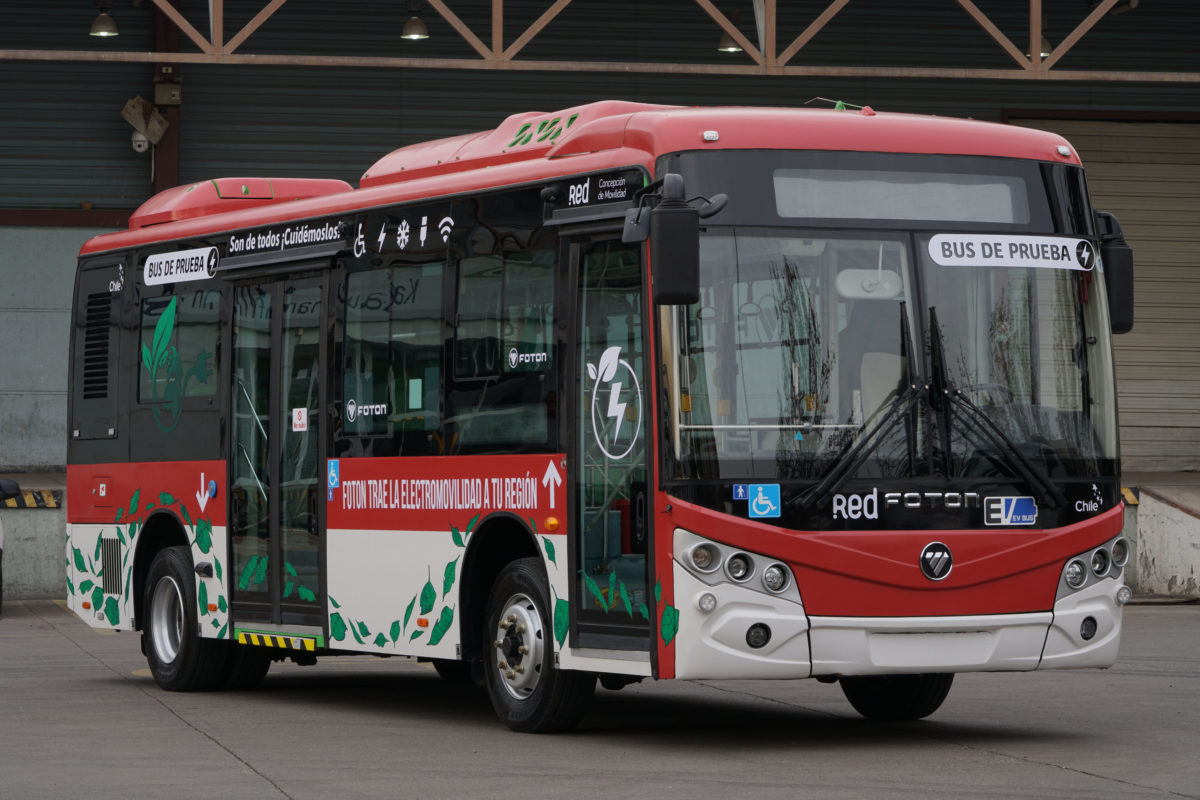
100 Full electrical bus delivered to Chile

Thus, the company Metropol, the main operator in Buenos Aires, will enter the system as a new actor with the award of two units (U1 and U2) and the operation of 49 services. Meanwhile, Redbus was awarded two units (U4 and U6), with 50 services. For its part, STP will handle the management of units U3 and U5, with 54 services.

Among the main attributes provided by this tender, which contemplates new requirements and more tools to guarantee a better service, the reduction in the size of the service units stands out, which, on average, will have 400 buses. This will reduce the risks of interruption of transport services, in the event that a company presents operational problems.

It also has shorter-term operating contracts, which will fluctuate between five and seven years (depending on the percentage of electric buses in the fleet), extendable for up to five more years if certain quality standards established in the contract are met. The new public transport design for Santiago contemplates 153 additional services, which represents 29% of the total system.

The standard of the new vehicles includes free Wi-Fi, USB ports to charge electronic devices on the road, air conditioning, and demands are raised in the interior and exterior design of the bus. Specific safety conditions are established for the driver, such as the requirement of a safety cabin, and padded seats, internal and external security cameras on board the bus, object proximity detection systems to avoid being knocked over and collided, internal screens to display trip information, and driving quality systems.

  • The payment mechanism for operators is modified to safeguard the transport offer established through the Operation Program.
  • Greater power is given to the authority in the definition of the Operation Programs to be able to think about transportation at the city level.
  • A direct penalty related to non-stopping at stop is established: if an expedition has a justified claim of non-stopping, that expedition is not paid. Failure to stop at stops is one of the most frequent claims by users.
  • Performance indicators are redefined to increase the demand on Operators. Discounts are contemplated for Operators for poor service, and prizes when the scheduled operation is fulfilled in an outstanding manner.
  • Mechanisms for a quality of service are incorporated: Repeated discounts were implemented for a bad operation, fines, reassignment of services or expiration of the contract. Thus, the Operator has a permanent improvement incentive.
  • The new contracts establish road safety certifications, gender equality, reconciliation of work, family and personal life, and the certification of at least 60% of workers, by the fifth year, in occupational profiles according to ChileValora.
  • It is required to have a minimum percentage of 7.5% of women in the operation and maintenance staff, which must be met within a maximum period of 2 years.
  • A compensation provision fund is created to ensure payment of compensation to workers in cases of insolvency.
  • Revisions associated with the changes experienced by the Operator’s demand are eliminated, being the concessionaire’s responsibility to implement the quality of service mechanisms and control of the payment of the rate, in accordance with its legal powers. In this sense, a direct economic incentive is incorporated for the reduction of evasion that is the product of the Operator’s efforts.
  • To avoid risks for the user, the new contract does not consider the payment for services with buses without maintenance certification.
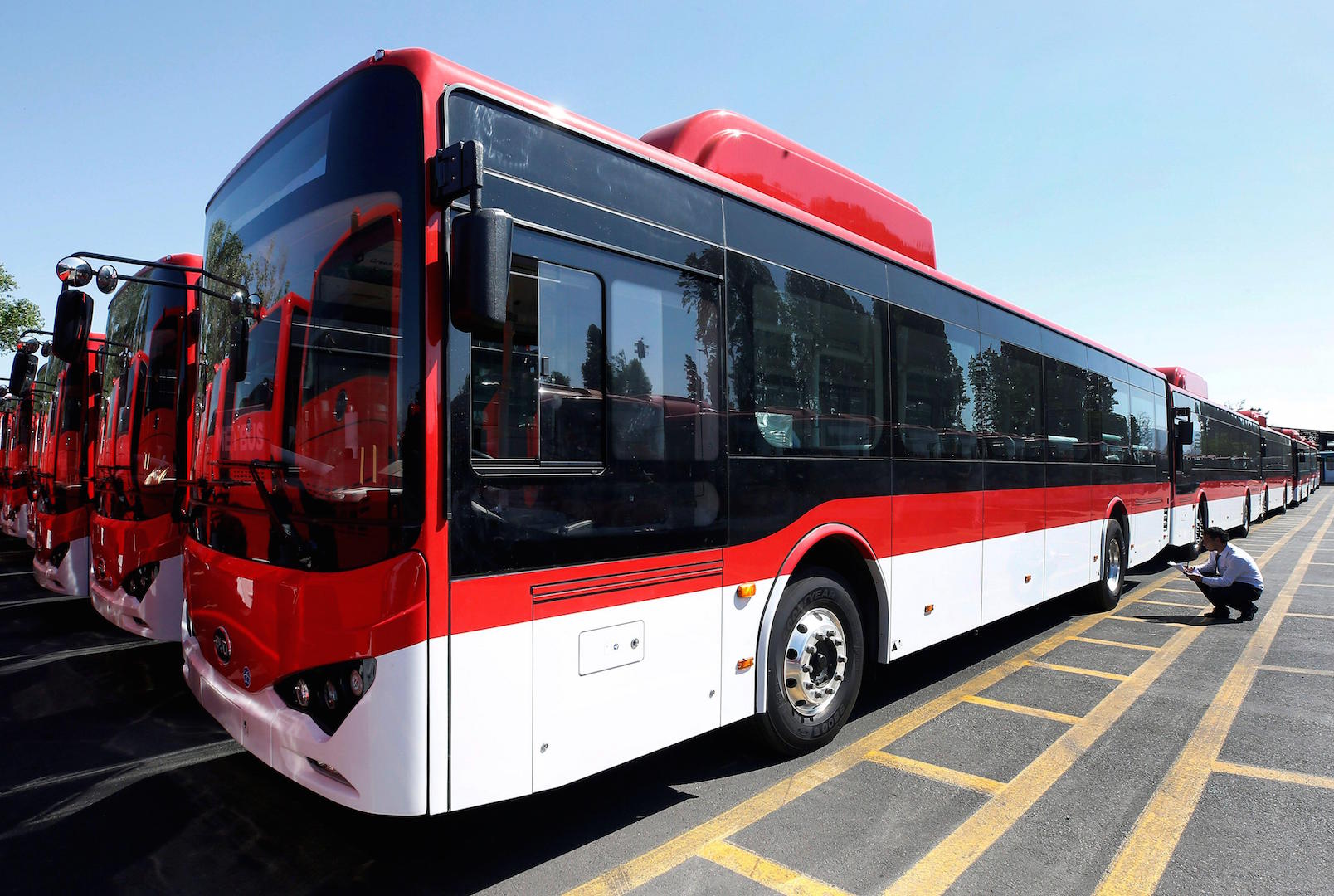
2CND91T The new fleet of electric buses for public transport, manufactured by China’s BYD, are parked in a bus terminal in Santiago, Chile November 28, 2018. Picture taken November 28, 2018. REUTERS/Rodrigo Garrido

When the 991 electric buses arrive, at the end of 2022, Santiago will be the city with the largest number of vehicles of this technology in Latin America, recovering the place that it will momentarily lose, at the hands of Bogotá, which will soon have 1,485 zero-emission buses in the Transmilenio system.

130 IVECO EURO VI GAS UNITS WILL ARRIVE AT THE SIVA SYSTEM IN VALLEDUPAR, COLOMBIA.

DELIVERIES WILL BE DURING THE SECOND HALF OF 2022

Colombiabus newsroom – William Marroquín

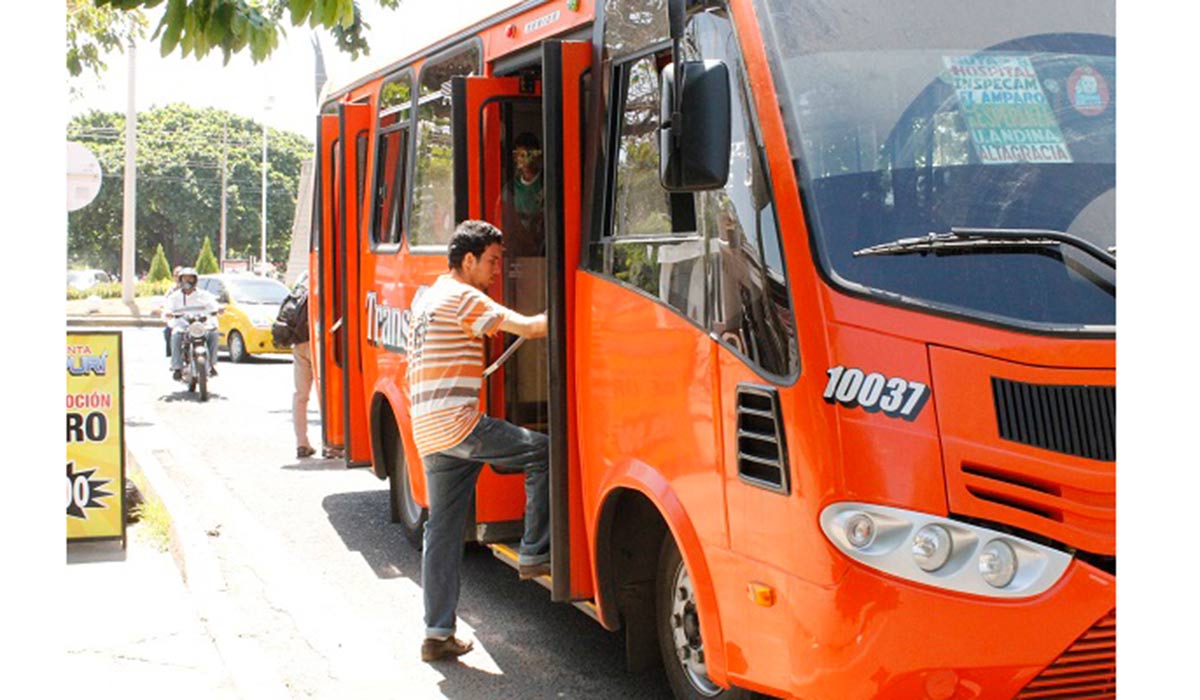
Like other intermediate Colombian cities, the problem of urban transport in Valledupar was the result of the lack of policies that prevented chaos in the operation and that stopped informality in the mobilization of passengers in time. Only at the beginning of the present century, the structuring of the Strategic Public Transport Systems (SETP), designed for populations between 300,000 and 600,000 inhabitants, began.

Since the end of 2010, the Valledupar Integrated Public Transport System – SIVA, has been in charge of providing a quality and efficient service in the capital of Cesar, and by 2021 it determined the need to acquire new vehicles to replace units of the traditional component through public tender. The specifications contemplated low-emission buses and a minimum capacity of 16 seated passengers, accessible and with the solutions of modern and inclusive buses. Likewise, demand estimates were adjusted, considering variables such as motorcycle taxis and the growing number of users who have switched from buses to motorcycles.

A process where SIVA, as the managing entity, also assumes the purchase and ownership of the vehicles, preventing the system from being trapped in the need to achieve financial closures and obtain investment commitments, allowing the value of the rate charged to the users per trip made. The amount of the contract amounts to 11.2 million dollars.

The tender began in September 2021, where the proponents submitted offers with diesel, electric and natural gas technologies, which ended up prevailing. The evaluation criteria for SIVA’s offers included legal and financial capacity, experience and technical solvency. The Iveco 70C14G chassis, of Italian origin powered by natural gas, which meets the Euro VI emission standard, will be coupled with bodies for the urban segment built locally for 25 passengers (16 seated + 8 standing + 1 seat for users with reduced mobility).

The engine is 3 liters and is born dedicated to operating with natural gas, it delivers 136HP of power, with a 6-speed manual transmission. Its total length is 7.4 meters, with a wheelbase of 4,350 mm and supports a gross vehicle weight of 7,000Kg. It has disc brakes, ABS and, to highlight, the ESP electronic stability program that will provide maximum active safety.

Iveco’s experience in urban transport projects in cities such as Manizales, Medellín and Cali, allowed it to prove its knowledge in the urban segment. The deliveries of the vehicles to the SIVA operator will be made gradually, between June and September 2022, bringing a new air and dignifying the mobilization of the users of the capital of Cesar

HIGER WILL HAVE AN ARTICULATED ELECTRIC BUS RUNNING IN BRAZIL AND URUGUAY BY JULY

THE BUS WILL COME 100% MADE IN CHINA

Colombiabus newsroom – Higer do Brasil / William Marroquín

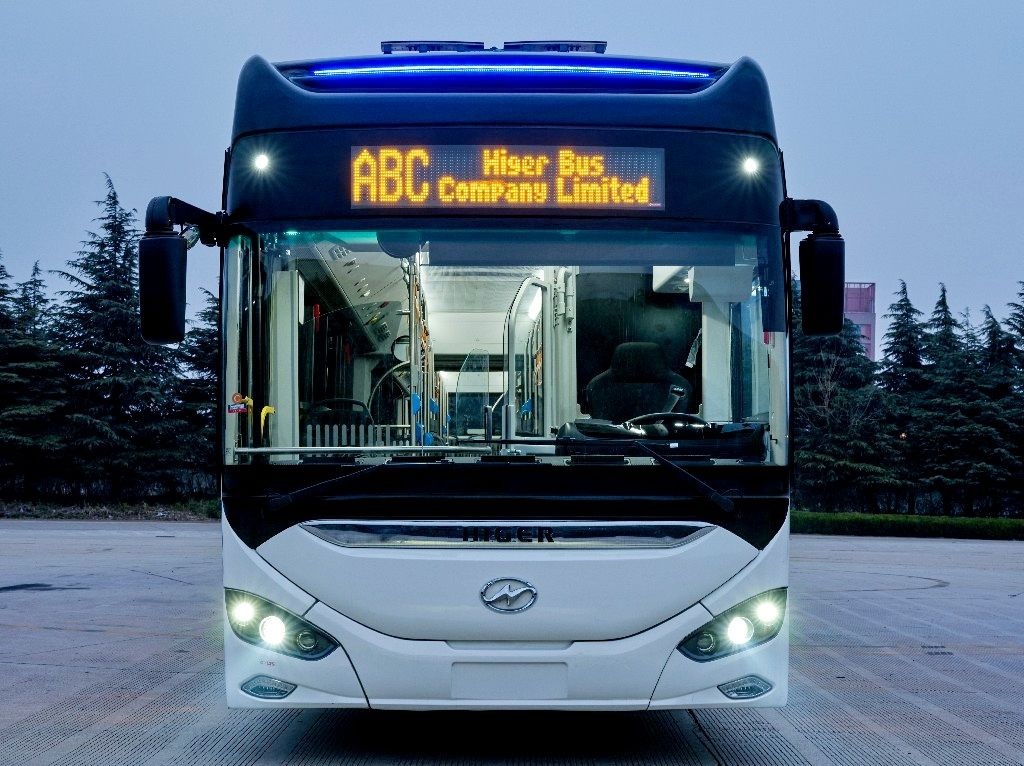
The Chinese bus manufacturer Higer, belonging to the same group that manufactures the King Long and Golden Dragon brands, continues to show that it has great ambitions in the electrification of public transport in Latin America.

In November 2021, the official presentation of the Higer Azure 12BR electric standard was held in Brazil, in an event chaired by the Mayor of São Paulo. This 12.2 meter long vehicle capable of transporting up to 70 passengers is being demonstrated and tested on the routes of Transwolff, the public transport operator of the great Brazilian metropolis.

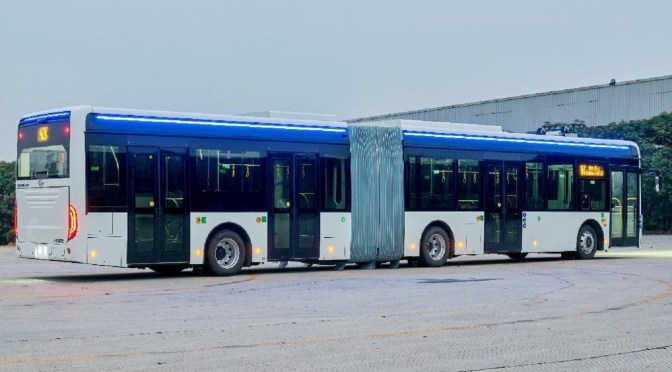
The next step will be the arrival of the Higer Azure 18BR articulated electric bus, the name by which it will be known in Brazil, since its name in China is KLQ6186GEV. The double-body version is essential for the development of BRT (Rapid Transit Bus – in Spanish) systems in Latin American cities, since in many cities, this type of bus is the majority. In Brazil alone, there are to date 94 lines of this type, in 24 cities, thus also the interest of the Chinese manufacturer and its representative in the country, TEVX.

The Azure 18BR is 18,750 mm long, 2,550 mm wide, and 3,390 mm wide; It is capable of supporting a gross vehicle weight of 33,500Kg, obviously influenced by the batteries. These accumulators are provided by CATL, with a capacity of 516Kwh, which allow an average autonomy of 270Km and to fully recharge, they need 3.5 hours.

Major brands in the automotive industry contribute to the development of this electric articulated bus: Dana with the generator, ZF with the air suspension, Wabco disc brakes, air conditioning manufactured by Valeo, Bosch power steering and special Michelin tires for urban use.

The Azure 18BR also stands out for its completely low-floor platform even at the rear doors, providing maximum accessibility, although it can be adapted for systems in other cities, whose stations are not at ground level. The bus will have all the equipment for the comfort of the 154 passengers it can carry, as specified by SP Trans, manager of public transport in São Paulo: air conditioning, USB charging ports, free Wi-Fi internet connection and tinted windows.

The model is integral, with chassis and bodywork built in China, which continues to generate controversy in a country like Brazil, where importers are tightly controlled and where its population travels in 100% local buses. The bus that will arrive in July will not be alone, as a second Azure 18BR will be tested on urban routes in Uruguay.

MARCOPOLO EXPANDS THE OPTIONS OF GENERATION 8 WITH ITS PARADISO 1600 LD

AVAILABLE FROM THE SECOND QUARTER OF 2022

Colombiabus newsroom– Marcopolo S.A.

By 2022, there is expected to be a significant improvement in demand for road travel around the world. The highway bus segment contracted significantly during 2020 and much of 2021, and only the end of the previous year showed that a firm recovery must begin. Marcopolo, moved in that direction and in the middle of the previous year presented the new Generation 8, which has the challenging task of surpassing what the G7 left (which is still marketed in many markets), especially in the western hemisphere, where it is the bus bestseller.

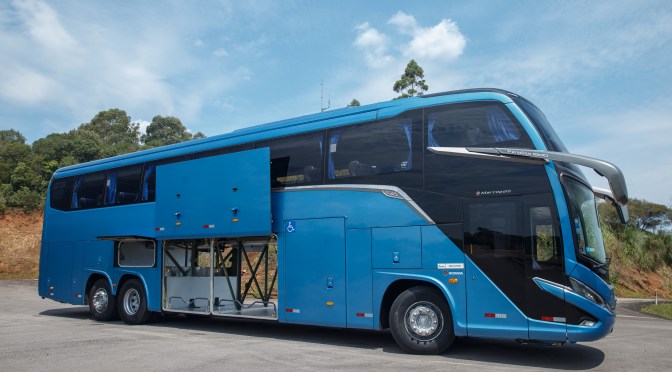
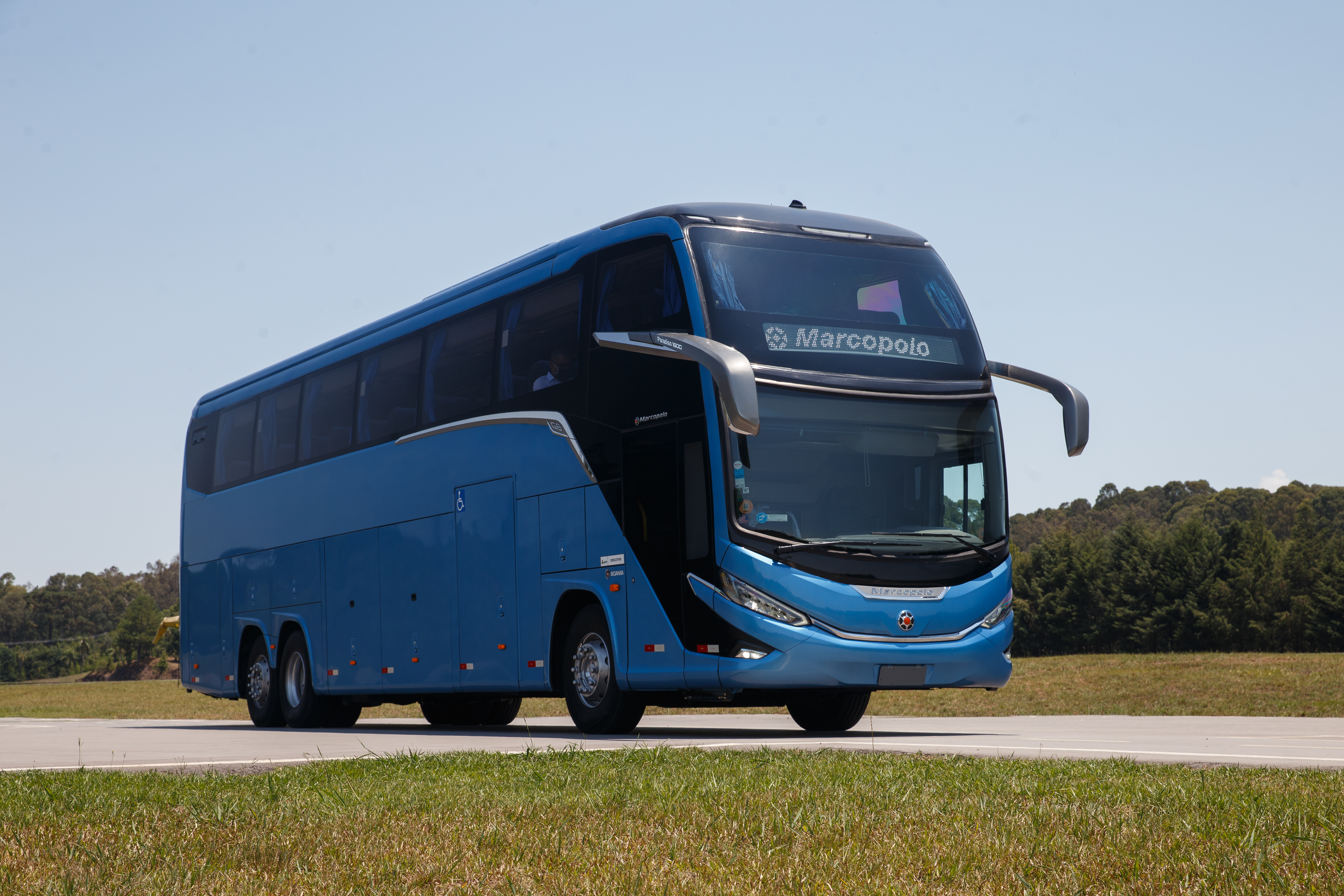
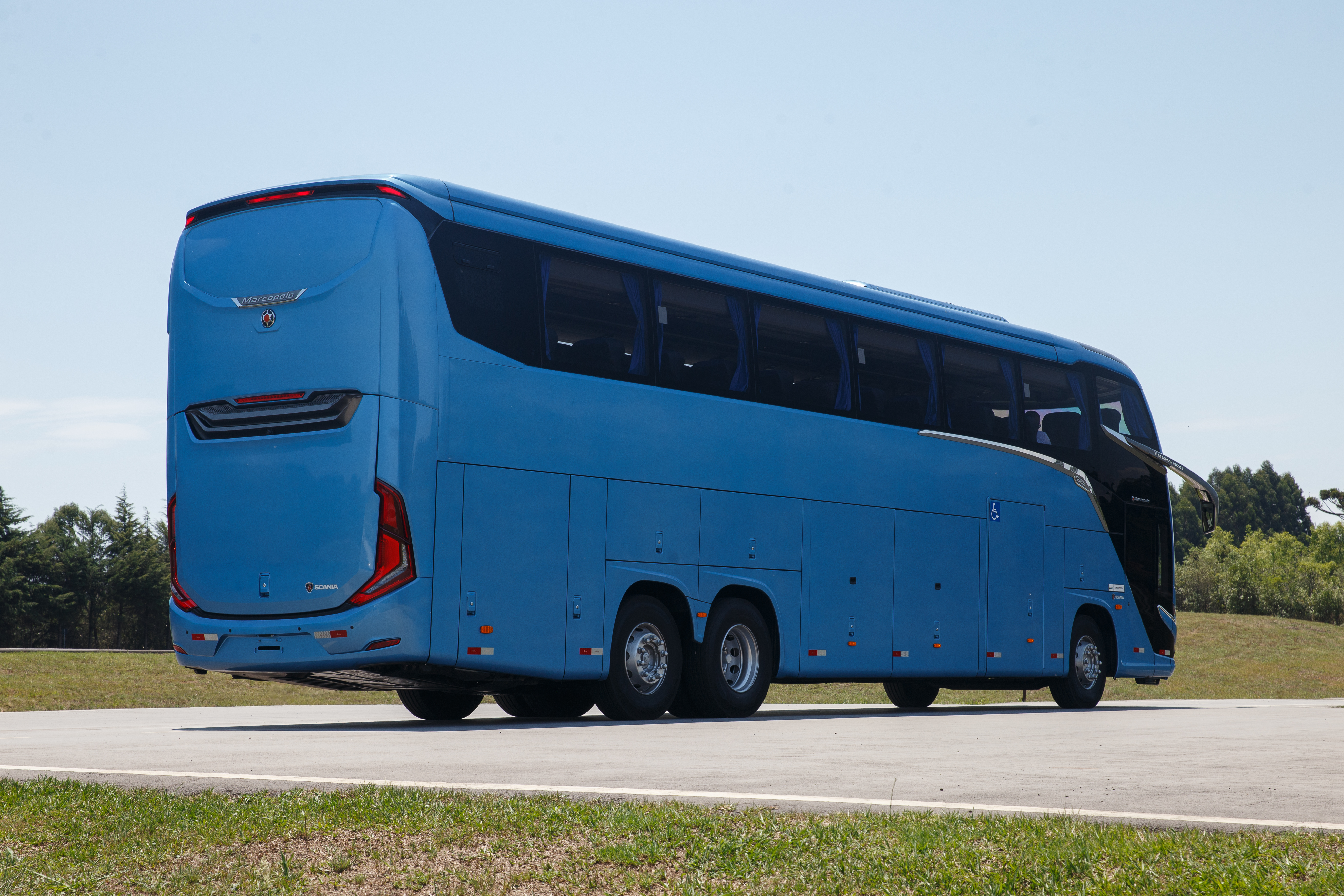
In July 2021, the Paradiso 1050, 1200, 1350 and 1800DD arrived, becoming the first options of the new generation 8, which are now complemented by the Paradiso 1600LD, the road bus with the largest hold capacity on the market. The model, which can be produced with different brands of chassis in the 6×2 configuration and also 8×2 for some markets, maintains the characteristics of safety, comfort and space, combined with innovation and technology to offer a better experience to passengers and drivers, with a model of high operational efficiency on medium and long-distance highway routes.

“We develop all the Generation 8 models focused on excellence and maximum efficiency of the operation so that our clients obtain better commercial results”, highlights Ricardo Portolan, Director of Commercial Operations of the Internal Market and Marketing of Marcopolo.

The model incorporates all the technologies and design of the Marcopolo DNA introduced in the previous models of the Generation 8 launched in July 2021. The front grille and bumper with greater volume, robustness and the use of new external materials increase the durability of the assemblies. More than 140 innovations generate positive impacts for drivers, passengers and transporters, the elegant and modern style with a drag coefficient of only 0.379. Additionally, the optional full LED headlights, with efficiency up to 3.5 times higher than other buses on the market, and a structure that increases the passive safety of the driver.

The Paradiso G8 1600 LD also offers the Marcopolo Biosafe solutions package, designed to make public transport safer against viral and bacterial contamination, incorporating solutions focused on biosafety. Optional elements such as toilet disinfection and air conditioning using UV-C light, antimicrobial finishes, 1x1x1 layout and alcohol gel dispensers continue to be available.

ORIENTED TO COMFORT AND SAFETY

One of the most important aspects in the development of the new project was the attention paid to safety and accessibility, both for drivers and passengers. The Low Drive version has a redesigned driver’s cabin with a lower instrument panel and left-side refrigerator and USB socket; larger visible area on the right side and glass partition wall, improving visibility and maneuverability for the driver. The cab door opening is larger for comfort and convenience, along with the completely revised upper instrument panel.

Also in the new Paradiso G8 1600 LD, every detail was designed to optimize the passenger experience, facilitating access to the passenger lounge, providing attributes of thermoacoustic comfort, seats that focus on ergonomics, in addition to the biolight concept, which adjusts interior lighting according to the time of day for visual comfort of the occupants.

A model that is in the final phase of homologation to be offered in all markets from the second quarter of 2022, with which Generation 8 is completed, with options for short, medium and long distance routes, in addition to an infinity of options to configure interiors.

V&A TRAVELS, FIRST CLIENT OF GENERATION 8 OF MARCOPOLO IN MEXICO

THE 500HP VOLVO B13R CHASSIS ACCOMPANIES THE BODY

Colombiabus newsroom – William Marroquín

Once the first Marcopolo Generation 8 units were presented in Brazil, the question was to know in which of the brand’s foreign markets, the new creation that continues to capture the interest of carriers, passengers and bus enthusiasts in Latin America would be present. , with a start of commercial life collecting orders for those seeking to offer new levels of comfort on road routes, whose mobilization continues to grow after months of restrictions.

Already in October, the first model of this new saga had arrived for Mexico, a Paradiso 1800DD double-decker bus with the MAN 26.480 chassis, built in Brazil at the Caxias do Sul facilities. Other single-deck units were sent to Aztec lands in PKD configuration (for coupling to the chassis at Polomex facilities), corresponding to the Paradiso 1200 and Paradiso 1350 models.

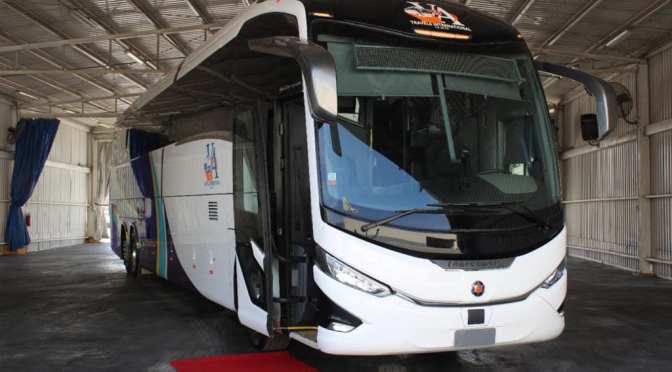
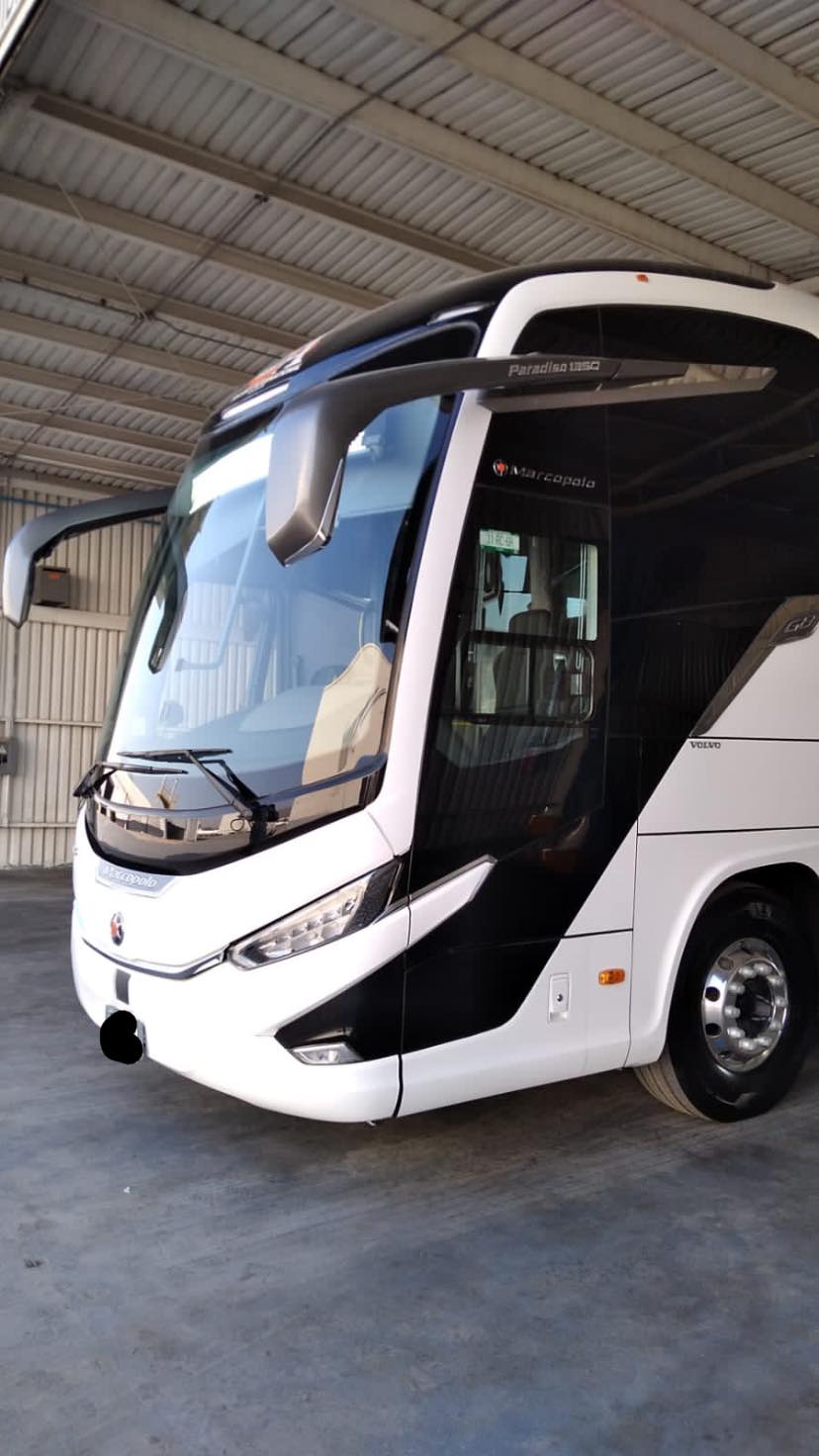
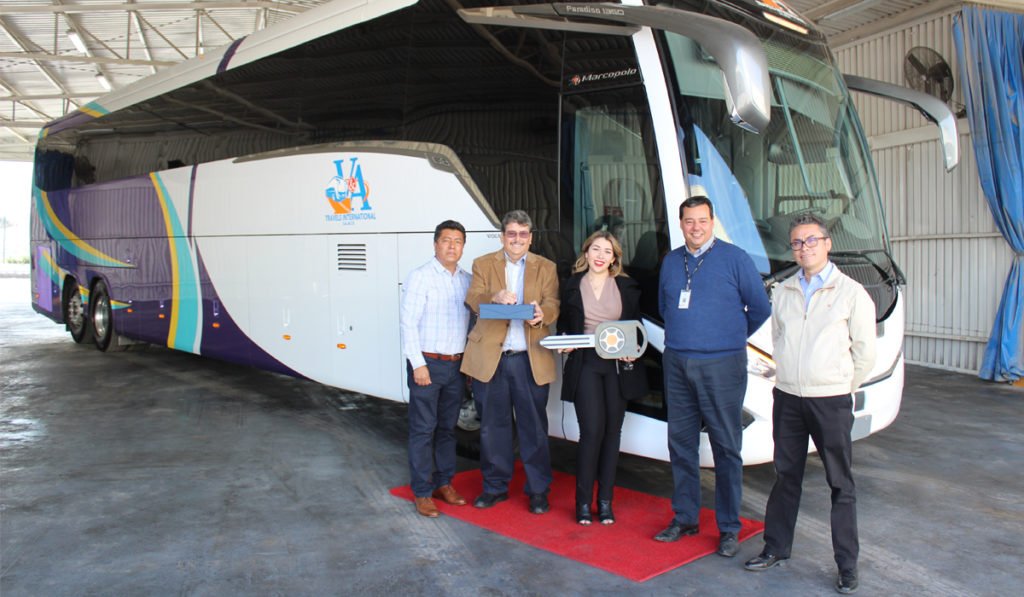
Precisely on the Paradiso 1350, the first unit of the Generation 8 in Mexico has been delivered, for V&A Travels International, operator of tourist services and bus charter. The company based in Hermosillo (State of Sonora) serves clients as important as PepsiCo, AstraZeneca, Tecnológico de Monterrey in the country, but also with activities in the United States, given its border location.

Returning to the bus, this Generation 8 Paradiso 1350 6X2 has a length of 15 meters and is equipped with a semi-bed with three-point seat belts and USB ports in each seat to recharge mobile devices. For entertainment, the bus has five 15.6-inch high-definition digital screens and a new surround sound system with higher-quality speakers. The passenger room includes a LED lighting system with different indirect light configurations, applying chromatherapy to change color and intensity, to have the best internal environment at all times.

The bus incorporates biosafety solutions to offer protection against contamination by viruses and bacteria on trips, such as a UV lamp in the toilet and the air conditioning return, antimicrobial protection on the seats and access handrails. The toilet also has a new design for greater comfort and ergonomics.

V&A Travels has chosen the Volvo B13R chassis, where high performance, maximum safety and respect for the environment are combined. The Volvo D13C engine delivers 500HP of power and 2,500Nm of torque delivered to the wheels with the help of the prodigious 12-speed forward I-Shift automated transmission. The electronics allow self-diagnosis of faults, and it is also equipped with self-protection against overheating, low oil pressure and fire detection sensors.

Regarding safety, it is always important to highlight what the chassis offers, which has a complete equipment to protect the driver and its occupants: EBS5 electronic braking that governs the ABS and ASR traction control; ESP stability program, dual retarder control, hill start assist, brake temperature and wear warning, door brake, automatic differential lock and self-calibration when changing brake pads.

Separate mention deserve the Volvo Dynamic Steering System (VDS) and the Active Safety System (SSA). With the first, the effort of the operator is reduced, it provides greater stability and better adaptability to the speed of the vehicle when moving the steering wheel. The second includes emergency braking and collision warning; adaptive cruise control and lane departure alert.

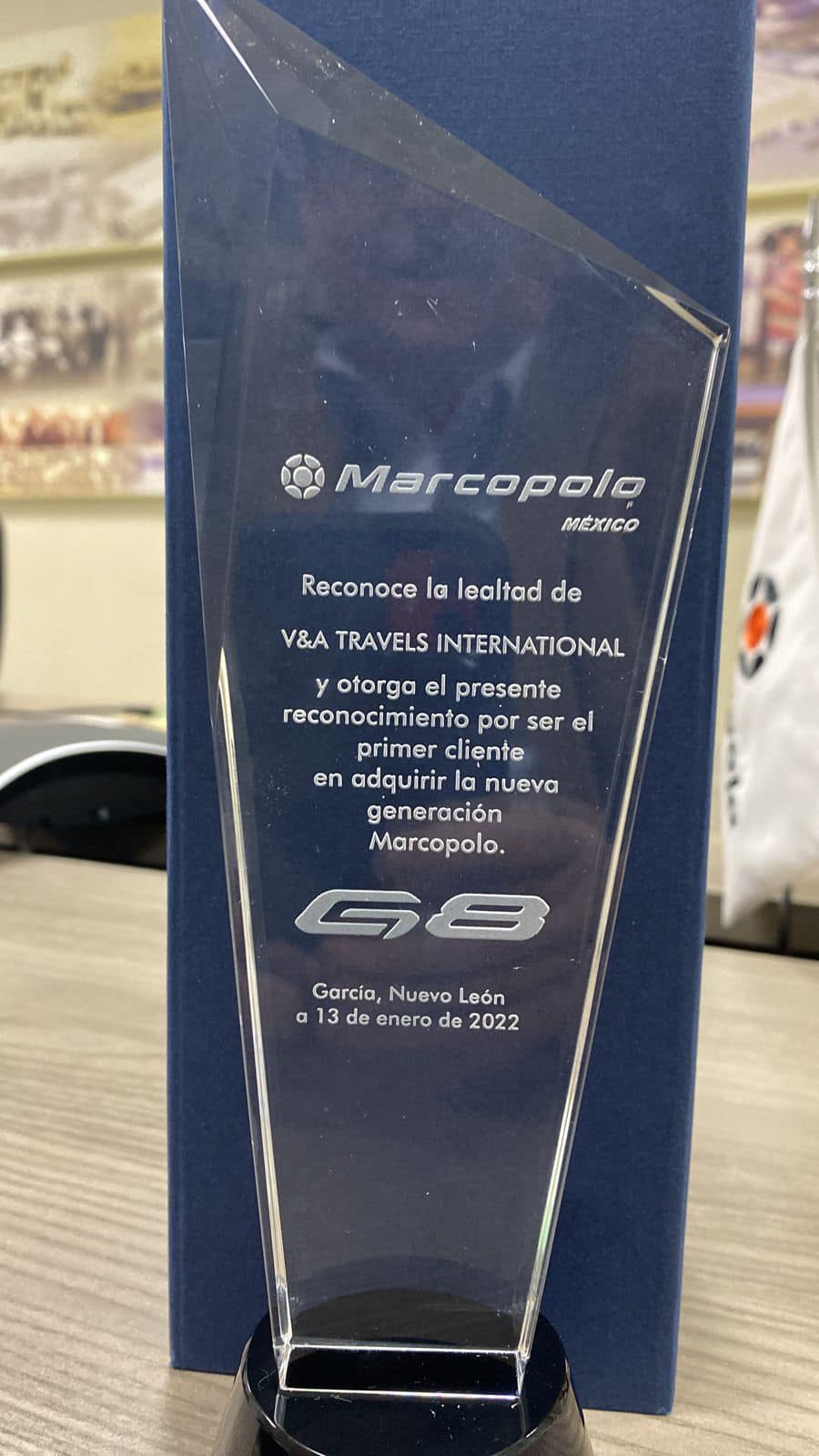
Marcopolo Mexico gave recognition to V&A Travels, an important client on the border with the United States and the Pacific. “We are sure that with this acquisition, the company V&A Travels International will mark a great differential in the tourist transportation operations of the area, providing an ultra-luxury service in medium and long distance lines.” said José Luiz Goes, General Director of Marcopolo Mexico.

MEXICO CITY LAUNCHES 65 MERCEDES-BENZ URBAN BUSES

THEY WILL TRANSPORT NEAR 65,000 PEOPLE DAILY

Colombiabus newsroom – Motor a Diesel

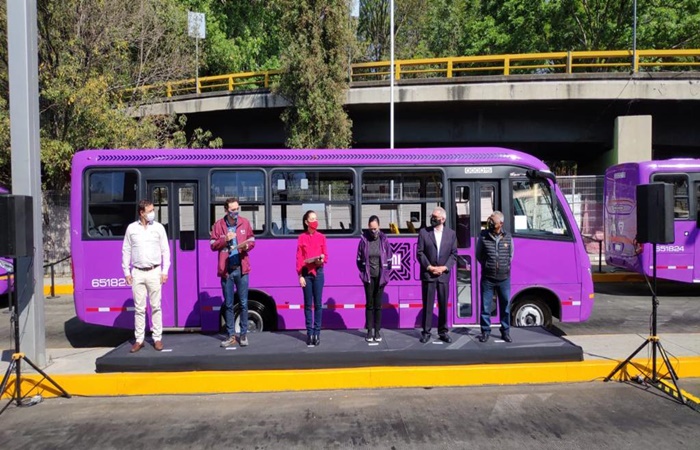
The government of Mexico City gave the starting signal to 65 Mercedes-Benz midibuses with Marcopolo bodywork for the start-up in the Legaria Corridor. These new vehicles represent an important evolution in the mobilization of the Latin American mega-metropolis, since they already have access to all the transportation systems of the big city with the single Integrated Mobility card.

Autobuses Unidos Legaria is the transport company that has obtained the concession for this corridor, which will have 72 fixed stops and which involved training 90 operators with theoretical and practical courses on machine technique, road safety and service experience for that users enjoy more pleasant trips.

These buses have the Mercedes-Benz LO916/48 chassis, powered by the OM924LA four-cylinder engine with 4.8 liters of displacement, turbocharged with intercooler, which delivers 154HP at 2,200rpm and 580Nm between 1,200 and 1,600 revolutions, complying with the Euro V emissions.

The Marcopolo Senior body is manufactured at the García plant, Nuevo León with the 2020 redesign, which reaches a length of 9.15 meters and 2.25 meters in width. It has GPS satellite tracking, surveillance cameras, passenger counting and friendly technology for more comfortable trips.

“Today we are working for a comprehensive transportation network, where more than 40 billion pesos have been invested in this network. The right to quality mobility and transportation has been an initiative of the head of government and for that support today we give the starting signal for these units, replacing the 173 microbuses on route 17 and route 28 that cover the Metro routes Tacuba- Medical Specialties; Metro Tacuba-San Isidro; Metro Tacuba-Tecamachalco; and Tacuba ESIA» indicated Jesús Padilla Centeno, President of Grupo Movilidad de Vanguardia (MOVA).