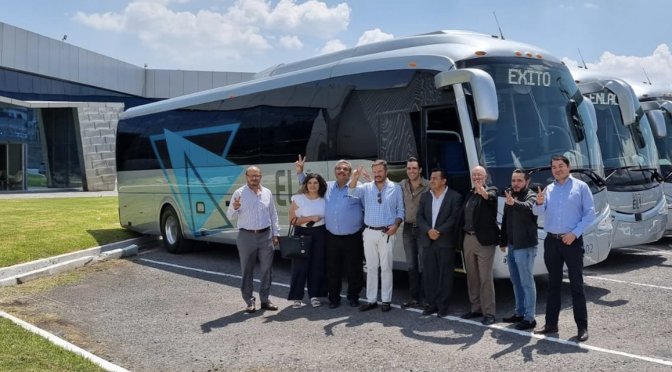
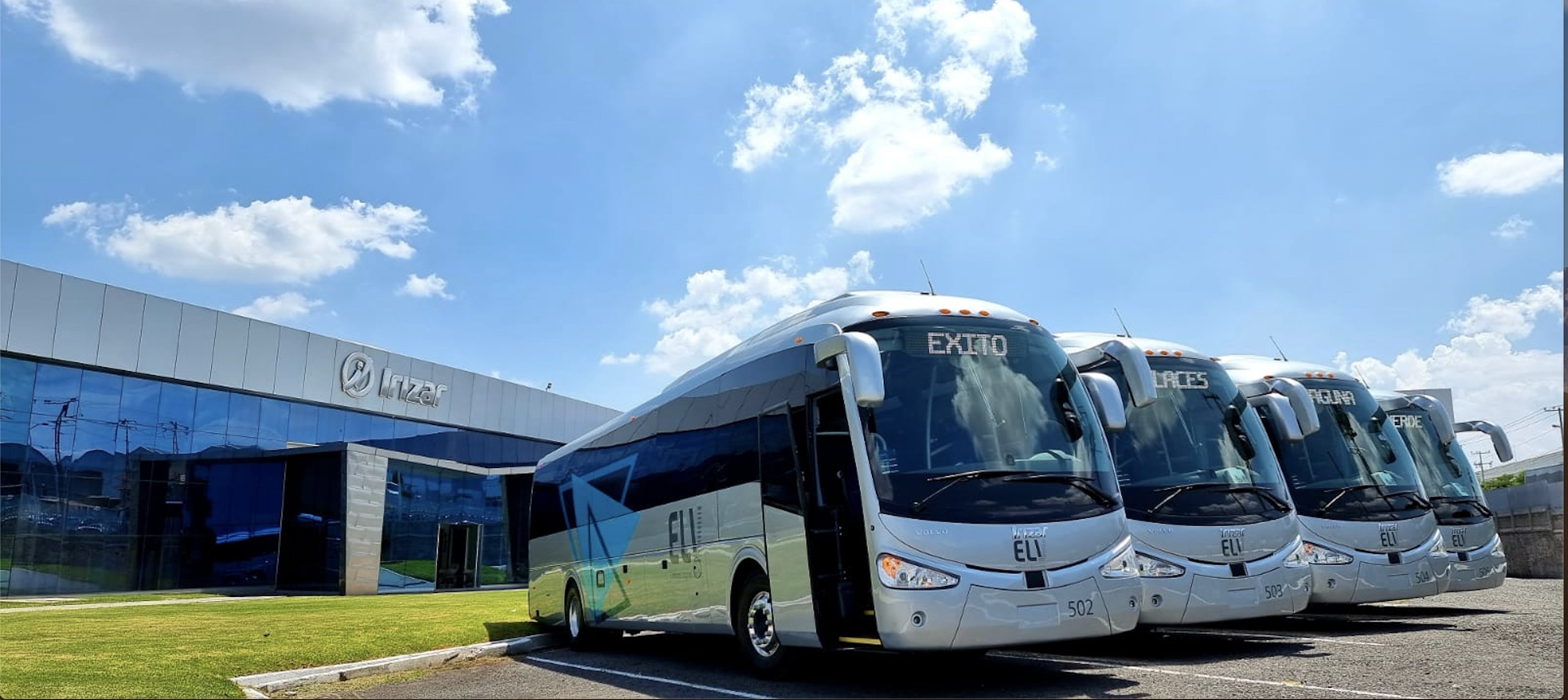
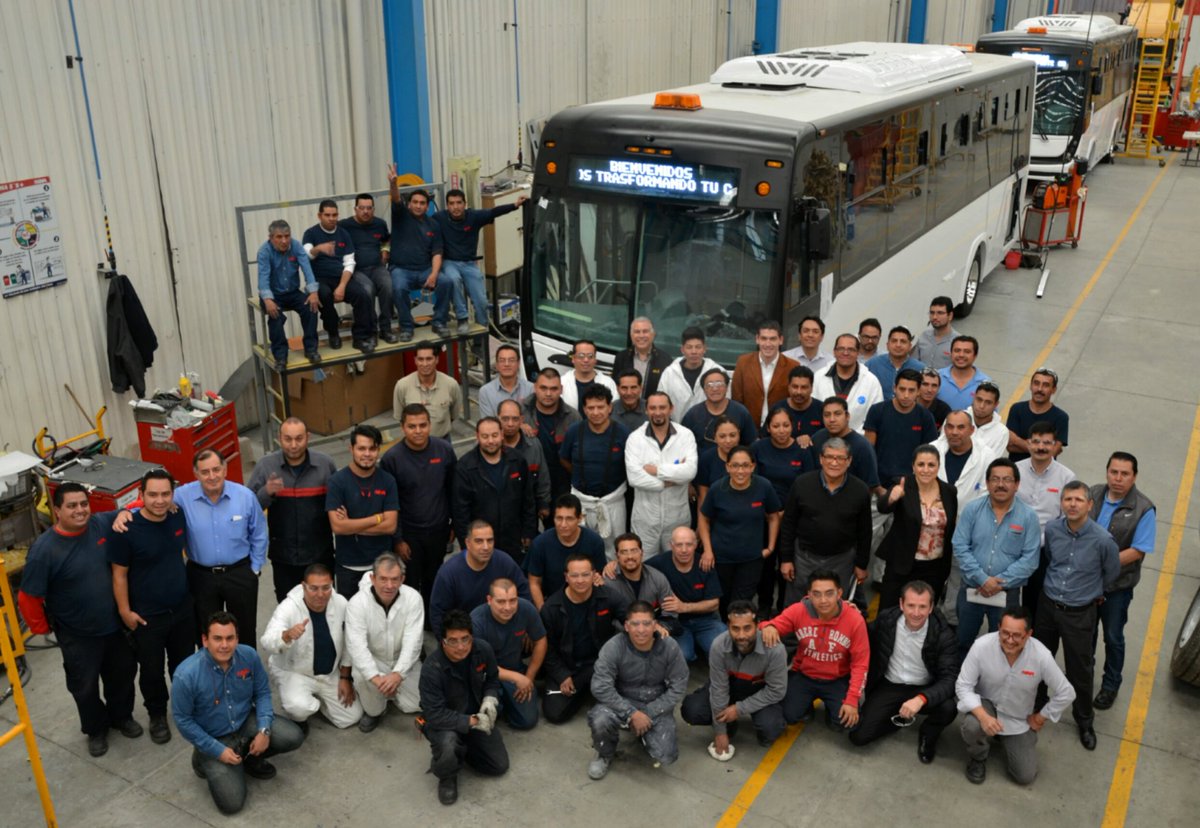
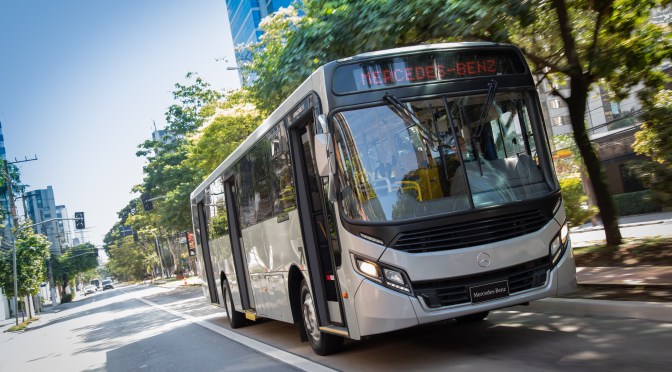
The Laguna Verde de México Consortium, formed by the operator Omnibus de Alba, ETS and Scanda have received their first 20 buses, within a commitment that involves acquiring another 30 units for short and medium distance road transport, also oriented to tourist services and excursions.
The twenty units of the first delivery correspond to the Volvo B8R chassis, manufactured at the company’s facilities in Tultitlán, bodied with the Irizar i5 model, the most sold by the Spanish manufacturer in Mexico, built at the group’s plant located in Querétaro.
The buses are powered by the 7.7-liter D8 engine that reaches 330HP of power, delivers a constant 1,200Nm between 1,200 and 1,600 revolutions per minute, with all Volvo safety equipment, including hill start assistance, control dual retarder, ABS, traction control, all-wheel disc brakes and EBS system.
The order also includes some Volvo B11R units that will be included in the next deliveries, with 410HP of power offered by the D11C engine. These vehicles will be bodied with the Irizar i6 model, with a higher capacity.
The Irizar i5 model was presented in 2009 in Mexico and is an old acquaintance of Omnibus de Alba, which has included it for its charter services and tourist transport in the state of Mexico for tours from the country’s capital, in Mérida for tours of Yucatán and in the tourist area of Cancun. This medium-size bus, can reach up to 13 meters and offer up to 51 seats, was the best-selling model of the Spanish manufacturer during 2020 and is shaping up to have the same result in 2021.
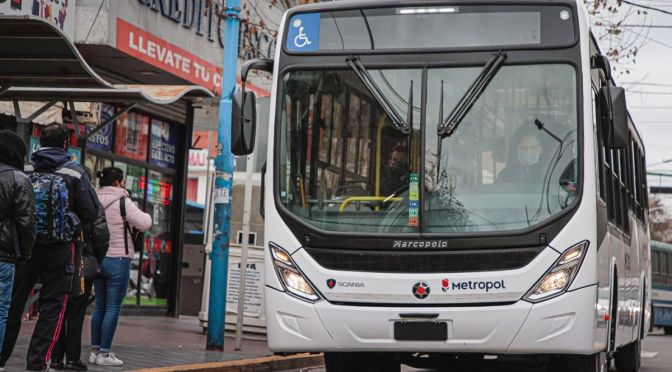
The Metropol Group, one of the main public transport operators in Argentina, received 52 new Scania K250 buses, which began their work on urban routes in the Buenos Aires Metropolitan Area. The new units are added to an order received in 2020 for 25 Scania K310 vehicles, which the company assigned to serve short and medium-distance interurban routes.
The new buses are part of an investment of close to 35 million dollars that the Metropol Group announced. With it, they hope to renew about 250 urban buses. The vehicles have been bodied with the Marcopolo Torino model, at the facilities of Metalsur, one of the most important Argentine constructors, now controlled by the Brazilian giant.
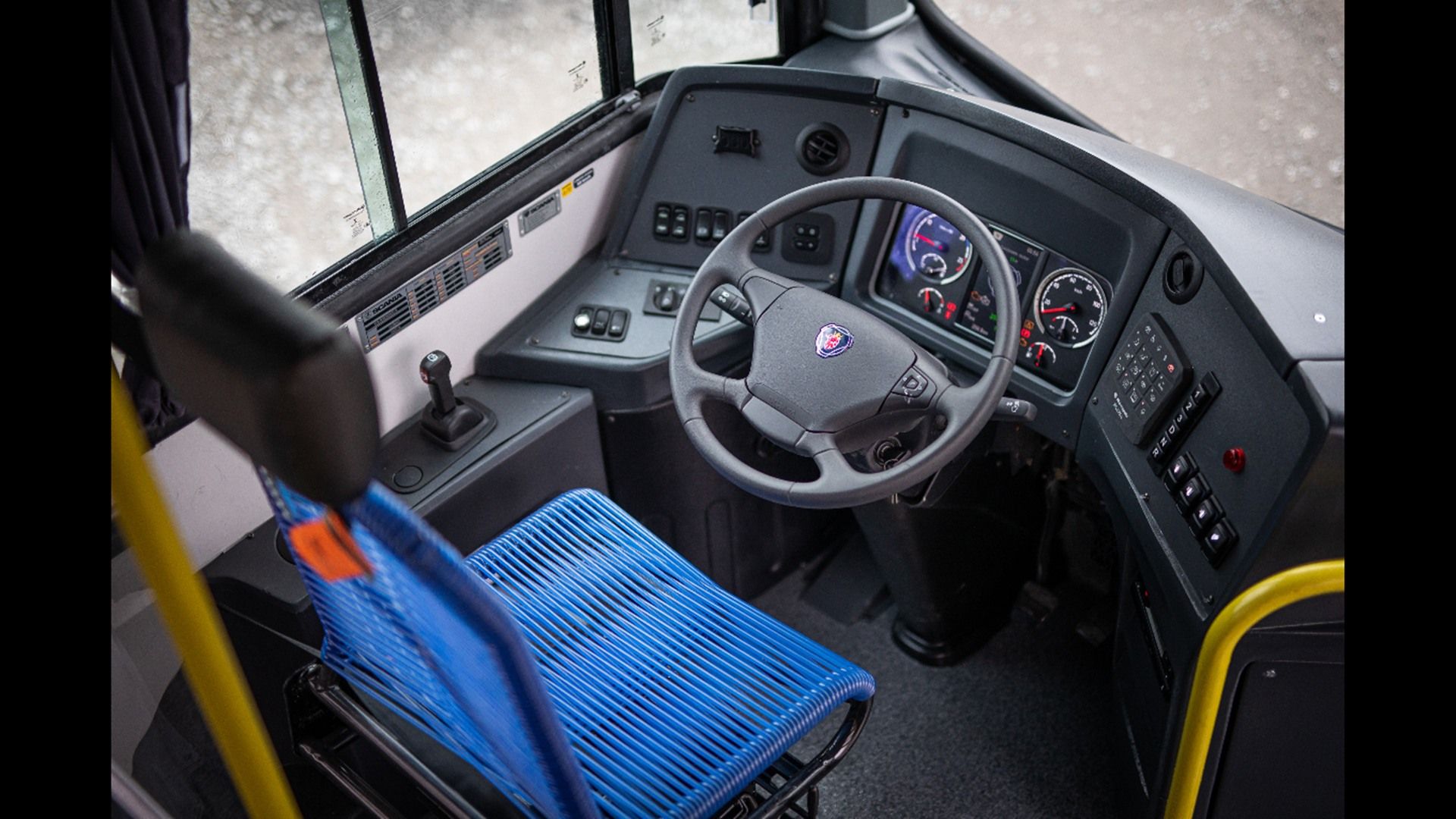
The buses have DC09 109 diesel engines with 9 liters of displacement and 250HP of power, complying with the Euro 5 emission standard, powered by high pressure injection-pump technology. They deliver 1,150Nm of torque between 1,000 and 1,300 revolutions per minute, have automatic transmission, retarder and disc brakes on all wheels. Additionally, they will be supported by the entire Scania Connected Services structure for proper fleet management, to optimize driving habits, analyze operation, reduce unforeseen stops and improve repair times, as well as maintenance contracts to guarantee the highest availability of the fleet.
The Torinos feature a low entry for best accessibility, locally made padded Grammer seats, Climabuss air conditioning and the capacity to carry up to 80 passengers. “Scania supplied us for medium-distance services to La Plata and Zárate with units equipped with the best technology that exists in terms of active safety and self-braking, in addition to making the driver comfortable and with low consumption” Eduardo Zbikoski, President of the Metropol Group.
The Metropol Group operates about 1,700 buses, travels 112 million kilometers a year and before the pandemic, it handled 1 million passengers a day. It also has Toyota dealerships, with more than 13,000 units sold, and an agro-industrial business unit dedicated to the production and export of nuts.
GUADALAJARA ADVANTAGE IN ELECTRIFICATION IN MEXICO
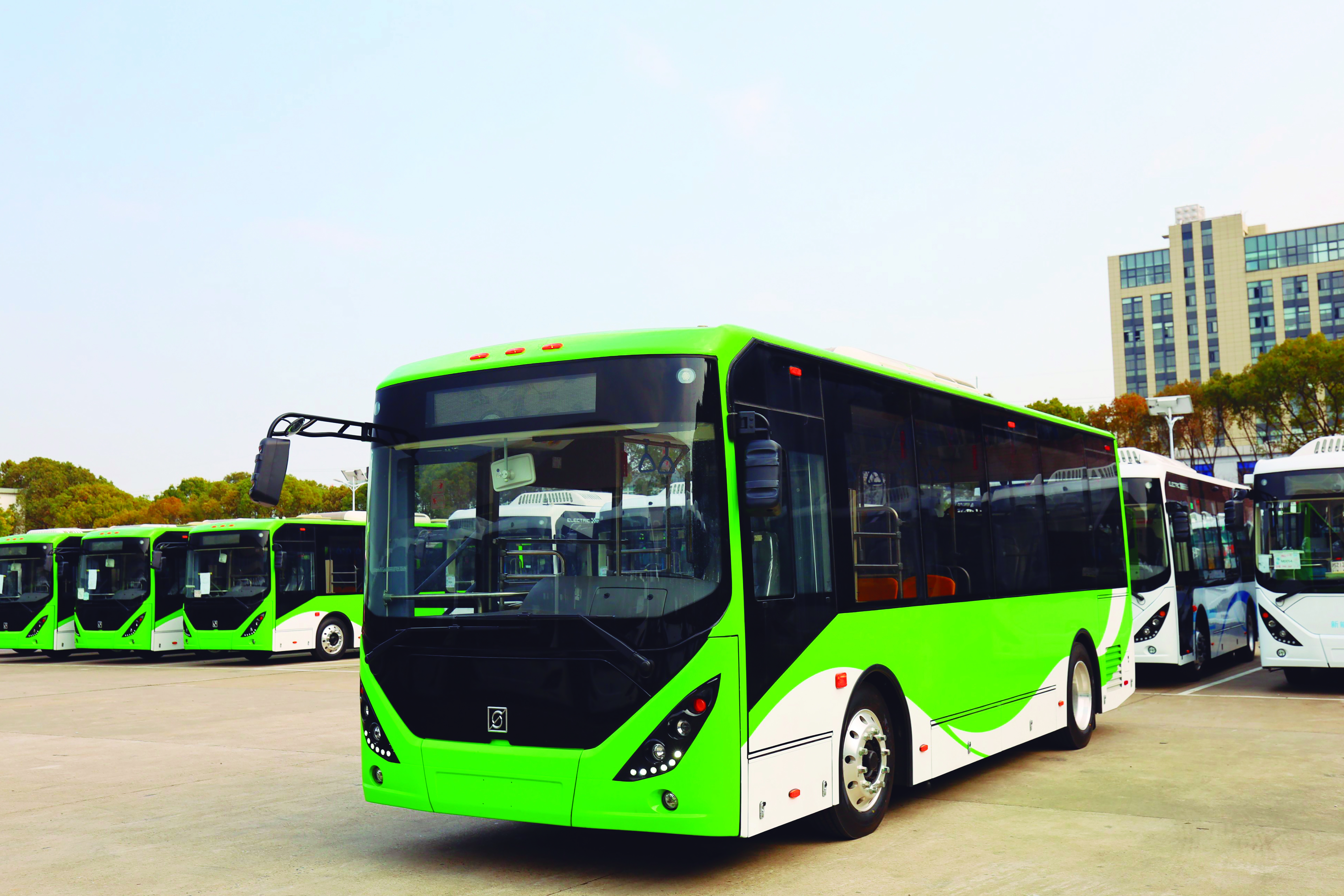
For a few weeks, the Mexican state of Jalisco has been announcing what will be the beginning of a revolution in urban transport in Guadalajara, as the capital of the state and the connection with other neighboring cities such as Zapopan and Tonalá. A few days ago, the articulated Mercedes-Benz units began to arrive, built in Pereira by Busscar de Colombia for the Mi Macro Periférico system and since July 4, the first urban route operated 100% with electric buses, the route C98.
38 electric units manufactured in China by Sunwin, corresponding to the SWB6868BEV model, with 20 seats and a maximum capacity of 58 passengers in a length of 8.6 meters. The vehicles have a Siemens electric motor, Dana axles, air suspension and a weight of around 13,000Kg.
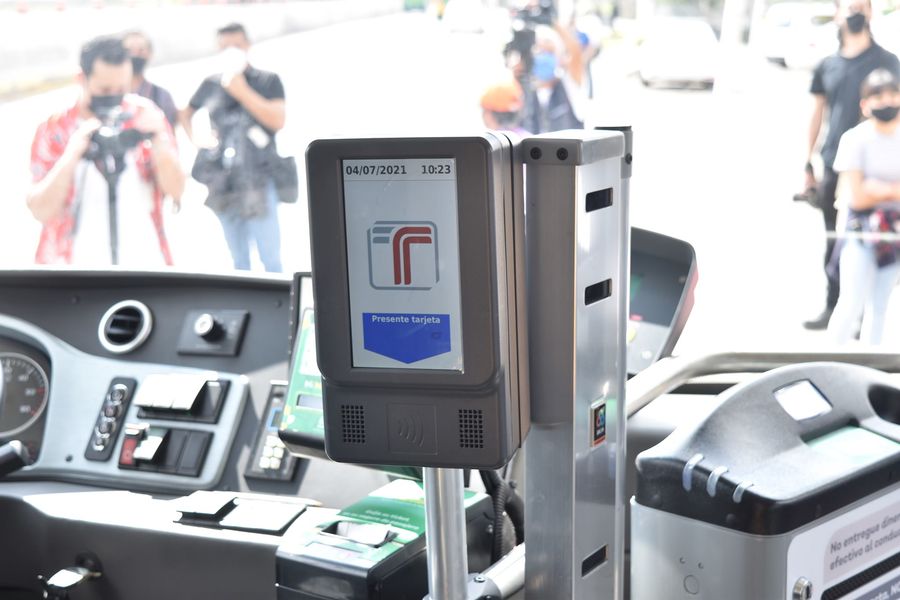
Route C98 in Guadalajara will cover the journey from the Periférico Norte station of Line 1 of Mi Tren, to the University Center of Tonalá (CuTonalá). They will be conducted by 43 women and 36 men, who for three weeks received training to become part of the personnel that will serve in these units and become familiar with the new technology. Additionally, they will have a collection system through the My Mobility card.
These buses also run in countries such as Pakistan, Taiwan, Saudi Arabia, the United Arab Emirates and Colombia. They are units that generate five times less noise than other diesel or gas buses, are more comfortable, have air conditioning and have an integrated ultraviolet disinfection system, and are low-floor for great accessibility.
Mi Transporte Eléctrico is part of the Integrated Mobility Model in the Guadalajara Metropolitan Area made up of lines 1, 2 and 3 of Mi Tren, the units of Mi Transporte, Mi Macro Calzada and soon Mi Macro Periférico, as well as the bicycle system public MiBici. This C98 route has a frequency of every 12 minutes, and the complete route from point to point takes about 2 hours and 10 minutes. Starting the first service at 5:00 and the last at 22:20
The current demand for the corridor is 12,500 passengers per day, but the system is capable of increasing the capacity to 15,000 people by connecting the route with the airport and even mobilizing 20,000 people. This is the first step to reach the goal by 2030 to renew 100% of public transport units with low-emission technology operating under new, more efficient user service schemes.
With the changes caused by the pandemic in the transport sector, the continuous charter segment of passengers has strengthened during the last year to the detriment of sectors such as the highway that expect better times. The charter sector grew 80% compared to the previous period, helping Marcopolo, a leader in the Brazilian production of bus bodies, maintain vehicle production rates in the country.
In the first five months of this year, the company produced 688 vehicles for the sector, representing 62% of the market share. Given these figures, in order to maintain its leadership in the segment and add more value and innovation to vehicles, Marcopolo launches the Viaggio 800 bus. The model sets a new quality standard for the market, as it combines strength, comfort, design and reliability differentiation, in addition to ensuring the best cost-benefit ratio.
In the last 90 days, the company presented the product individually to each customer, having already sold more than 100 units. Of these, the first six units are already being delivered to the client Piccolotur / SP, one of the continuous and occasional charter companies with the longest tradition in Jundiaí and the region. It also operates in the Campinas region and part of Greater São Paulo, serving companies from various segments.
The new Viaggio 800 will be produced at the Caxias do Sul plant and was developed to meet the specific demands and characteristics of the Brazilian continuous charter segment and also of the foreign market. Among the differentials is the width of 2,600 mm, which provides more comfort and interior space for the passenger. Regarding the length, in the configurations of 48 to 52 seats, the total measurements are from 12,400 mm to 13,500 mm, respectively.
Naturally, it can complement the portfolio of large capacity vehicles, but designed for short journeys, or commuter transport thanks to the 800 mm height of the hold, designed for not very bulky luggage.
With a bold, modern design and light lines that embody Marcopolo’s DNA, the Viaggio 800 was developed for different front-engine chassis options, as well as ensuring quick and easy maintenance. The model has a front headlight assembly, with three round headlights and DRL, LED turn signals and fog lights (optional), to ensure greater light efficiency and driver safety.
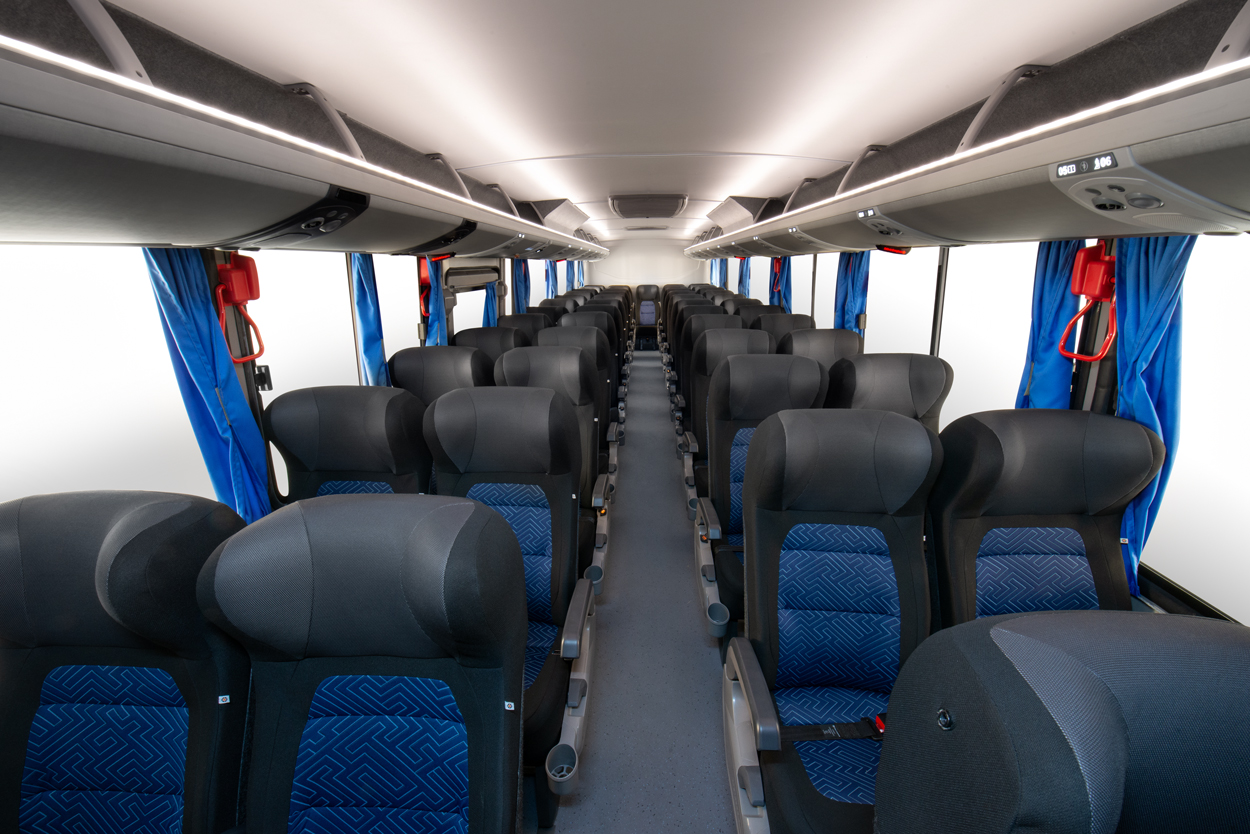
The model has a new interior finish in the driver’s cabin, more modern and of high quality, and a new total separation wall, with a door in position that guarantees better access to the passenger room. The lighting is fully LED and, to ensure passenger comfort, two options are offered for the Executive model seats, with a new design and specially developed foam headrests to mold the biometric characteristics of the passengers.
Colombiabus newsroom – Charlie Rodríguez/Joseba Mendoza
The renewal of public transport vehicles in the Colombian capital continues, and its citizens are experiencing the most important incorporation of vehicles in its history. It has been two years when bi-articulated, articulated, gas standards, electric buses and midibuses of various types have been incorporated into the ranks of the main passenger transport operators in Bogotá.
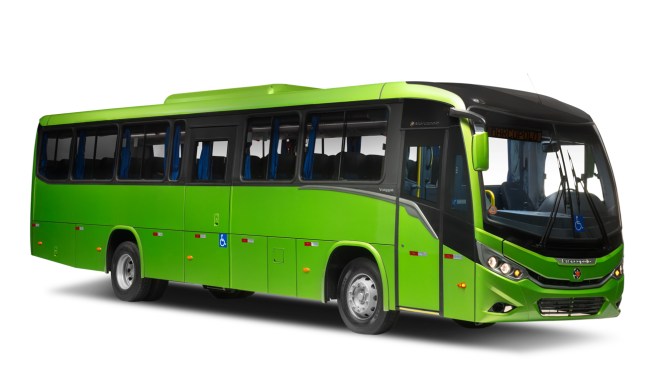
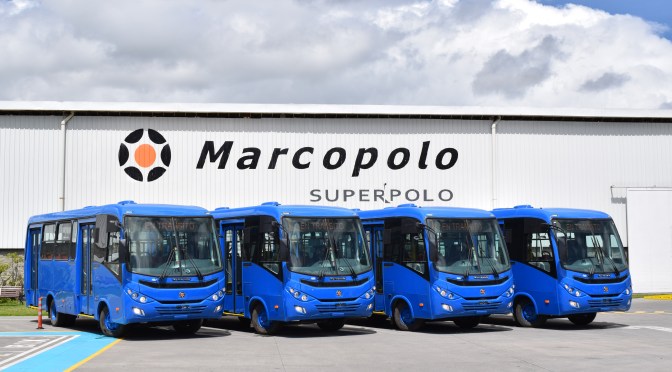
This time, the turn is for the zonal component, which receives 110 new units of the Marcopolo New Senior 600 urban model, mounted on the Mercedes-Benz Of917 chassis, capable of carrying up to 50 passengers inside between sitting and standing. New vehicles that will facilitate the movement of passengers in the most remote parts of the Colombian capital, thanks to their compact dimensions that allow them to turn with more solvency in the narrow streets of the city’s neighborhoods.
A TESTED AND PROVEN MODEL
The forward door midibuses became an industrial trend during the early 2010s. Although Marcopolo had in his portfolio the successful Senior model, suitable for the bodywork of front engine chassis, the formal configuration of the same, having an aerodynamic front glass, it did not quite fit the new trend of midibus configuration, with the access ahead of the front axle. In response, they presented the luxurious Audace model, a derivation of the Brazilian model of the same name, incorporating luxury finishes and the design philosophy of the 7th generation.
Despite the acceptance of this vehicle, especially in the tourist segment of the market, the war in this category of bodywork was given more by price and practicality, than by luxury. It was so Superpolo decided to launch a product never seen before (not even in Brazil), called New Senior, capable of serving the inter-municipal, school and urban markets, with more favorable production costs, lower overall height, lower weight and greater modularity in the production process .
The 600 version of the New Senior (the one with the lowest platform) is the protagonist of this installment, and has received a series of adjustments to make its operation simpler, more comfortable, safer and above all, profitable. So much so, that in order to optimize the weight of the vehicle, facilitate access control and guarantee the protection of drivers against pathogenic threats such as Coronavirus, and vandalism attacks, now the midibuses return to the configuration original door between axles, leaving free the front space next to the driver.
Another interesting detail incorporated into the new units is the modularity of the side lining, with a view to reducing repair times due to minor collisions. In this way, the aluminum side sheet is sectioned into several parts, both in the central part and in the underside of the body. Thus, if a repair is necessary on the sides of the bus, only the affected part can be replaced quickly, without having to repair the entire side sheet. This results in less downtime for repairs and lower maintenance costs.
Another interesting detail on the exterior of the body are the asymmetric rear-view mirrors. In this way, the mirror on the right side is much further from the line of sight, than the one on the driver’s side, practically fixed to the access door. This allows a better visual, also reducing the cost of damage or repair of these accessories.
SIMPLE BUT SAFE
The Mercedes-Benz OF 917 platform is a new commitment by Daimler to offer more universal vehicles, thanks to the presence of Fuso as one of the group’s brands. It is a vehicle designed for the transport of passengers (there are no equivalents of this chassis with trucks of the brand), with a straight frame, mechanical suspension and a compact 4-cylinder in-line engine that delivers 170Hp at 2-500 revolutions per minute.
It is a simple mechanic, easy to coach, but also simple to operate, which is reflected in the driving area, where the instruments. Another interesting detail on the exterior of the body are the asymmetric rear-view mirrors. In this way, the mirror on the side is much further from the line of sight than the one on the driver’s side, practically fixed to the access door. This allows a better visual, also reducing the cost of damage or repair of these accessories. Thus, if an arrangement is necessary on the sides of the bus, only the part can be replaced quickly, affected, without having to repair the entire lateral lamina. This results in less downtime for repairs and lower cost of maintenance.
Thanks to the location of the engine, which is located at the front of the mobile, the rear area has been intervened to locate passengers with reduced mobility. The hydraulic lift for wheelchairs is installed there, which is incorporated into the exit ladder at the rear end of the bus, in addition to a space specially designed for the fixation of the disabled passenger. The exterior lighting is very well-defined in this model and is part of the active safety systems incorporated into the bus. The front area features easily replaceable round low and high lamps, as well as fog lights on the lower part of the front bumper. The low beams, upper delimiters, DRL light, as well as the taillights have LED technology.
A REVIEW FROM THE INSIDE
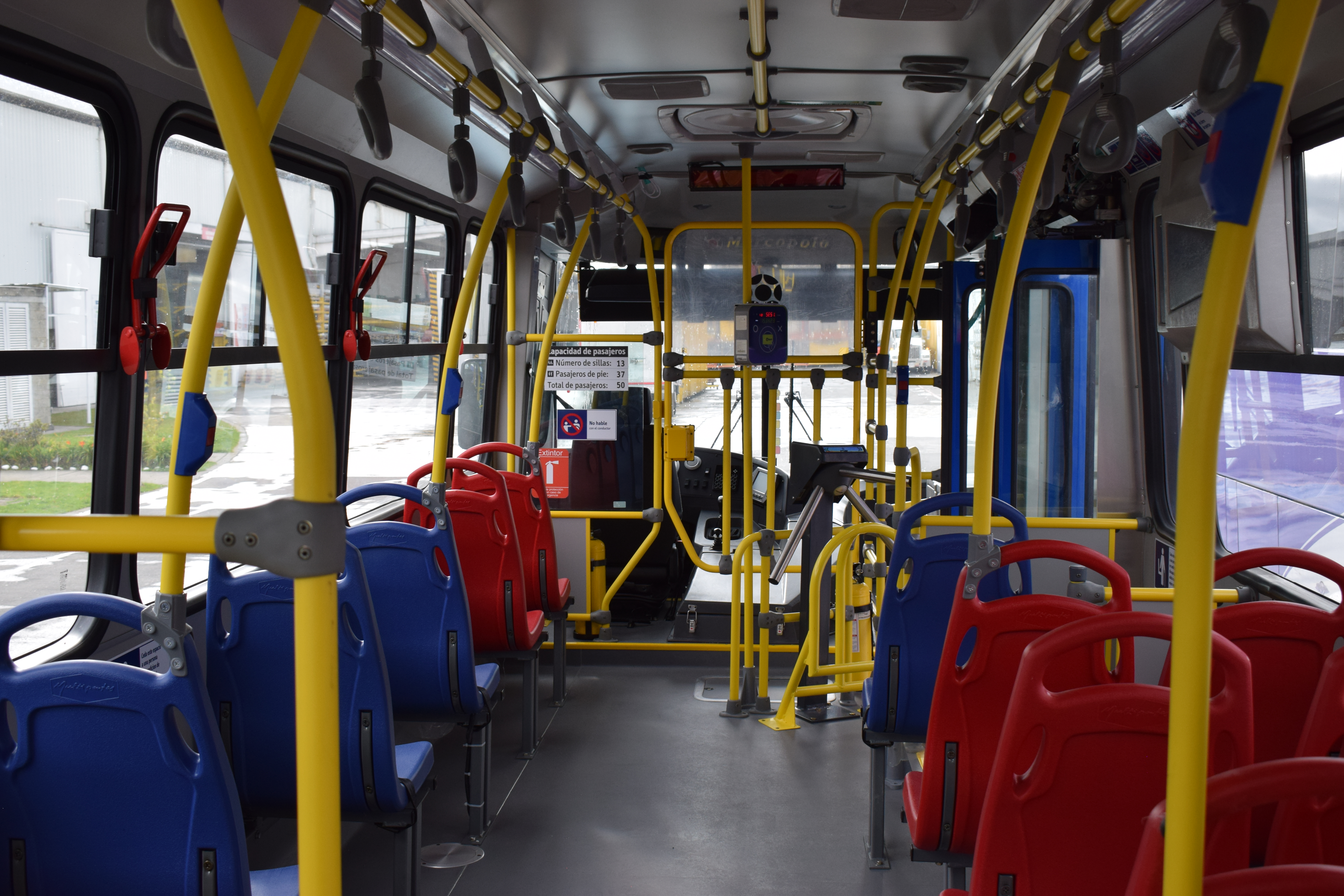
Although the regulations for body building are strict and give less and less room for creativity in the internal configuration of mass transport vehicles, it is the small details that they allow manufacturers to achieve differential points that tip the balance in their favor when it comes to choice by operators. In this case, the passenger lounge of the New Senior has been configured with 13 seats and space for 37 standing passengers, which have handles in metallic pipe with a non-slip finish along the aisle. Most of these handles are fixed to the bodywork thanks to an aluminum profile that runs through the saloon, avoiding drilling holes in the hood and roof trim.
Passengers with priority boarding have their blue seats duly differentiated, as well as the space for travelers with live help (guide dog), which have their special location. The renewal process is ongoing, and thanks to the operators who trust the national products, companies such as Superpolo continue to create jobs, both directly and for each of the suppliers that makes an effort to achieve safe and quality products.
More than 200 air-conditioning systems, type AC353 for new articulated busses in São Paulo
Since many years, Brazilian fleet operators and bus manufacturers rely on bus air-conditioning expertise of Eberspaecher: In São Paulo, the German thermal management expert has already equipped nearly 800 articulated buses with air-conditioning systems. Another 150 units were installed in the past 12 months and are already in operation in the city of São Paulo. More than 60 additional ones will follow in the mid of 2021.
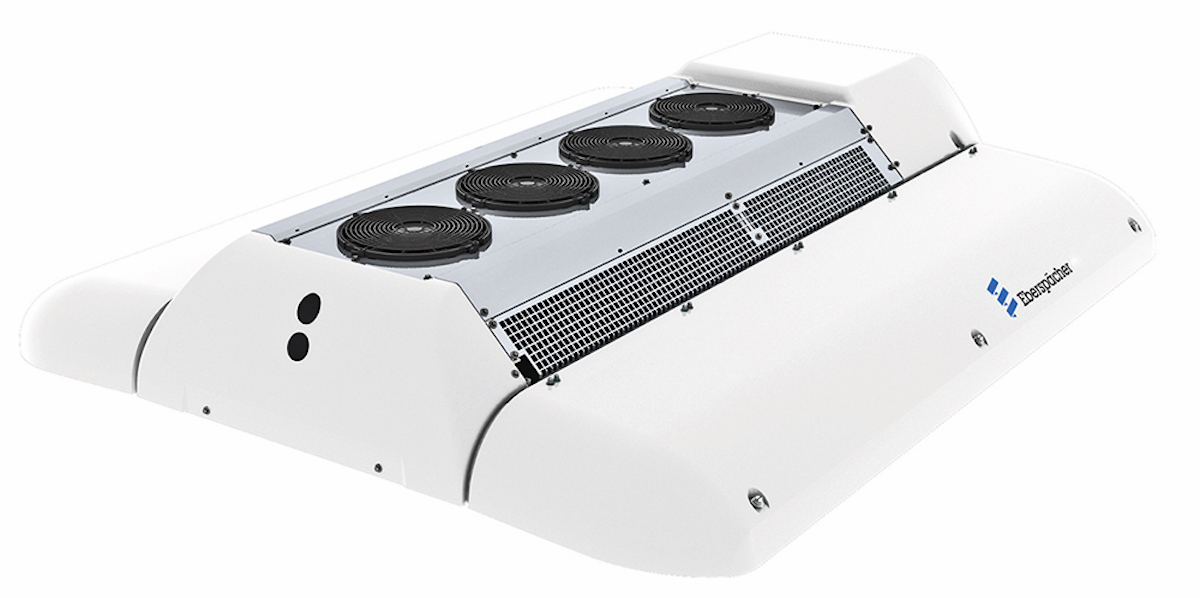
The articulated city busses are equipped with the AC353 inline roof-mounted AC system product platform, which has a very high global reliable reputation. The system comes in various cooling capacity classes and impresses fleet operators and manufacturers through long lifetime and its service friendliness. Passengers enjoy the high comfort level and pleasant temperatures the AC353 product family provides during the usage of public transport buses. The AC353 air-conditioning systems can also be combined with Eberspaecher’s clean air solutions for efficient air filtration, air purification and air sterilization.
Eberspaecher’s Bus & Coach Business Unit offers heating and cooling solutions for every kind of busses and coaches. No matter the requirements, bus and drive type – the German air conditioning specialist offers the optimum solution. Customers all over the world particularly appreciate the flexibility, reliability, and efficiency of air-conditioning systems from Eberspaecher.
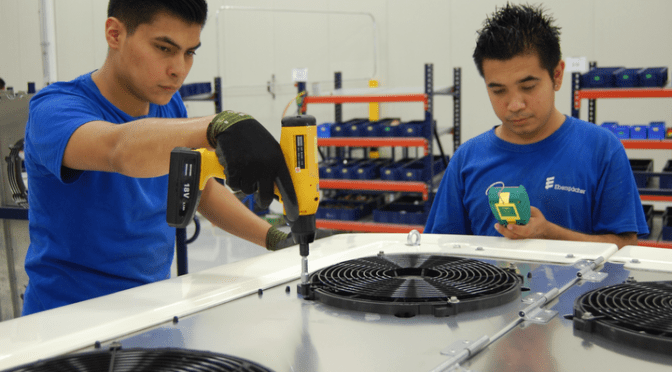
The systems from Eberspaecher Climate Control Systems Bus & Coach for the South American market are manufactured in Sorocaba, Brazil. More than 20 employees produce bus AC systems in this plant. The worldwide Eberspaecher dealer network ensures optimum service throughout the life-cycle duration.
First manufacturer of all-electric bus AC systems in Mexico and Central America
In line with its corporate strategy, Eberspaecher is committed tocontribute to a Clean Mobility. Therefore, the thermal management expert supports bus manufacturers and fleet operators in further promoting electric mobility in their passenger transport systems with its AC136 AE (All-Electric) product family. Since 2021, the air-conditioning system is produced in the Eberspaecher production plant in Monterrey, Mexico, to supply customers from Central and North America. Eberspaecher Mexico is the first manufacturer in Central America producing AC systems for electric buses.
In line with its strategy to move towards a Clean Mobility and the increasing demand for e-mobility and related thermal management systems going with it, Eberspaecher´s Bus and Coach Business Unit integrated the production of its AC136 AE (All-Electric) parallel roof-mounted air-conditioning system to the Eberspaecher production plant in Monterrey, Mexico. This production line was built to supply the company’s Central and North American customers. Production started in March this year. With this step, Eberspaecher is Central America’s first manufacturer that produces air-conditioning systems for electric buses.
First shipment of air-conditioning systems for electric buses
In April, Eberspaecher delivered the first AC136 G3 AE units produced in Mexico used for electric buses to one of their most important customers in the USA. The AC136 G3 AE is an electric roof-mounted air-conditioning system dedicated to hybrid and electric buses. The product family convince with an outstanding performance, lightweight housing aluminum evaporator and tubes, as well as the high efficiency with low energy consumption.
Miguel Vallejo, General Manager of Eberspaecher in Mexico, says: “With the first assembly line for all-electric AC systems, Eberspaecher is a pioneer in Mexico and Central America. We are proud to act as the Eberspaecher production and exportation platform of these AC systems for Central and North America. This step reaffirms our corporate motto “DRIVING THE MOBILITY OF TOMORROW“, and endorses our leadership position in Mexico and Latin America in producing new technologies for the Clean Mobility of the future.”
Passenger transport companies are betting on strong demand since the last quarter of 2021, when the majority of Brazilians will probably already be vaccinated against the coronavirus. This projection is based on several factors, the certainty of a repressed pandemic demand, the high costs of air tickets and the immense supply of national tourist destinations with outdoor attractions. Added to this is the incomparable capillarity and frequency of the range of destinations offered by the regular bus system.
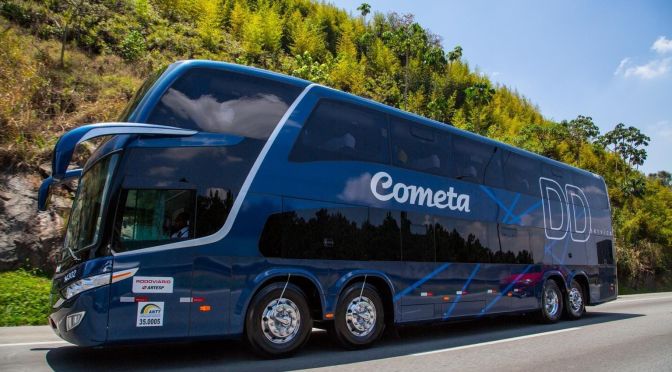
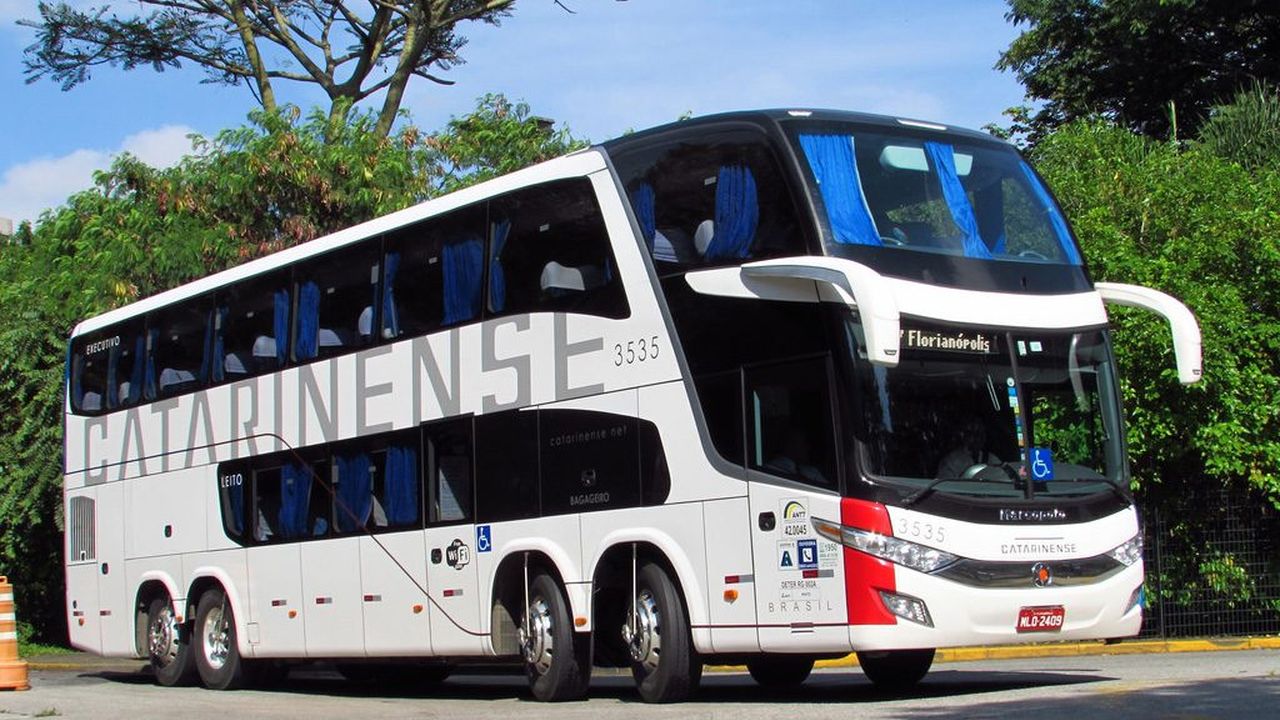
This sentiment is collected by the Brazilian Association of Intetestatal Land Transport – Abrati, which groups together most of the country’s companies, several of them of great renown such as Expresso Brasileiro, Viacao Catarinense, Viacao Garcia, Gontijo, Viacao Cometa, Auto Viacao 1001, Andorina, Aguiabranca, among others. The companies, before the pandemic, had invested about 1,000 million dollars between 2017 and 2020 and now, they expect to invest about 3 trillion reais (about US $600 million) in the next two years. The resources hope to allocate them beyond the improvement in the organizational structure of the companies.
Investments, although they slowed down between 2020 and 2021, but they did not stop. Now they hope to resume them to motivate the traveler with renewed vehicles. Some companies such as Gontijo, the new orders from Boa Esperança and the scheduled renewals of the JCA group, a major operator in the country, are signs of the initial steps being taken to prepare for reactivation.
The second aspect has to do with alliances and integration with other means of transport. Companies know that they must offer more than mobility and take their customers from one place to another; therefore packages integrating accommodation and tourist experiences, interconnection and a better sales promotion are ready. For example, Aguiabranca hopes to develop the travel agency model, others have points of sale at airports such as Real Expresso in Brasília, da Cometa in Guarulhos, Autoviacao 1001 and Rio de Janeiro, or even the integration between the bus terminal and the airport that It is about to be completed in the city of Porto Alegre.
The benefits for travelers are also expected to be extended within this investment plan: on the one hand, the improvement of loyalty and rewards programs to encourage customers. On the other hand, the GBS group (Viacao Garcia – Brasil Sul) has piloted the «easy baggage check» to speed up boarding and allow the traveler to take better advantage of the services of the large terminals. Also, the proposals of podcasts and advice through platforms offered by the Guanabara Group that offer information about the route and points of interest.
With the increase in the service offer and the conditions for citizens to travel, together with the long-awaited immunization, it is expected that companies will begin to resume the dynamics that existed between 2017 and 2019, when the country was beginning to emerge from an economic crisis, until the arrival of the pandemic, which generated a great setback.
In 2017, DINA, the Mexican bus and truck builder, presented the Silux model that sought to revolutionize the country’s technology and offer new sustainable transport solutions, under the concept of the Integrated Light System. This is a form of construction that seeks to make vehicles lighter and additionally equipped with natural gas-powered engines.
Now this model is the basis with which DINA hopes to enter the world of electromobility, preparing a bus that is expected to operate in the mass transit system of Mexico City. It takes advantage of a base where about 15 million dollars were invested at the time to present the first models of 9 and 11 meters, but now they will be able to receive the electric generators.
For this, DINA works together with the experts from Industrial Power, a Mexican company that has a history of more than 110 years, accompanying the electrical development in the country and more than 70 building electric motors. Two years ago it started the development of its business line oriented to electromobility, offering the complete powertrain.
It has the largest battery testing laboratory in Latin America, and with the support of multilateral banks it has developed projects with Chinese manufacturers for last-mile electric vehicles. It is expected that DINA’s new electric bus can enter the competition to be the supplier of the city’s first electric corridor, which will have 260 buses.
A CHASSIS THAT WAS BORN AS A WINNER AND CONTINUES WITH ORDERS
Mercedes-Benz do Brasil, has been able to celebrate the sale of the 100,000 unit in its local market, the OF1721 chassis, in a year of great challenges and where it is struggling hard for the economic recovery of the bus industry, due to the pandemic. More than 120,000 platforms have been produced at the São Bernardo do Campo plant (São Paulo State), which also serves the foreign market.
The OF 1721 had its first version between 1998 and 2004, being the best-selling on the market during those years. Between 2005 and 2011, with the entry into force of the Euro 3 standard in Brazil, it was replaced by the OF 1722. As of 2012, when the Euro 5 emissions standard was adopted and Mercedes-Benz incorporated Bluetec 5 technology, it returned to be called OF 1721, continuing its leadership in sales in the country since then.
Achieving enormous acceptance in urban public transport, both in metropolitan regions, as in other cities and throughout the country, the 100,000 OF 1721 chassis registered in Brazil mean an average of approximately 4,350 units per year. The sales success of the OF 1721 is an important contribution to the success of the OF line of Mercedes-Benz front-engined buses, which reached its 50th anniversary last March. During these five decades, more than 256,000 OF models have been registered in the Brazilian market, with a total production of around 310,000 units that have also gone to the markets of Latin America and Africa, mainly.
Not only is it the best-selling bus by Mercedes-Benz in Brazil, it is also witness to the milestones of many companies, which were born, grew and consolidated in urban and road transport, using this family of vehicles in their fleets.
Developed to receive bodies of up to 13.2 meters, the OF-1721 is equipped with the OM 924 LA 4-cylinder electronic engine, which offers a power of 208 hp at 2,200 rpm and a torque of 780 Nm between 1,200 and 1,600 rpm. This engine is a reference for its fuel economy and high thrust at low revs, which make it ideal for urban traffic.
In addition to the traditional mechanical leaf spring suspension setup, the OF 1721 is also offered with inner tubes, increasing passenger and driver satisfaction in terms of vehicle comfort. The chassis includes exclusive Top Brake engine brake, ABS braking system, G 85 6-speed gearboxes with oil cooler, additional pulley for air conditioning and connection for telemetry data extraction (FMS). The list of options includes items such as digital tachograph and retarder.
Its fuel economy features include the EIS automatic engine shutdown system. If the bus is stationary, but with the engine running, the gear in neutral and the parking brake applied, in a situation that lasts a long time, for example 4 minutes, without the driver accelerating the vehicle or activating the brake service, the system automatically activates and switches off the engine, preventing it from idling for excessive times, increasing consumption, emissions and wear.