Tag Archives: Busworld Latin America

BUSSCAR EN CONJUNTO CON BYD Y ENEL ENTREGAN 172 BUSES ELÉCTRICOS EN BOGOTÁ PARA MUEVE FONTIBÓN

EN 2022 SE ENTREGARÁN 830 BUSES ELÉCTRICOS MÁS

Redacción Colombiabus – William Marroquín

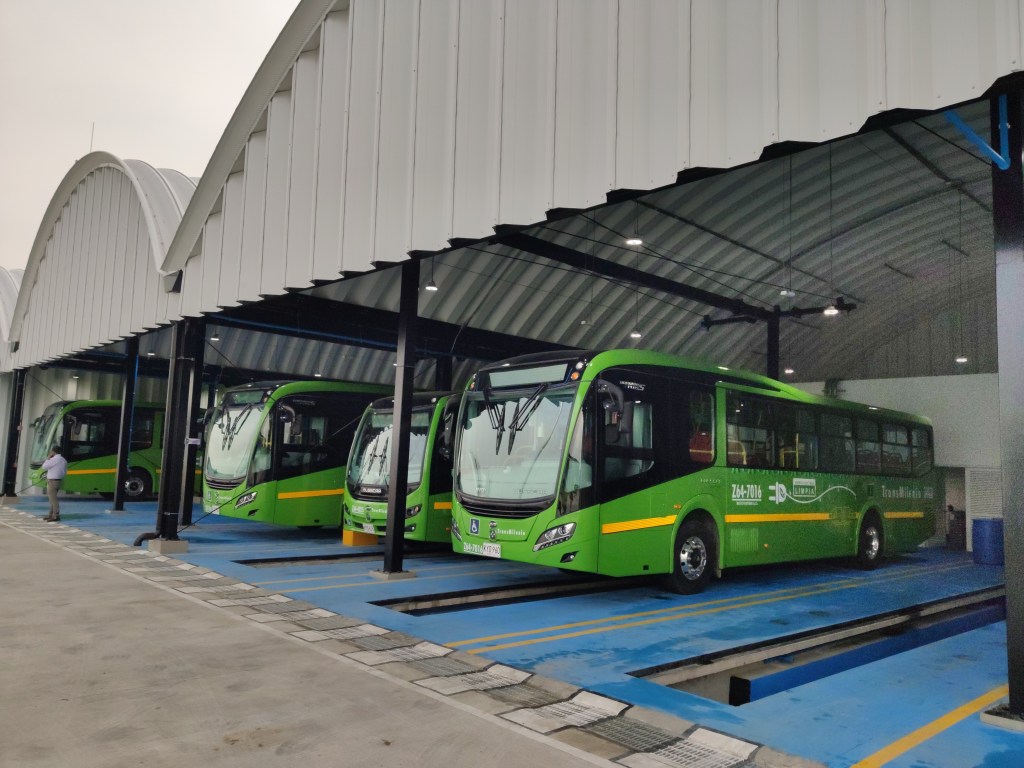
Un paso muy importante en esa carrera por ofrecer soluciones para una mejor calidad de vida de los ciudadanos en Bogotá y concretamente de la localidad de Fontibón, al occidente de la ciudad se ha dado con la entrega de 172 buses eléctricos. Un proceso que inició en el segundo semestre de 2020 (en uno de los momentos más difíciles de la pandemia al encontrarnos con muchas restricciones y encierros), con la licitación dde autobuses eléctricos que publicó Transmilenio y que se definió iniciando 2021 con la adjudicación de los contratos y los pedidos de flota.

Estos 172 buses no sólo permitirán reducir de manera significativa las emisiones de CO2 a la atmósfera, también llevarán un nivel de confort muy elevado tanto a los pasajeros como los operadores, quienes disfrutarán de una gran suavidad de marcha, cero ruido y un alto confort gracias a las soluciones para la vida a bordo que incorporan los autobuses.

Elementos como puertos USB para recargar dispositivos electrónicos, conexión WiFi a internet gratuita, pantallas de información presentando las generalidades de las rutas, rutero electrónico que informa los puntos de parada y audio múltiple. También los sistemas de videovigilancia con función de pánico que alertan a las autoridades sobre cualquier eventualidad en la ruta, el detector de fatiga y la telemática embarcada para gestionar flota, permiten un monitoreo permanente de toda la actividad y en tiempo real.

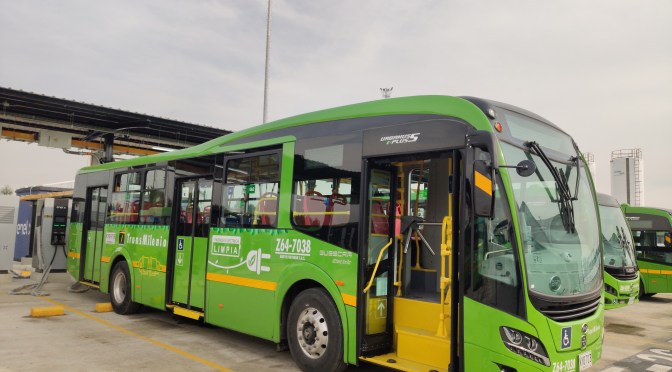
Los vehículos fueron construidos con la combinación de chasis BYD, carrocerías Busscar producidas en Pereira y el patio de recarga así como los conectores a cargo de EnelX. Son 89 busetones eléctricos capaces de transportar un máximo de 50 pasajeros y 83 buses padrón con una disposición para movilizar hasta 80 ocupantes.
“Iniciamos con estos 172 buses, la entrega de 1002 buses para Bogotá, que son necesarios para consolidar el sistema y mejorar el servicio a los usuarios. No fue una tarea fácil adjudicar y licitar estos buses, pues estábamos en tiempos de pandemia, también Transvial y Enel merecen nuestro agradecimiento por haber participado en las unidades funcionales licitadas previamente. Asimismo por creer en nosotros por superar todas las barreras que se nos presentaron durante los cierres en los puertos, por eso podemos entregar hoy estos vehículos, ayudando a la reactivación del país, pues todos serán carrozados en Colombia, apoyando a la industria nacional” indicó Alvaro Rengifo, Gerente General de Transmilenio.

Enel también participó con la entrega de un nuevo terminal de carga llamado Patio Escritorio, muy cerca a una de las pistas del Aeropuerto Eldorado. Allí se encuentran 81 cargadores dobles, con una infraestructura preparada por EnelX para permitir que en un tiempo cercano a las 3,5 horas cada a autobús esté totalmente cargado y pueda cumplir con esa autonomía mínima de 260 kilómetros para realizar la jornada diaria.

El patio es el quinto que se entrega en Bogotá, unido los otros localizados en Suba, Usme, Perdomo y otro también en Fontibón. Allí se invirtieron cerca de 60.000 millones en terrenos, infraestructura y equipos, donde se podrá dar soporte a los 172 autobuses del operador Mueve Fontibón. Serán 6 rutas las que inician operación, permitiendo conectar a la localidad del occidente de Bogotá con Suba (KC321, KC315 y KC323), Cerros de Oriente (KH322) y Centro Andino (KA306 y KA319).

La entrega de los nuevos buses, también ha servido para anunciar nuevos proyectos que buscan que la ciudad, por una parte reduzca la dependencia del sistema Transmilenio y los autobuses con la segunda línea de metro que deberá dejarse contratada en 2023 para que a futuro el sistema cuente con cinco líneas, además de nuevos trayectos de cables aéreos y superar los 1.000 kilómetros de ciclorrutas.

Adicionalmente, deberá iniciarse la construcción del regiotram de occidente, iniciando en Facatativá, pasando por Madrid y Mosquera para terminar en el centro de Bogotá. y por otra, avance en la consolidación de la metrópoli-región. También en 2023, deberá dejarse contratada la construcción del regiotram del norte, que conecará a Zipaquirá, con la capital del país.


130 IVECO EURO VI GAS UNITS WILL ARRIVE AT THE SIVA SYSTEM IN VALLEDUPAR, COLOMBIA.

DELIVERIES WILL BE DURING THE SECOND HALF OF 2022

Colombiabus newsroom – William Marroquín

Like other intermediate Colombian cities, the problem of urban transport in Valledupar was the result of the lack of policies that prevented chaos in the operation and that stopped informality in the mobilization of passengers in time. Only at the beginning of the present century, the structuring of the Strategic Public Transport Systems (SETP), designed for populations between 300,000 and 600,000 inhabitants, began.

Since the end of 2010, the Valledupar Integrated Public Transport System – SIVA, has been in charge of providing a quality and efficient service in the capital of Cesar, and by 2021 it determined the need to acquire new vehicles to replace units of the traditional component through public tender. The specifications contemplated low-emission buses and a minimum capacity of 16 seated passengers, accessible and with the solutions of modern and inclusive buses. Likewise, demand estimates were adjusted, considering variables such as motorcycle taxis and the growing number of users who have switched from buses to motorcycles.

A process where SIVA, as the managing entity, also assumes the purchase and ownership of the vehicles, preventing the system from being trapped in the need to achieve financial closures and obtain investment commitments, allowing the value of the rate charged to the users per trip made. The amount of the contract amounts to 11.2 million dollars.

The tender began in September 2021, where the proponents submitted offers with diesel, electric and natural gas technologies, which ended up prevailing. The evaluation criteria for SIVA’s offers included legal and financial capacity, experience and technical solvency. The Iveco 70C14G chassis, of Italian origin powered by natural gas, which meets the Euro VI emission standard, will be coupled with bodies for the urban segment built locally for 25 passengers (16 seated + 8 standing + 1 seat for users with reduced mobility).

The engine is 3 liters and is born dedicated to operating with natural gas, it delivers 136HP of power, with a 6-speed manual transmission. Its total length is 7.4 meters, with a wheelbase of 4,350 mm and supports a gross vehicle weight of 7,000Kg. It has disc brakes, ABS and, to highlight, the ESP electronic stability program that will provide maximum active safety.

Iveco’s experience in urban transport projects in cities such as Manizales, Medellín and Cali, allowed it to prove its knowledge in the urban segment. The deliveries of the vehicles to the SIVA operator will be made gradually, between June and September 2022, bringing a new air and dignifying the mobilization of the users of the capital of Cesar

SCANIA MEXICO DELIVERS ITS FIRST CHASSIS WITH THE MARCOPOLO G8 BODYWORK

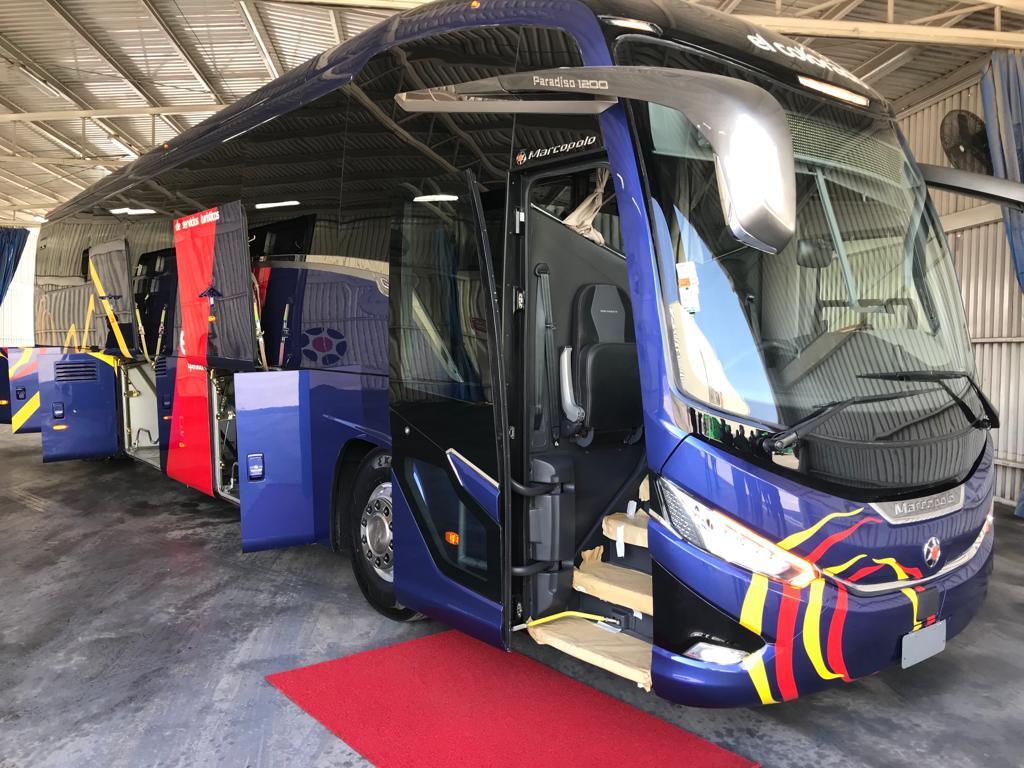
EL COLORADO TOURS LAUNCHES PARADISO 1200 G8

Latinobus newsroom – Scania México

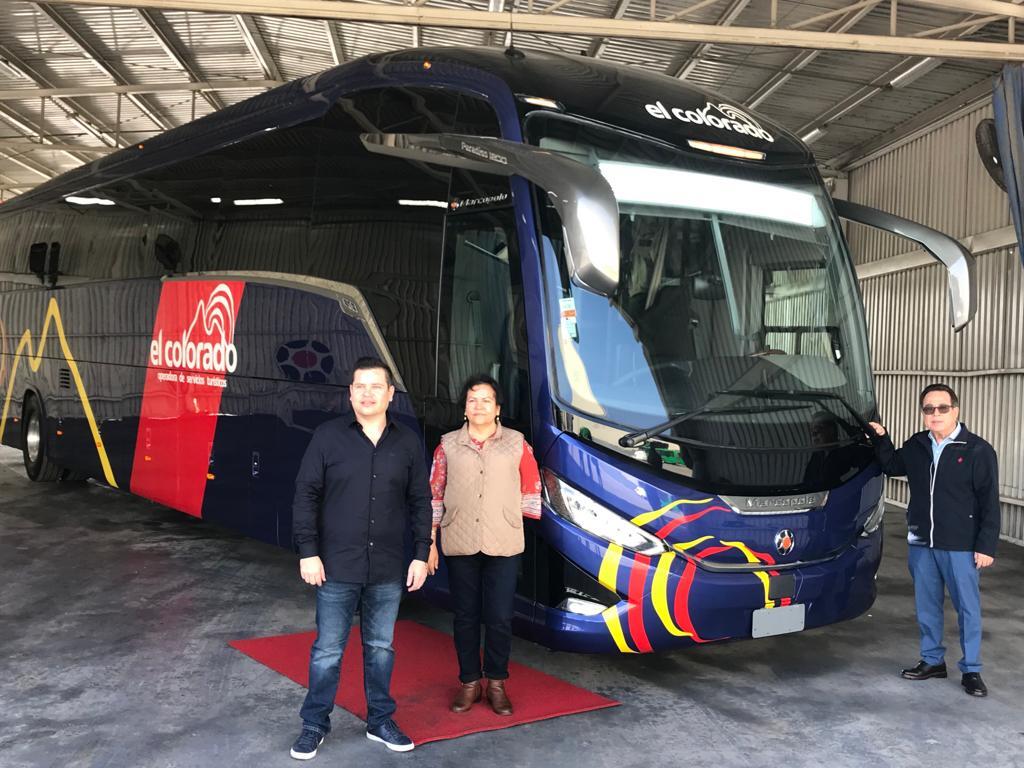
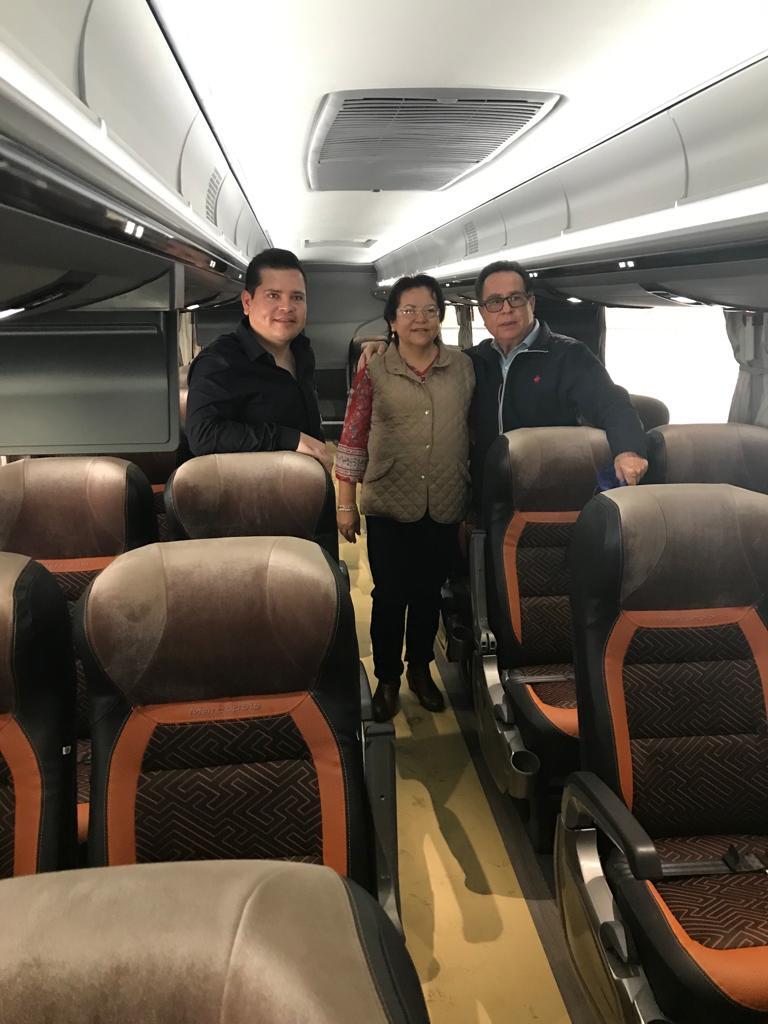
Scania delivered to the Chihuahuan company, El Colorado Tour, its first chassis that will be accompanied by the Marcopolo G8 bodywork, this time on the K450 chassis with its Euro 6 diesel engine.

This new bus will be making tours throughout the Republic, from Chihuahua to any point in Mexico. The Colorado Tour Buses is a local company that seeks to take tourism and business personnel through different routes, complying with the best industry standards.

“We are very happy with the acquisition of this Scania bus, we needed one for at least 50 passengers and without a doubt this bus has been our best option both for performance and for its sustainable and environmentally friendly technology. Likewise, we believe that the powertrain will provide us with a great benefit, it is a very competitive bus at market price.” Commented Mario Ruiz, Director of El Colorado Tours.

One of the great objectives of the Swedish brand is the reduction in the carbon footprint and the improvement of the environment, in addition, it seeks that each of its clients has a unique and quality service, in order to be part of the objectives of the clients, offering them confidence and security in the services. Under this premise, for the northern company, it was one of the factors for which they made their purchase decision, since it is important for them to offer their clients’ transportation options with lesser environmental impacts and thus contribute with their Socially Responsible Company certifications.

With this delivery, Scania reaffirms its commitment to Mexican carriers who are betting on having safer, cleaner, much more productive and efficient units, with all the comprehensive support of the brand in the country accompanying the new generation of transport in Mexico.

The Scania chassis corresponds to the K450EB 4X2 model, which stands out for its DC13 147 engines equipped with XPI ultra-high-pressure fuel injection, which allows these high power figures to be achieved and also 2,350Nm between 1,000 and 1,300 turns. It has the 12-speed Opticruise automated gearbox with its three operating programs (power, normal and economical) together with the retarder.

In the safety section, it has a very complete endowment, starting with the electronic braking system, four-wheel discs, ABS and traction control. As a complement, the ADAS system and its three components AICC (Intelligent Adaptive Cruise Control), LDW (Lane Departure Warning) and AEB (Advanced Emergency Braking) provide maximum peace of mind on the move.

BUSES OCC DE MEXICO STRENGTHENS ITS COMMITMENT TO TRAVELERS BY INCORPORATING 20 NEW BUSES

THE COMPANY COMMITS TO THE VOLVO-IRIZAR TEAM

Latinobus newsroom – William Marroquín

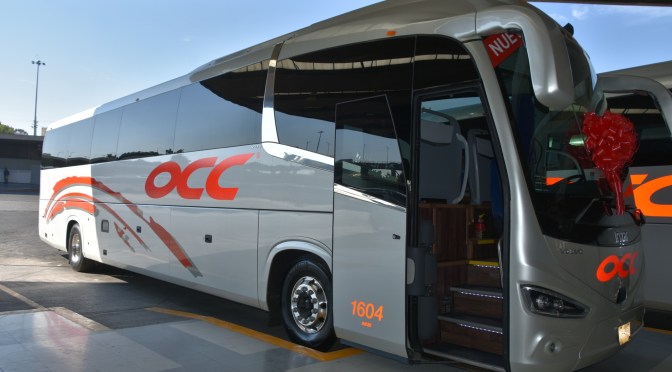
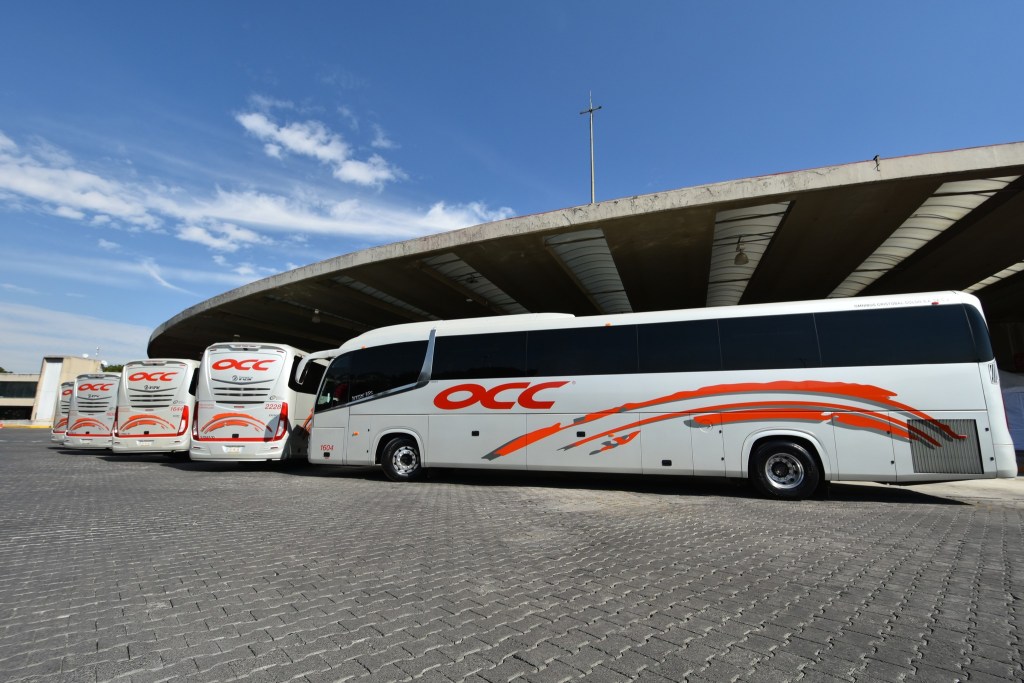
The history of Omnibus Cristóbal Colón – OCC dates back to 1930, when a union of bus owners began to connect Mexico City with Cuautla and Cuernavaca in the state of Morelos, until its acquisition in 1988 by ADO (Autobuses Eastern). Today, OCC is one of the brands that is part of Mobility ADO, one of the main passenger transport conglomerates in the Aztec nation.

After the enormous difficulties that OCC had to overcome during the pandemic, which led to a drastic reduction in the operation of the fleet, the company is reunited with its allies and clients, to present its first incorporation in more than two years, with which It shows that he trusts the market and indicates that the most complicated days of this situation that changed the world seem to have been overcome.

“Today is a very important day, because when the pandemic started, the world stopped and with its mobility. Although we never stopped, there was a time when about 4,000 buses were not operating, but always trusting that we were going to get ahead. What we are presenting here is a reflection of the trust we have in Mexico, in the company and, above all, with the most significant thing that we have in our organization: our passengers. We believe that the only way to get ahead is with a lot of work, effort and dedication every day to show our passengers that traveling through southern Mexico with OCC is safe, viable, hygienic and that they can be very calm letting themselves be carried away by the experts, such as Autobuses OCC” mentioned Aldo Alarcón Vargas, General Director of Transportation at Mobility ADO.

In that order of ideas, OCC has opted for one of the combinations preferred by transporters in Mexico in the last year, with the Volvo chassis that serves as a platform to receive the Irizar i6 body, receiving 20 buses with this specification, capable to carry up to 44 passengers and about 13,000 users per month.

The new units will travel to the states of Morelos, Oaxaca, Chiapas where there is informality and high competition. That is why OCC is aware that to endorse this commitment to its travelers, it not only implies incorporating new units, but also with a high-level service.

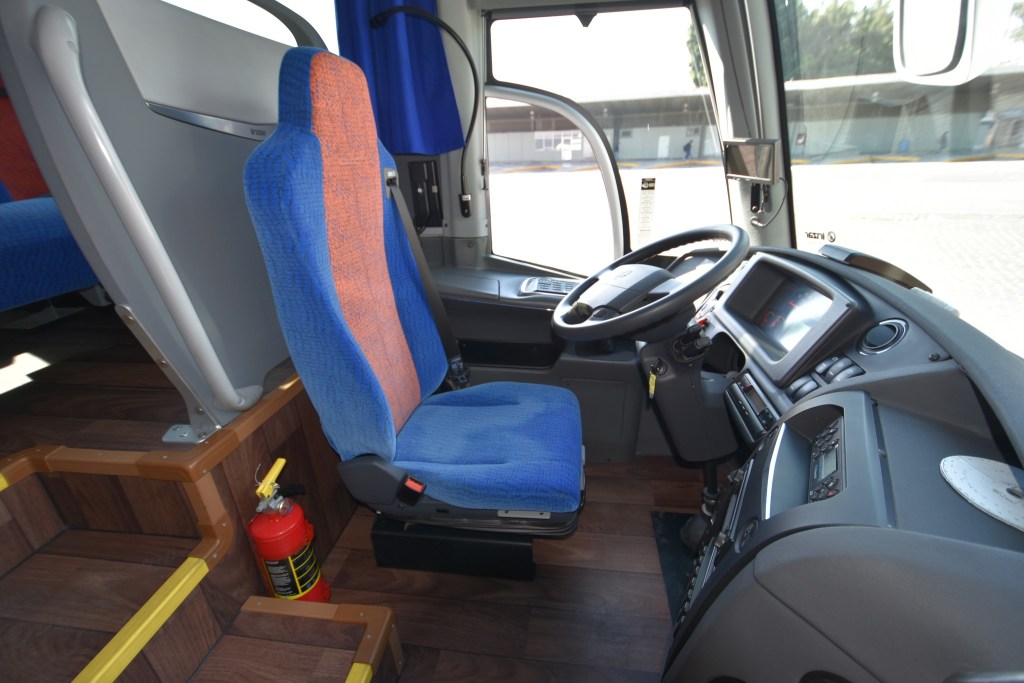
The Volvo chassis corresponds to the B11R 4X2 model with its 10,800cc, 6-cylinder D11C engine with turbocharger and intercooler, which also meets the Euro 5 emission standard. It delivers 410HP of power and 1,950Nm of torque, figures with which the bus will travel with plenty of capacity to move on any terrain. Additionally, it has a fault diagnosis system (multiplex), self-protection against overheating and low oil pressure, as well as engine fire detection sensors.

To guarantee peace of mind for the occupants, the bus is equipped with the Volvo disc brake system on all axles (EBS5- Electronic Braking System). With this you can control the ABS, the ASR (control
traction control), anti-slip system, pad wear sensors, intelligent braking combined with retarder, hill start assist and emergency braking system. The latter includes involuntary lane departure warning, adaptive cruise control and activation of automatic braking when a risk of collision is noticed.

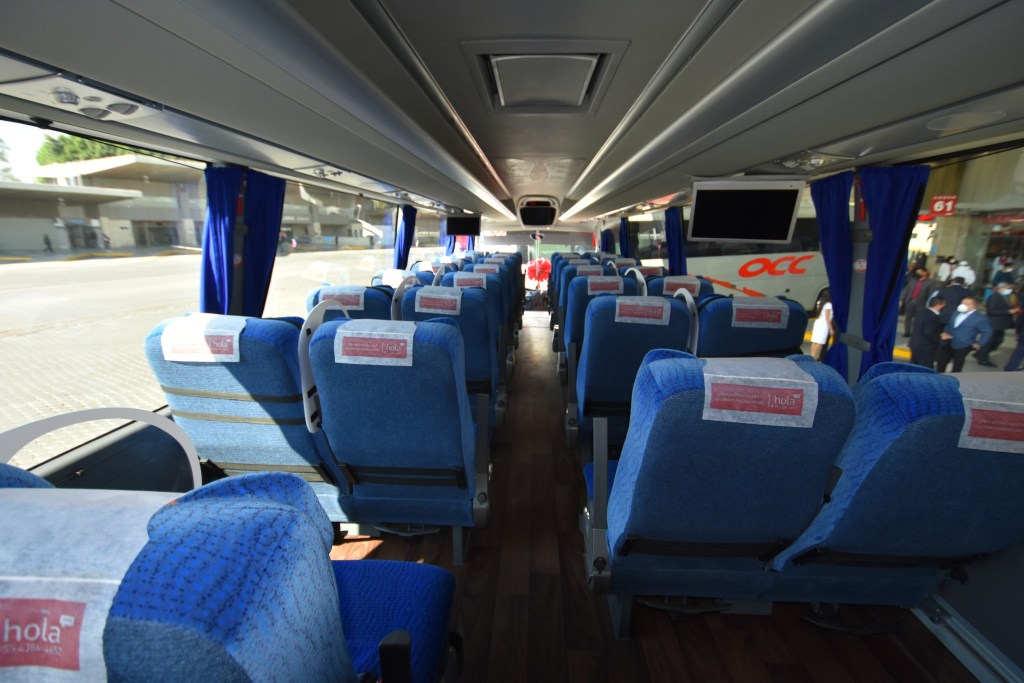
The Irizar i6 body has been the second best-selling body by the Spanish manufacturer in Mexico, following the i5, which is designed for cheaper service lines. The bus has a toilet, 22-inch and 19-inch environmental entertainment screens, USB connections to recharge devices and air conditioning provided by Hispacold (also belonging to the same Irizar business group).

In this way, 2022 begins with the right foot in the highway transport (foreign) of Mexico, which will generate a lot of news due to the arrival of new players in the market, the struggle of the competitors not to lose position and in the same way, if Volvo will continue as leader in the highway segment as it did during 2021, surprising the Aztec market.

HIGER WILL HAVE AN ARTICULATED ELECTRIC BUS RUNNING IN BRAZIL AND URUGUAY BY JULY

THE BUS WILL COME 100% MADE IN CHINA

Colombiabus newsroom – Higer do Brasil / William Marroquín

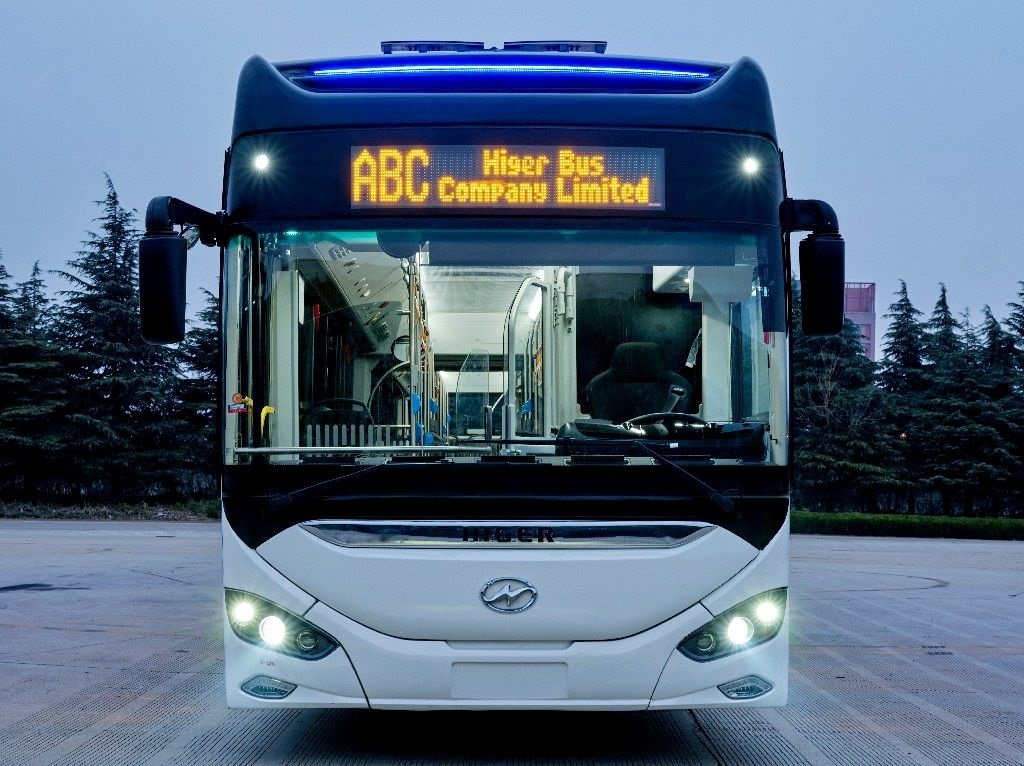
The Chinese bus manufacturer Higer, belonging to the same group that manufactures the King Long and Golden Dragon brands, continues to show that it has great ambitions in the electrification of public transport in Latin America.

In November 2021, the official presentation of the Higer Azure 12BR electric standard was held in Brazil, in an event chaired by the Mayor of São Paulo. This 12.2 meter long vehicle capable of transporting up to 70 passengers is being demonstrated and tested on the routes of Transwolff, the public transport operator of the great Brazilian metropolis.

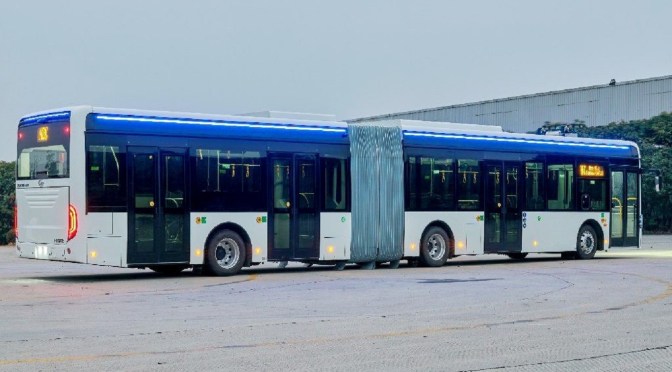
The next step will be the arrival of the Higer Azure 18BR articulated electric bus, the name by which it will be known in Brazil, since its name in China is KLQ6186GEV. The double-body version is essential for the development of BRT (Rapid Transit Bus – in Spanish) systems in Latin American cities, since in many cities, this type of bus is the majority. In Brazil alone, there are to date 94 lines of this type, in 24 cities, thus also the interest of the Chinese manufacturer and its representative in the country, TEVX.

The Azure 18BR is 18,750 mm long, 2,550 mm wide, and 3,390 mm wide; It is capable of supporting a gross vehicle weight of 33,500Kg, obviously influenced by the batteries. These accumulators are provided by CATL, with a capacity of 516Kwh, which allow an average autonomy of 270Km and to fully recharge, they need 3.5 hours.

Major brands in the automotive industry contribute to the development of this electric articulated bus: Dana with the generator, ZF with the air suspension, Wabco disc brakes, air conditioning manufactured by Valeo, Bosch power steering and special Michelin tires for urban use.

The Azure 18BR also stands out for its completely low-floor platform even at the rear doors, providing maximum accessibility, although it can be adapted for systems in other cities, whose stations are not at ground level. The bus will have all the equipment for the comfort of the 154 passengers it can carry, as specified by SP Trans, manager of public transport in São Paulo: air conditioning, USB charging ports, free Wi-Fi internet connection and tinted windows.

The model is integral, with chassis and bodywork built in China, which continues to generate controversy in a country like Brazil, where importers are tightly controlled and where its population travels in 100% local buses. The bus that will arrive in July will not be alone, as a second Azure 18BR will be tested on urban routes in Uruguay.

MARCOPOLO EXPANDS THE OPTIONS OF GENERATION 8 WITH ITS PARADISO 1600 LD

AVAILABLE FROM THE SECOND QUARTER OF 2022

Colombiabus newsroom– Marcopolo S.A.

By 2022, there is expected to be a significant improvement in demand for road travel around the world. The highway bus segment contracted significantly during 2020 and much of 2021, and only the end of the previous year showed that a firm recovery must begin. Marcopolo, moved in that direction and in the middle of the previous year presented the new Generation 8, which has the challenging task of surpassing what the G7 left (which is still marketed in many markets), especially in the western hemisphere, where it is the bus bestseller.

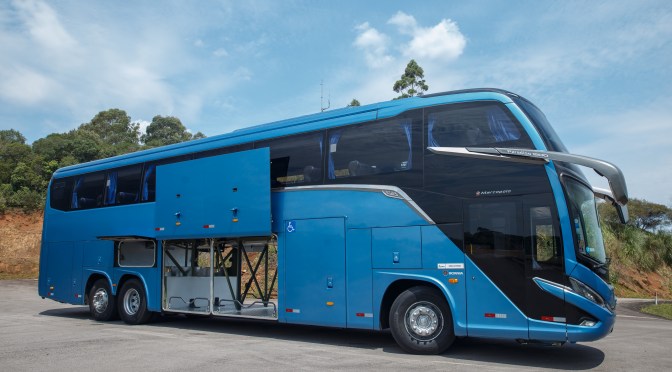
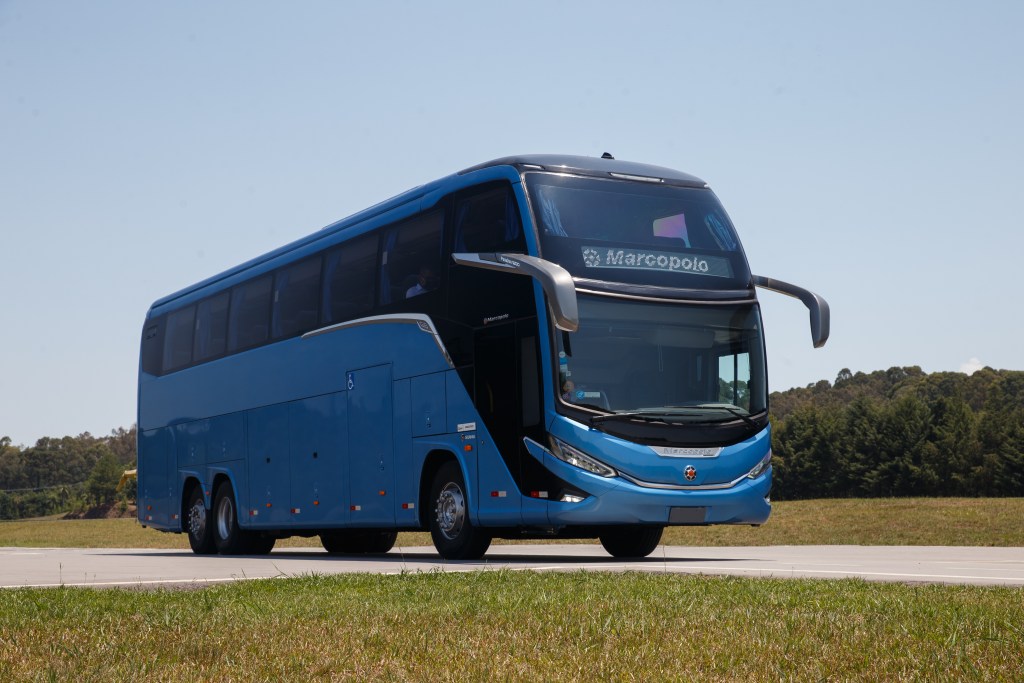
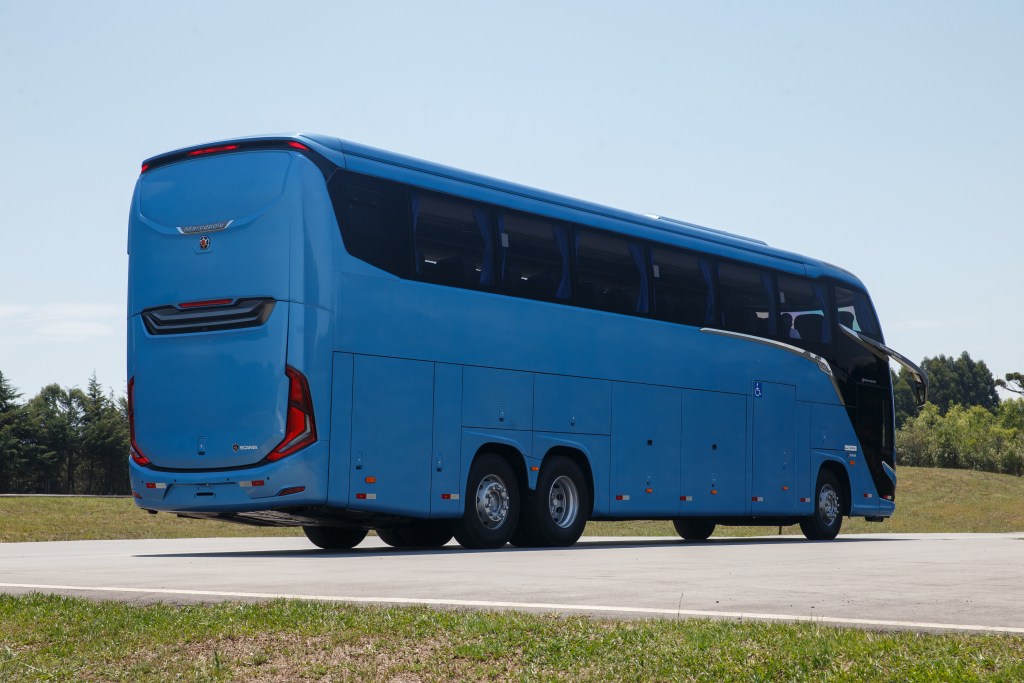
In July 2021, the Paradiso 1050, 1200, 1350 and 1800DD arrived, becoming the first options of the new generation 8, which are now complemented by the Paradiso 1600LD, the road bus with the largest hold capacity on the market. The model, which can be produced with different brands of chassis in the 6×2 configuration and also 8×2 for some markets, maintains the characteristics of safety, comfort and space, combined with innovation and technology to offer a better experience to passengers and drivers, with a model of high operational efficiency on medium and long-distance highway routes.

“We develop all the Generation 8 models focused on excellence and maximum efficiency of the operation so that our clients obtain better commercial results”, highlights Ricardo Portolan, Director of Commercial Operations of the Internal Market and Marketing of Marcopolo.

The model incorporates all the technologies and design of the Marcopolo DNA introduced in the previous models of the Generation 8 launched in July 2021. The front grille and bumper with greater volume, robustness and the use of new external materials increase the durability of the assemblies. More than 140 innovations generate positive impacts for drivers, passengers and transporters, the elegant and modern style with a drag coefficient of only 0.379. Additionally, the optional full LED headlights, with efficiency up to 3.5 times higher than other buses on the market, and a structure that increases the passive safety of the driver.

The Paradiso G8 1600 LD also offers the Marcopolo Biosafe solutions package, designed to make public transport safer against viral and bacterial contamination, incorporating solutions focused on biosafety. Optional elements such as toilet disinfection and air conditioning using UV-C light, antimicrobial finishes, 1x1x1 layout and alcohol gel dispensers continue to be available.

ORIENTED TO COMFORT AND SAFETY

One of the most important aspects in the development of the new project was the attention paid to safety and accessibility, both for drivers and passengers. The Low Drive version has a redesigned driver’s cabin with a lower instrument panel and left-side refrigerator and USB socket; larger visible area on the right side and glass partition wall, improving visibility and maneuverability for the driver. The cab door opening is larger for comfort and convenience, along with the completely revised upper instrument panel.

Also in the new Paradiso G8 1600 LD, every detail was designed to optimize the passenger experience, facilitating access to the passenger lounge, providing attributes of thermoacoustic comfort, seats that focus on ergonomics, in addition to the biolight concept, which adjusts interior lighting according to the time of day for visual comfort of the occupants.

A model that is in the final phase of homologation to be offered in all markets from the second quarter of 2022, with which Generation 8 is completed, with options for short, medium and long distance routes, in addition to an infinity of options to configure interiors.

V&A TRAVELS, FIRST CLIENT OF GENERATION 8 OF MARCOPOLO IN MEXICO

THE 500HP VOLVO B13R CHASSIS ACCOMPANIES THE BODY

Colombiabus newsroom – William Marroquín

Once the first Marcopolo Generation 8 units were presented in Brazil, the question was to know in which of the brand’s foreign markets, the new creation that continues to capture the interest of carriers, passengers and bus enthusiasts in Latin America would be present. , with a start of commercial life collecting orders for those seeking to offer new levels of comfort on road routes, whose mobilization continues to grow after months of restrictions.

Already in October, the first model of this new saga had arrived for Mexico, a Paradiso 1800DD double-decker bus with the MAN 26.480 chassis, built in Brazil at the Caxias do Sul facilities. Other single-deck units were sent to Aztec lands in PKD configuration (for coupling to the chassis at Polomex facilities), corresponding to the Paradiso 1200 and Paradiso 1350 models.

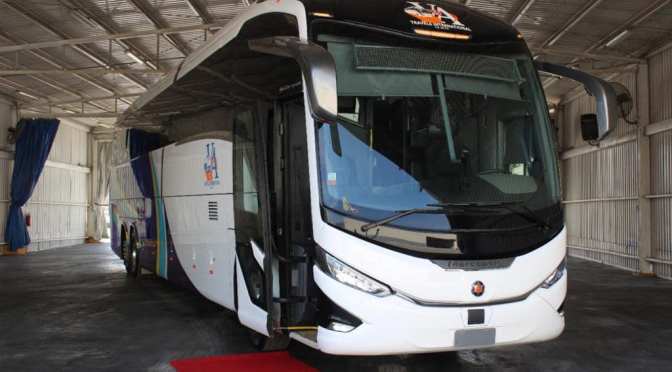
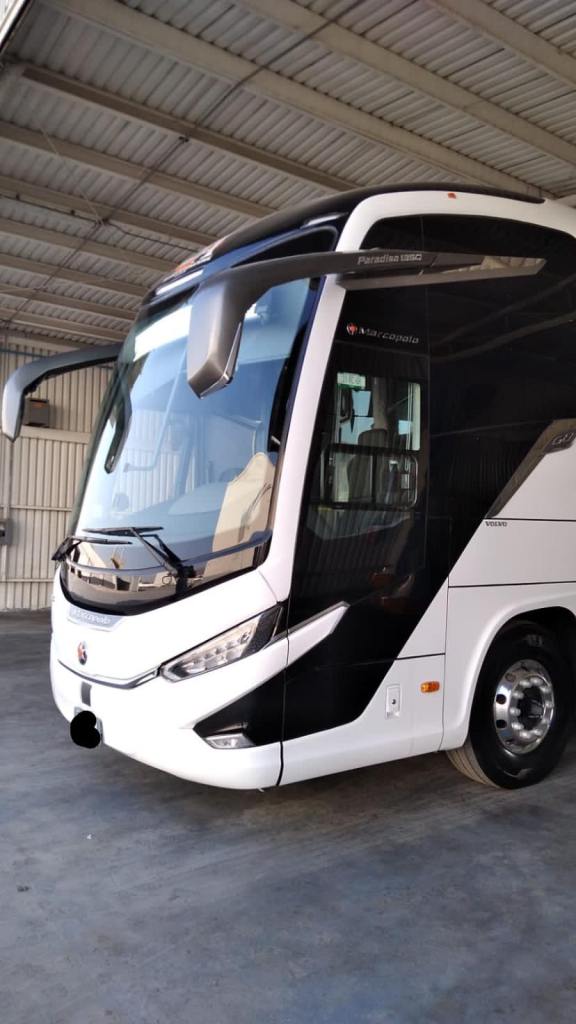
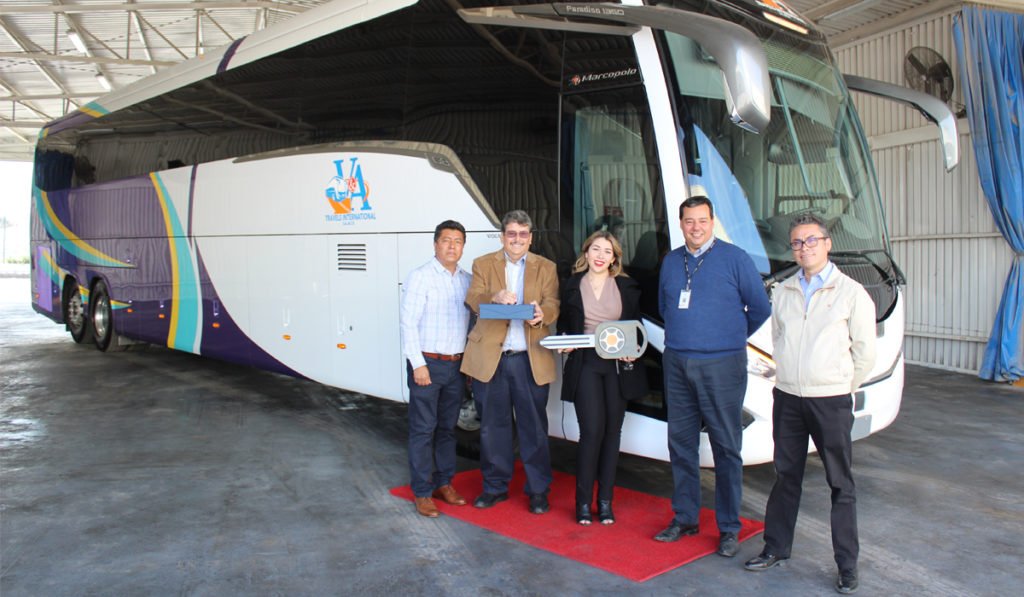
Precisely on the Paradiso 1350, the first unit of the Generation 8 in Mexico has been delivered, for V&A Travels International, operator of tourist services and bus charter. The company based in Hermosillo (State of Sonora) serves clients as important as PepsiCo, AstraZeneca, Tecnológico de Monterrey in the country, but also with activities in the United States, given its border location.

Returning to the bus, this Generation 8 Paradiso 1350 6X2 has a length of 15 meters and is equipped with a semi-bed with three-point seat belts and USB ports in each seat to recharge mobile devices. For entertainment, the bus has five 15.6-inch high-definition digital screens and a new surround sound system with higher-quality speakers. The passenger room includes a LED lighting system with different indirect light configurations, applying chromatherapy to change color and intensity, to have the best internal environment at all times.

The bus incorporates biosafety solutions to offer protection against contamination by viruses and bacteria on trips, such as a UV lamp in the toilet and the air conditioning return, antimicrobial protection on the seats and access handrails. The toilet also has a new design for greater comfort and ergonomics.

V&A Travels has chosen the Volvo B13R chassis, where high performance, maximum safety and respect for the environment are combined. The Volvo D13C engine delivers 500HP of power and 2,500Nm of torque delivered to the wheels with the help of the prodigious 12-speed forward I-Shift automated transmission. The electronics allow self-diagnosis of faults, and it is also equipped with self-protection against overheating, low oil pressure and fire detection sensors.

Regarding safety, it is always important to highlight what the chassis offers, which has a complete equipment to protect the driver and its occupants: EBS5 electronic braking that governs the ABS and ASR traction control; ESP stability program, dual retarder control, hill start assist, brake temperature and wear warning, door brake, automatic differential lock and self-calibration when changing brake pads.

Separate mention deserve the Volvo Dynamic Steering System (VDS) and the Active Safety System (SSA). With the first, the effort of the operator is reduced, it provides greater stability and better adaptability to the speed of the vehicle when moving the steering wheel. The second includes emergency braking and collision warning; adaptive cruise control and lane departure alert.

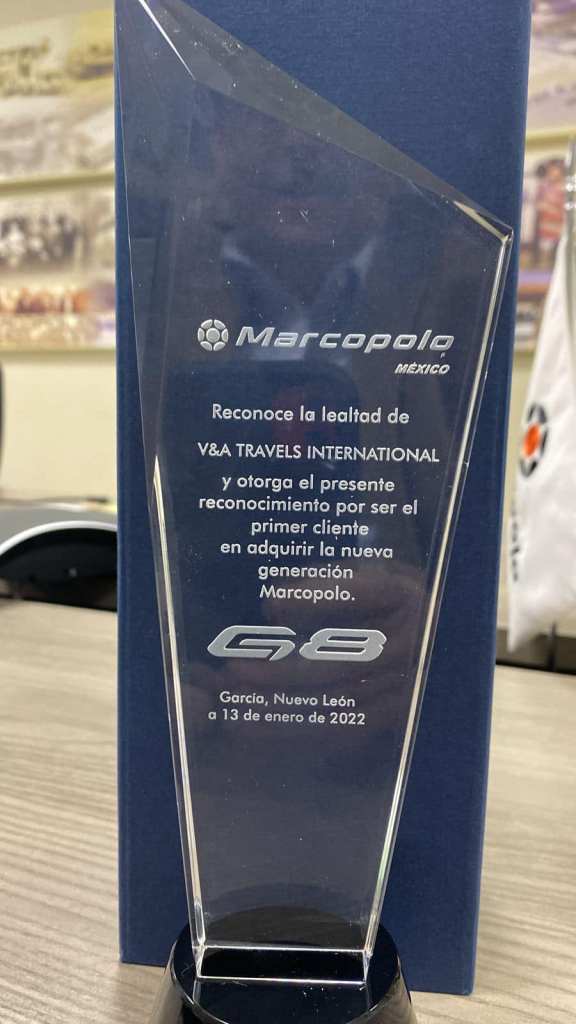
Marcopolo Mexico gave recognition to V&A Travels, an important client on the border with the United States and the Pacific. “We are sure that with this acquisition, the company V&A Travels International will mark a great differential in the tourist transportation operations of the area, providing an ultra-luxury service in medium and long distance lines.” said José Luiz Goes, General Director of Marcopolo Mexico.

MEXICO CITY LAUNCHES 65 MERCEDES-BENZ URBAN BUSES

THEY WILL TRANSPORT NEAR 65,000 PEOPLE DAILY

Colombiabus newsroom – Motor a Diesel

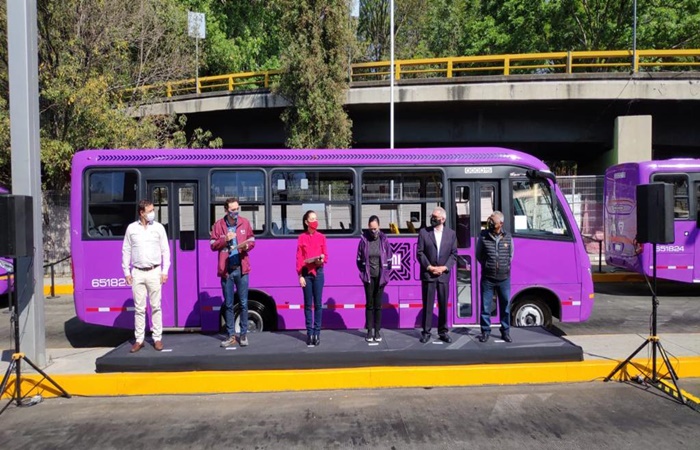
The government of Mexico City gave the starting signal to 65 Mercedes-Benz midibuses with Marcopolo bodywork for the start-up in the Legaria Corridor. These new vehicles represent an important evolution in the mobilization of the Latin American mega-metropolis, since they already have access to all the transportation systems of the big city with the single Integrated Mobility card.

Autobuses Unidos Legaria is the transport company that has obtained the concession for this corridor, which will have 72 fixed stops and which involved training 90 operators with theoretical and practical courses on machine technique, road safety and service experience for that users enjoy more pleasant trips.

These buses have the Mercedes-Benz LO916/48 chassis, powered by the OM924LA four-cylinder engine with 4.8 liters of displacement, turbocharged with intercooler, which delivers 154HP at 2,200rpm and 580Nm between 1,200 and 1,600 revolutions, complying with the Euro V emissions.

The Marcopolo Senior body is manufactured at the García plant, Nuevo León with the 2020 redesign, which reaches a length of 9.15 meters and 2.25 meters in width. It has GPS satellite tracking, surveillance cameras, passenger counting and friendly technology for more comfortable trips.

“Today we are working for a comprehensive transportation network, where more than 40 billion pesos have been invested in this network. The right to quality mobility and transportation has been an initiative of the head of government and for that support today we give the starting signal for these units, replacing the 173 microbuses on route 17 and route 28 that cover the Metro routes Tacuba- Medical Specialties; Metro Tacuba-San Isidro; Metro Tacuba-Tecamachalco; and Tacuba ESIA» indicated Jesús Padilla Centeno, President of Grupo Movilidad de Vanguardia (MOVA).

ECUATORIAN TRANSPORTERS BET ON HIGH-CAPACITY LUGGAGE BUSES

WILL IT BECOME A TREND?

Ecuador is one of the few countries in Latin America with a wide range of local manufacturers, when in other countries there has been a progressie disappearance of bus manufacturers, leaving only the most recognized or those that have been able to innovate to withstand the arrival of the foreign builders.

Although there is an important preference for local manufacturers, regardless of whether many of them have been carried away by copying foreign models; Ecuadorian carriers have been increasingly open to proposals from other countries. The buses of Brazilian origin, followed by the Chinese, Peruvian and occasionally from Colombia; they are in their flotillas.

There is also evidence of a change in the mentality of the country’s transporter, which is gradually passing to the rear-engine bus, especially on longer-distance routes. This arrangement of components allows the incorporation of better-performing vehicles that allow a higher load capacity, an increase in the overall length of the vehicle and its wheelbase.

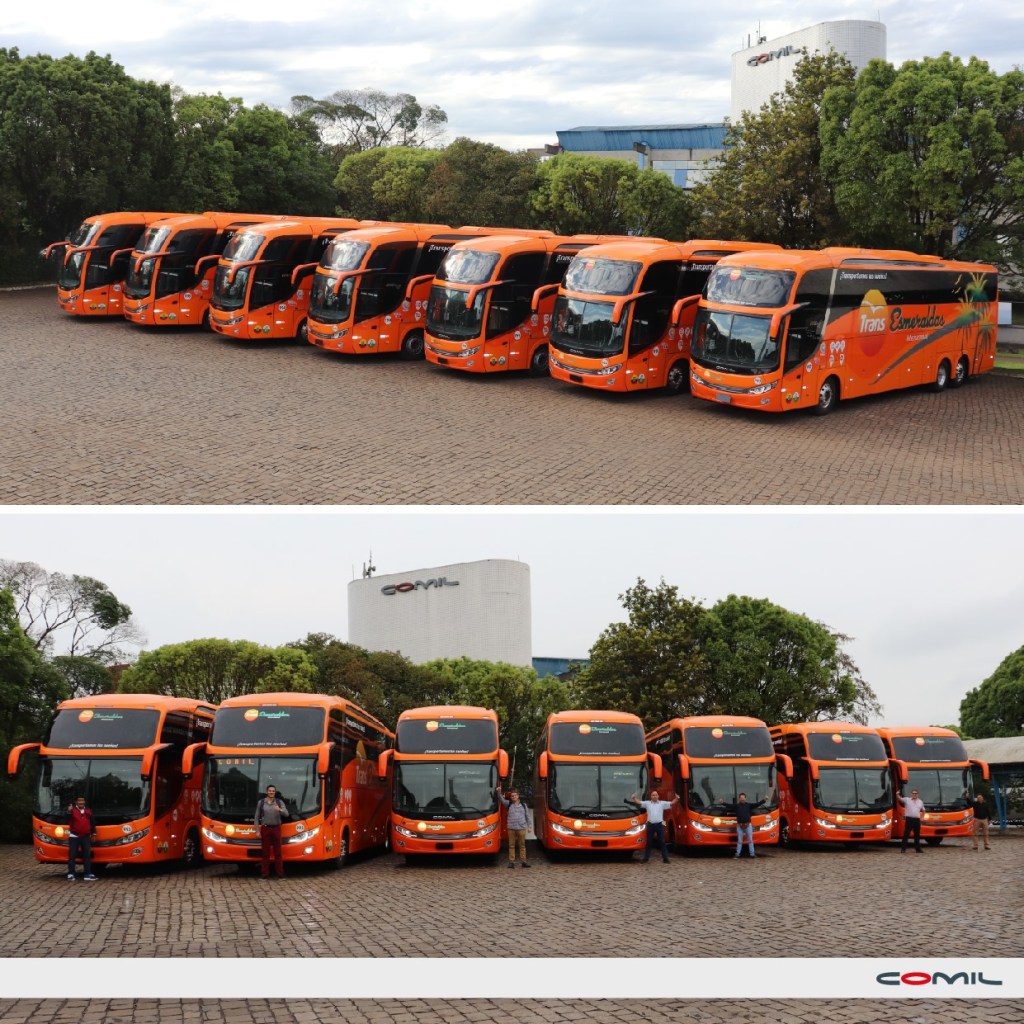
Precisely these characteristics have been used by Ecuadorian transporters, to bet on buses with the largest hold capacity in the market, with the respectable height of 1,600 mm from the floor to the edge of the passenger lounge, which allows offering almost 21 meters cubic of luggage space. With Transportes Esmeraldas, which in September 2021 received its order for 15 buses, the Campione Invictus HD model built by the Brazilian company Comil, located in Erechim.

“It is not very common to see them in Ecuador, but in this time of pandemic, having good warehouse capacity to transport parcels is an alternative to the drop in the number of passengers, that is why companies are considering them and new units are coming,” explains Ángel. Vinueza, Director of Ecuabus.

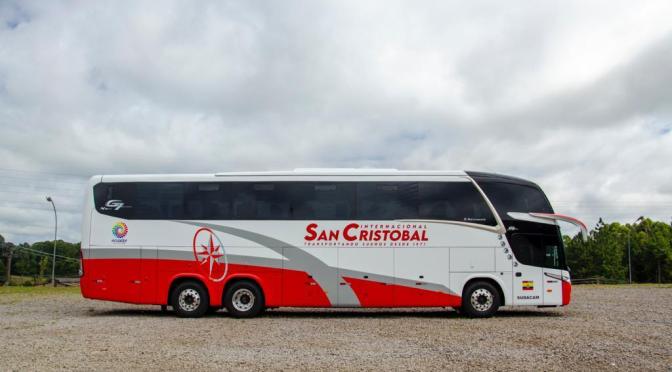
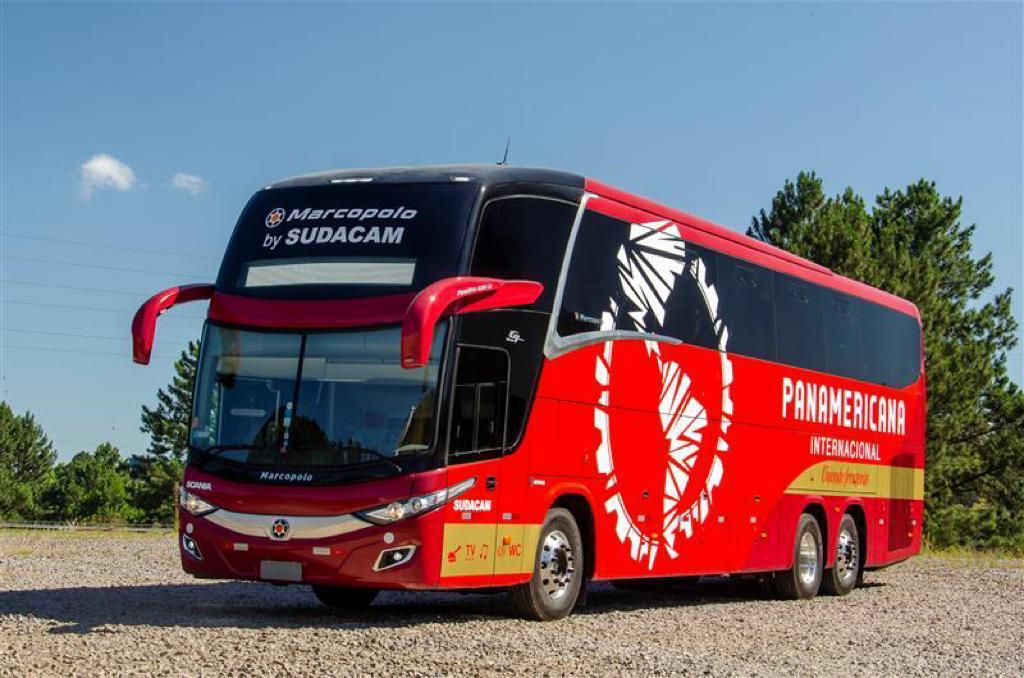
The next step has been taken by the Cooperativa San Cristóbal de Tulcán, near the border with Colombia, and Panamericana Internacional in the capital Quito. Both companies, recognized for their long-distance routes in the country and even internationally, have received their orders for the Marcopolo Paradiso 1600LD model, imported to Ecuador by the brand’s representative, Sudacam.

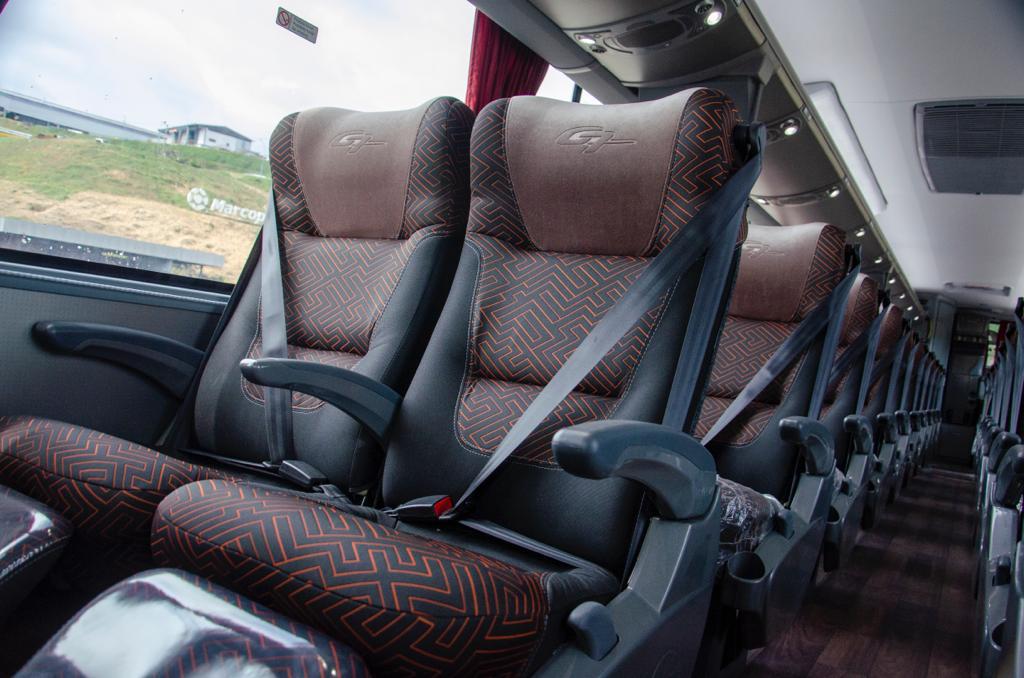
The three companies have opted for the 48-seat configuration, a toilet, half-bed seats with a good level of comfort, and a driver’s bedroom that is located in a lower position. Scania’s participation also stands out, with its high-power K460 platform, with the 12.7-liter engine that is offered throughout South America, but offers more power due to the Euro 3 emission regulations that apply to Ecuador.

To dose that great amount of power, the Opticruise automated 12-speed gearbox is present, while to ensure great ride comfort, the electronically leveling air suspension makes life on board easier. Heavy-duty retarder, ABS and traction control come with safety equipment, which also helps preserve brake material.

Will they become a trend in Ecuador? It cannot be said yet, but new paths have been opened in the matter of passenger transport in the country. “In principle, the novelty was the double-decker buses, but with these high-capacity buses, companies can have an additional line of business and provide facilities to the user because through a transport cooperative it is easier to send packages and merchandise. Companies are taking the issue of parcels very much into account, especially those who can afford to incorporate rear-engine buses into their fleets” Vinueza explains.

At the moment Scania has the leadership in these large buses in 6X2 configuration, gaining more and more market share, capturing this new mentality in transporters that are betting on vehicles with greater driving comfort. This has been motivating other brands, which will not want to lose ground and could surprise themselves in the coming months, with the incorporation of new chassis models for rear-engine buses in Ecuador.

PERUVIAN CIVA READY TO OPERATE ITS FIRST MARCOPOLO G8 WITH VOLVO B450R CHASSIS

INCLUDES SSA ACTIVE SECURITY SYSTEM

While several Latin American markets await the arrival of the first Marcopolo Generation 8 units, carriers that were interested in the proposal and placed their orders close to the launch date are already beginning to receive their buses to assign them to the operation.

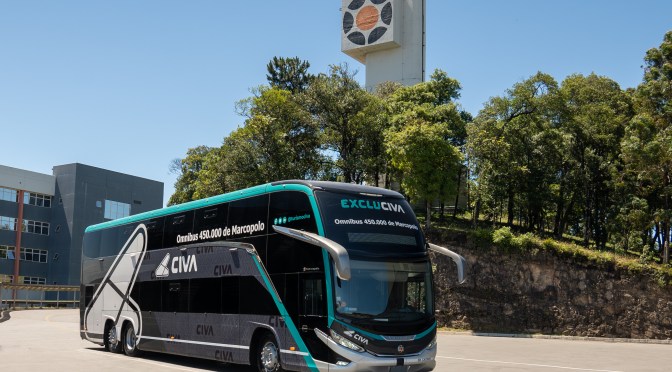
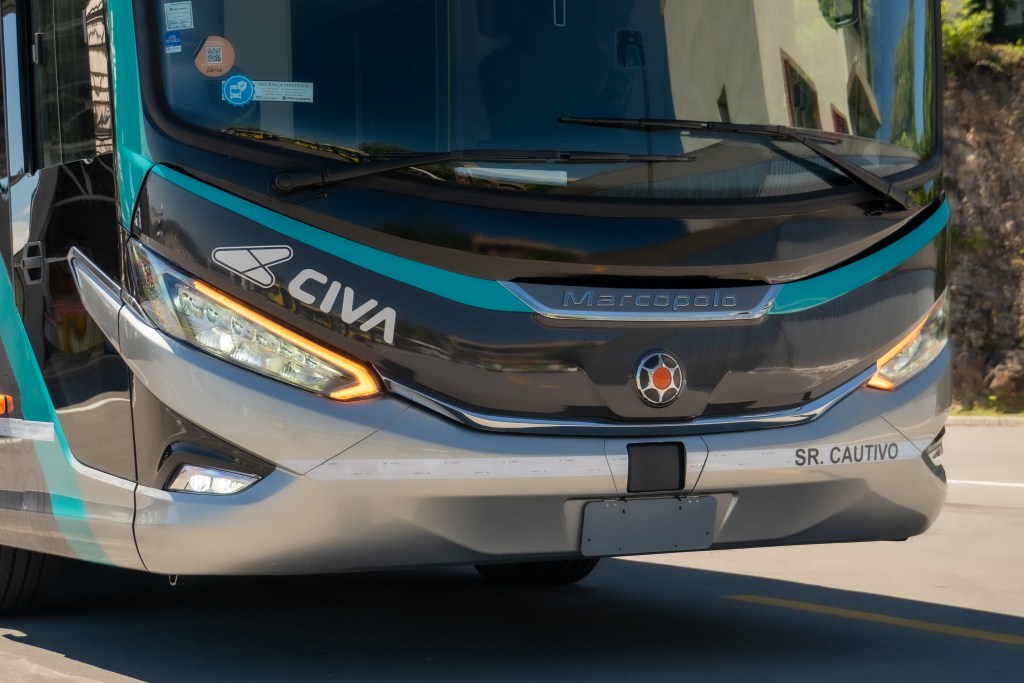
Transportes Civa de Perú, has a relationship of more than thirty years trusting in the creations of the Brazilian giant and became the first company outside of Brazil that received a Generation 8 bus, of its Paradiso 1800 DD model. The Inca operator, recognized for the high level of comfort and added value in its long-distance passenger transport services, will continue to reinforce that image that has made it a benchmark in South America.

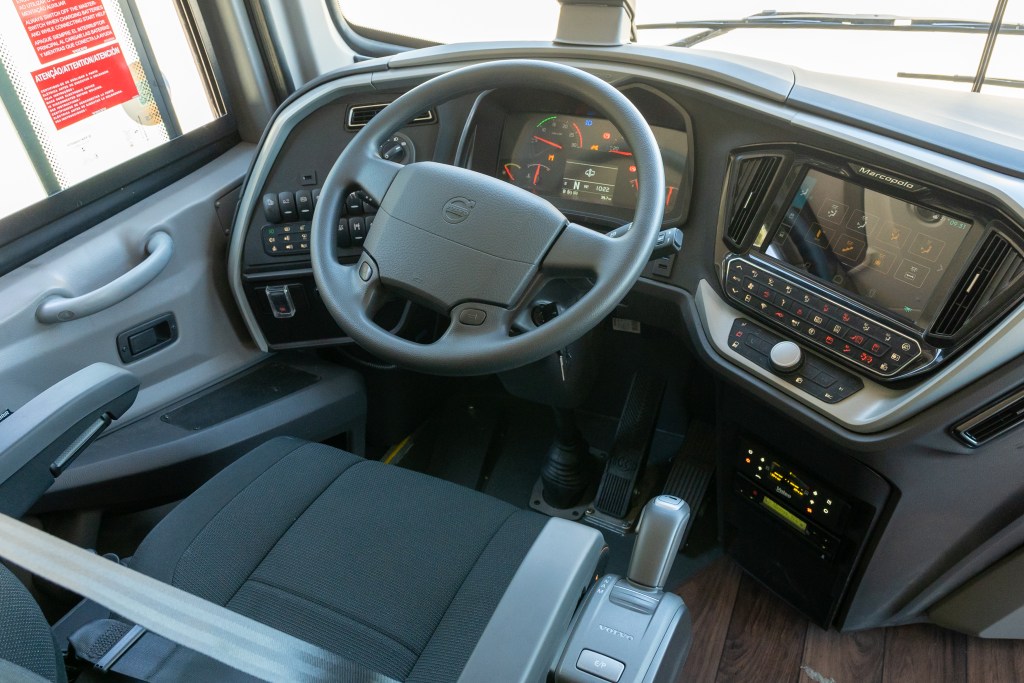
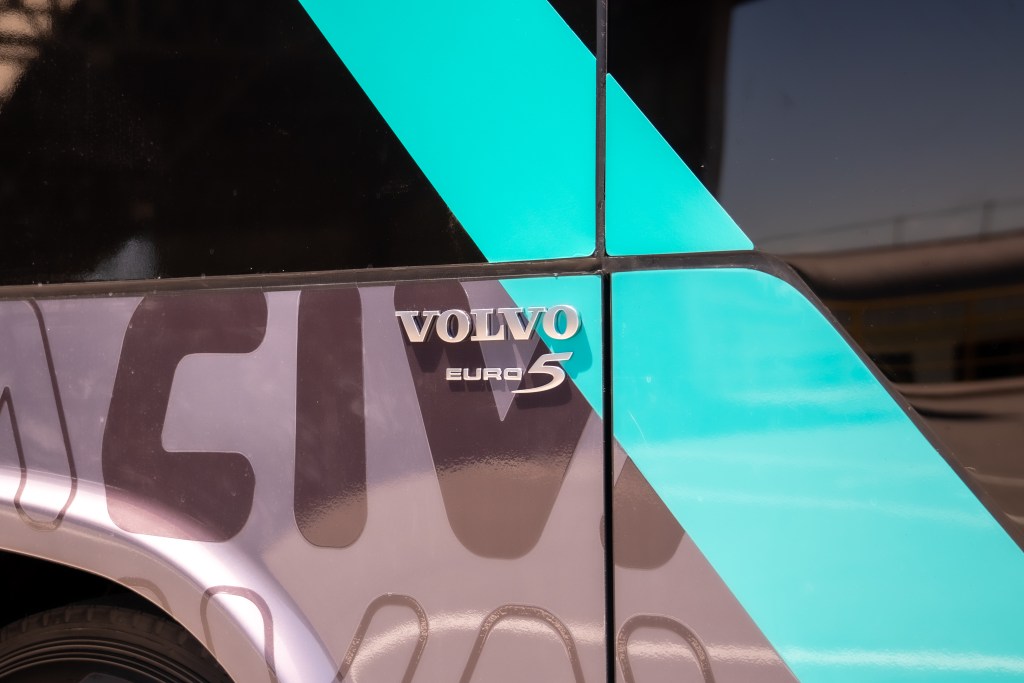
Civa has also been the protagonist of a milestone for Marcopolo, since this first Generation 8 bus they receive is the 450,000th unit produced by the Brazilian manufacturer, in its almost 72-year history. A special bodywork had to be coupled to a very special chassis, which is why the Peruvian transporter has relied on the Volvo B450R, which reinforces those values ​​of safety, performance and respect for the environment that are always sought in any model of the Swedish manufacturer.

A bus that, thanks to the materials chosen for the construction of the platform and a smaller engine with a displacement of 10,800cc, becomes the lightest on the market, which allows greater capacity and improves performance with lower fuel consumption than of its competitors. A propellant that delivers 450HP of power and 2193Nm, of torque, guaranteeing great responsiveness on any terrain and in any condition.

With unsurpassed ride comfort from the 12-speed I-Shift automated transmission, electronically level-adjustable air suspension at the push of a button, and the ability to compensate for body lean, they make long, winding road trips a breeze roads are a real pleasure. The engine management is fully electronic, complying with the Euro 5 emission standard, with a turbocharger and intercooler to provide maximum efficiency when changing altitude.

Safety has always been a value and hallmark of any Volvo, with an arsenal of equipment that gives drivers and passengers peace of mind when on the road: Electronic Brake System EBS with all-wheel discs, ABS, ASR traction control, ESP stability program, pad wear indicator, Volvo VEB engine brake, retarder and the innovative SSA Active Safety System.

The SSA is bringing us closer to what autonomous driving will be, but it is a huge advance in engineering, as it will help reduce road accidents and contribute to that “zero vision” so that in the future there are no fatalities in accidents in traffic. This system includes forward collision warning with emergency braking, inadvertent lane departure alert, adaptive cruise control to maintain speed according to a safe distance from the vehicle in front, along with the audible and vibration alarm in the seat.

A bus that reaches the ranks of the most luxurious and comfortable service offered by CIVA: the famous “Realmente Cama 180°” with the ExcluCiva badge. With wide leito armchairs on the first level capable of reclining 160°, equipped with a massage function and adjustable lumbar adjustment with remote control, attention on board. The second level also offers wide leito armchairs, but convertible into a 180° bed, with individual entertainment. Likewise, there are separation and connectivity curtains on the two floors of the bus.

Safety, design and comfort in one, so that the reactivation and economic recovery of long-distance bus transport continues and travelers can enjoy unique travel experiences, thanks to the combination of Volvo, Marcopolo and Civa.